A $9 Modelo started the argument. Matthew Conway was killing time before a flight when he stopped at a bar on First Avenue, changed his shirt, ordered a canned Modelo, and asked for the check. The total was $8.97 before tip.
After texting a few friends who buy beer in New York, Conway learned the can probably cost the bar somewhere around a dollar. He thought the markup was ridiculous. Josh Sharkey disagreed, so they asked someone who sells a lot of beer.
Keith Benjamin of Uptown Hospitality Group runs Uptown Social, Sharehouse, two Bodega locations, By The Way, and The Waverly, a wedding venue, in Charleston. Before moving south, he bartended at Stumble Inn on the Upper East Side, eventually bought into the business, and opened Hair of the Dog on the Lower East Side. In 2016, he moved to Charleston and put $5 million into a single build he now calls a unicorn. Even in college, he was running a fraternity tailgate operation with a six-figure budget.
In other words, Benjamin has spent a long time thinking about what people will pay for a drink and what it actually costs to serve one. When Michael Jacober put Conway's question to him on The meez Podcast, asking whether you can justify charging $9 for a beer that costs a dollar, Benjamin rejected the premise.
“That Modelo, it’s far less about the cost of goods sold or what you’re buying that Modelo for. It’s far more what the full package looks like and what the needs are as the operator, as the owner of that restaurant, bar, nightclub, wine spot.”
That is the argument worth paying attention to. A menu price is not simply the cost of an ingredient plus a markup; it is one part of a much larger economic system.
The debate is really about menu contribution margin: the dollar amount a menu item contributes after its plate cost is subtracted from its selling price, and the role those dollars play across the broader menu. Later in the conversation, Benjamin offered an example from his own restaurants that made the idea even clearer. Every Wednesday, he intentionally sells a steak he says he makes no money on.
That apparent contradiction gets at something more useful than the original $5 beer debate. The right question is not simply, “What should this item cost?” It is, “What does this item contribute?”
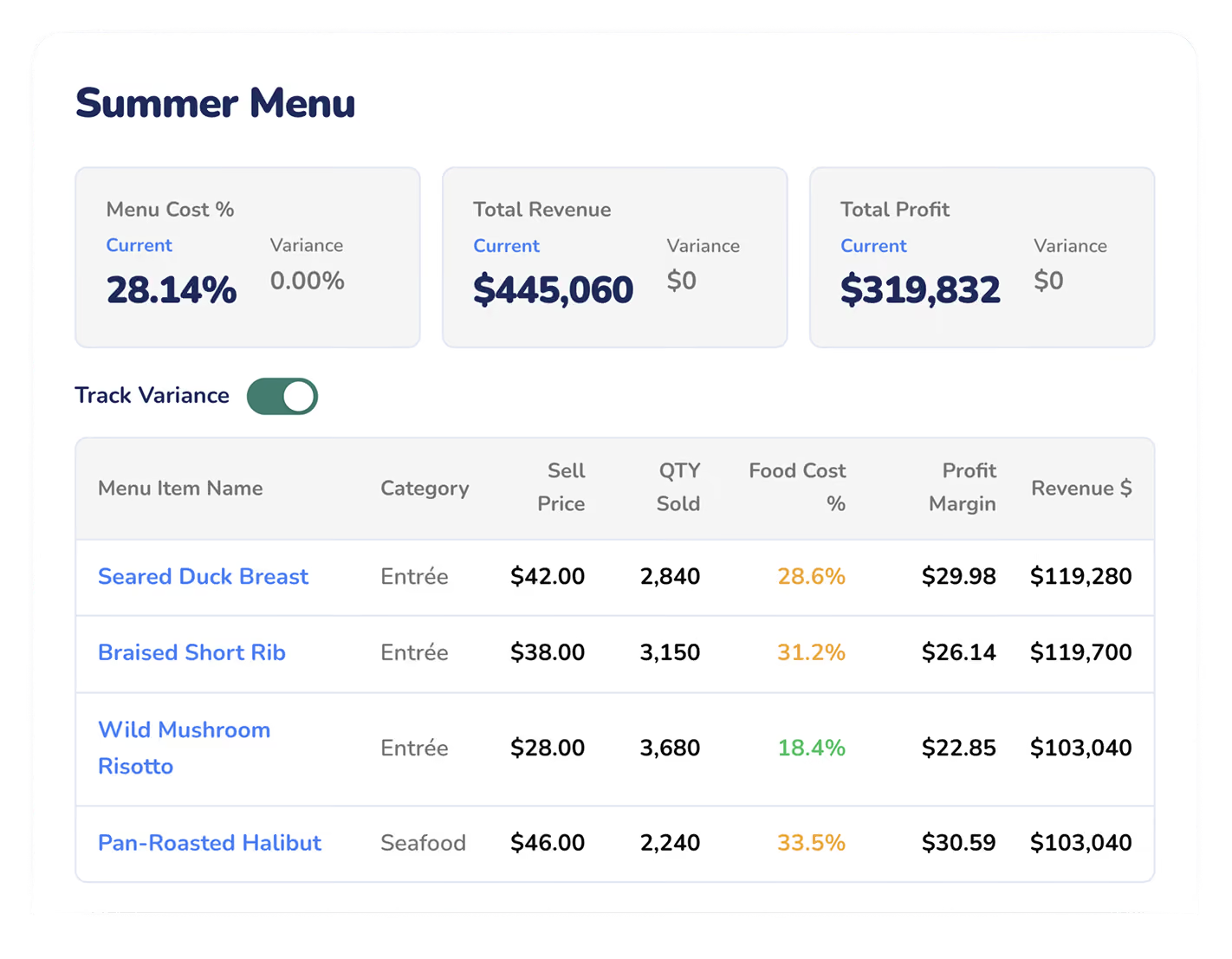
Menu contribution margin is the amount of money a menu item generates after its plate cost is subtracted from its selling price. Unlike food cost percentage, it shows the actual dollars an item contributes toward labor, rent, overhead, and profit.
Why Menu Contribution Margin Matters More Than Food Cost Alone
Benjamin's case for the $9 Modelo starts with everything the guest cannot see. Insurance is one example. He describes South Carolina's liquor liability environment as particularly difficult, and a high-volume operation like Uptown Social carries substantial legal exposure.
Entertainment is another major expense. Benjamin says he books seven figures of entertainment every year at cost. Labor adds another layer: South Carolina still follows the federal tipped minimum wage of $2.13 per hour, but Benjamin says he pays line cooks $20 to $25 an hour and dishwashers $19 to $20 because that is what it takes to staff the kitchen.
None of those expenses appears on the Modelo invoice, but the Modelo, and everything else on the menu, still has to help pay for them.
The broader industry is dealing with the same pressure. In the National Restaurant Association's 2026 State of the Industry report, more than nine in ten operators cited food, labor, insurance, and inflation as significant challenges, while 60 percent said business conditions deteriorated in 2025. Association figures also show food and labor costs each rose 35 percent between 2019 and 2025, and that same reporting notes third-party litigation funding has driven settlements higher even on routine claims.
Benjamin's point is not that restaurants should charge whatever they can get away with. It is that cost of goods sold cannot determine the correct selling price on its own. Two bars can pay exactly the same amount for a can of Modelo and still need completely different menu prices because the economics surrounding that beer are different: rent, labor, insurance, entertainment, debt, sales volume, and concept all matter.
The beer has to help support the business around it, not just cover the cost of the can.
The Number That Could Settle the $5 Beer Debate
Conway was not really disputing those operating costs. His argument was narrower: give people one affordable option.
“Giving them one option will never ruin anybody's P&L and you can never argue me that otherwise.” — Matthew Conway, The meez Podcast
He was not proposing an entire bargain-priced drinks list. He was talking about one beer: something a cook finishing a twelve-hour shift can afford, something a guest drinking expensive tequila can use as a chaser, and a visible signal that there is still an accessible way into the room.
Benjamin's answer was reasonable. None of them knew what that particular operator's P&L looked like. But that response also exposed the weakness in the debate: they did not have the number that could settle it. What does that beer actually contribute, and what does it cause people to buy alongside it?
Conway came closest to answering that with data from his own operation. Beer represents less than 1 percent of his beverage sales, and Modelo is his best-selling beer. His point was that he could charge $40 for it and the additional revenue still would not materially change his ability to give someone a raise.
That is a stronger argument than simply saying $9 feels unfair, but it cuts both ways. If the item is too small to materially improve the P&L, it may also be small enough to deliberately sacrifice margin on.
The cost of guessing wrong is climbing, too. Analysts tracking the split consumer describe a convergence of prices across dining segments, where guests hit an entrée price that no longer feels like value and start comparing it against entirely different dining options that offer more for the same money.
The real question is not whether cheap beer is morally right or financially irresponsible. It is whether an inexpensive beer can change guest behavior enough to justify the margin you give up. That is a menu engineering question.
How Loss Leaders Fit Into Menu Engineering
Keith Benjamin's Steak Frites Is a Loss Leader by Design
Later in the conversation, the discussion moved to slow nights. Benjamin explained that By The Way runs a Wednesday promotion: half-price steak frites, priced at $20 for an eight-ounce filet with hot fries.
He is not using an inferior cut to make the economics work. Benjamin said it is a steak he would put up against most others in Charleston. Then he explained the margin.
“And on a slow Wednesday, I'm 65. And on a busy Wednesday, I'm selling 130. I'm not making any money. It doesn't matter what I sell. I don't make any money on it.”
On its own, that sounds like terrible menu pricing. But Benjamin is not trying to make money on the steak itself; he is trying to fill the restaurant. Selling 130 steaks creates 130 opportunities to sell wine, appetizers, hot honey margaritas, and, yes, a few beers.
The steak is doing a specific job. It is a loss leader, and it is essentially Conway's $5 beer argument applied to an eight-ounce filet: give guests one conspicuously valuable reason to walk through the door, then let the rest of the experience earn the margin.
Conway offered a similar example from the guest's side. Jean-Georges once ran a $36 three-course lunch, and Conway estimates he went around twenty times. He said he never walked out spending less than $185 per person before tip. Sharkey remembered the same dynamic with the Cozy Room's $20 tasting menu.
The inexpensive item was not the business model; it was the invitation. That distinction is what turns a discount into a strategy, and it is why menu design decisions are rarely about the item being discounted.
A Cheap Item Can Be a Traffic Instrument
Consumer behavior gives the idea more weight. Alcohol sales at restaurants and bars fell 0.8 percent last year according to Technomic. Yet in the same reporting, nearly two-thirds of consumers, and almost three-quarters of millennials, said discounted alcoholic drinks influence where they choose to eat. Technomic's interpretation is direct: drink specials bring people through the door, and those guests then buy full meals.
The National Restaurant Association found a similar appetite for value. In its 2026 report, 81 percent of consumers said daily specials, discounts, or value promotions influence where and how they eat. More than seven in ten said they would dine out more frequently if they had the money, while more than six in ten operators saw traffic decline last year.
There is a scaled version of the strategy, too. Texas Roadhouse, which generated roughly $604 million in alcohol sales in 2024, has introduced $5 all-day, everyday beverage specials, including a ten-ounce margarita, at a moment when Gallup puts the share of American adults who drink alcohol at 54 percent, its lowest level in ninety years of polling.
None of this proves every restaurant should sell a $5 beer. It proves something more useful: a cheap item should not be judged only by its own margin. Sometimes its job is to create traffic. Sometimes it acts as a price anchor that changes how guests perceive the rest of the menu. And sometimes it really is just an unprofitable item.
Determining which one you have is a menu engineering question, not a philosophical one.
How to Measure Whether a Loss Leader Is Working
Benjamin's Wednesday steak is more instructive than the original beer debate because he can afford to make nothing on the steak only if he knows, with confidence, what the steak costs and what the rest of the check contributes.
An intentional loss leader requires operators to understand at least three things:
- Know the true plate cost of the promotional item. Half-price steak frites has a completely different margin structure from the same dish at full price, and a supplier change can quietly turn a deliberate sacrifice into a much larger one.
- Measure the contribution margin of what sells alongside it. Food cost percentage will make the steak look terrible in isolation. The contribution margin in dollars shows whether the wine, appetizers, and cocktails generated enough contribution to make the night profitable.
- Track menu mix and attach rate. If 130 guests order discounted steak and water, the promotion is not a strategy; it is a giveaway. Operators need to know what those guests purchase with the promotional item and whether that behavior changes the economics of the check.
That is where the menu engineering matrix becomes useful instead of academic. A popular, deliberately low-margin item can be a perfectly rational Plowhorse. An item that looks identical in the kitchen but fails to generate traffic or additional sales is simply a Dog.
The difference is not the recipe. It is what happens around it. A loss leader is not bad menu management; an unmeasured loss leader is.
Why Measured Margin Gives Operators Room to Experiment
Why Benjamin Can Give Margin Away on Purpose
For someone arguing that price has little to do with cost of goods sold, Benjamin is remarkably precise about cost of goods sold. At his high-volume venues, he targets 10 to 11 percent liquor cost, a figure he acknowledges sounds absurd to traditional restaurant operators. Once food becomes a meaningful part of the business, he considers 18 to 20 percent more realistic.
He is not pulling those targets from intuition. Uptown Social has eight years of operating data. He compares performance year over year, visits competitors, and checks pricing with a group chat of roughly twenty Charleston bar owners.
Asked how he actually sets a price, he did not reach for philosophy.
“It's math, right? It's math. It's volume and it's cost of goods sold. And then you look at obviously labor that it takes to sell that, look at entertainment.”
That discipline is what gives him room to experiment. The Wednesday steak is not a guess disguised as a promotion; it is a calculated trade.
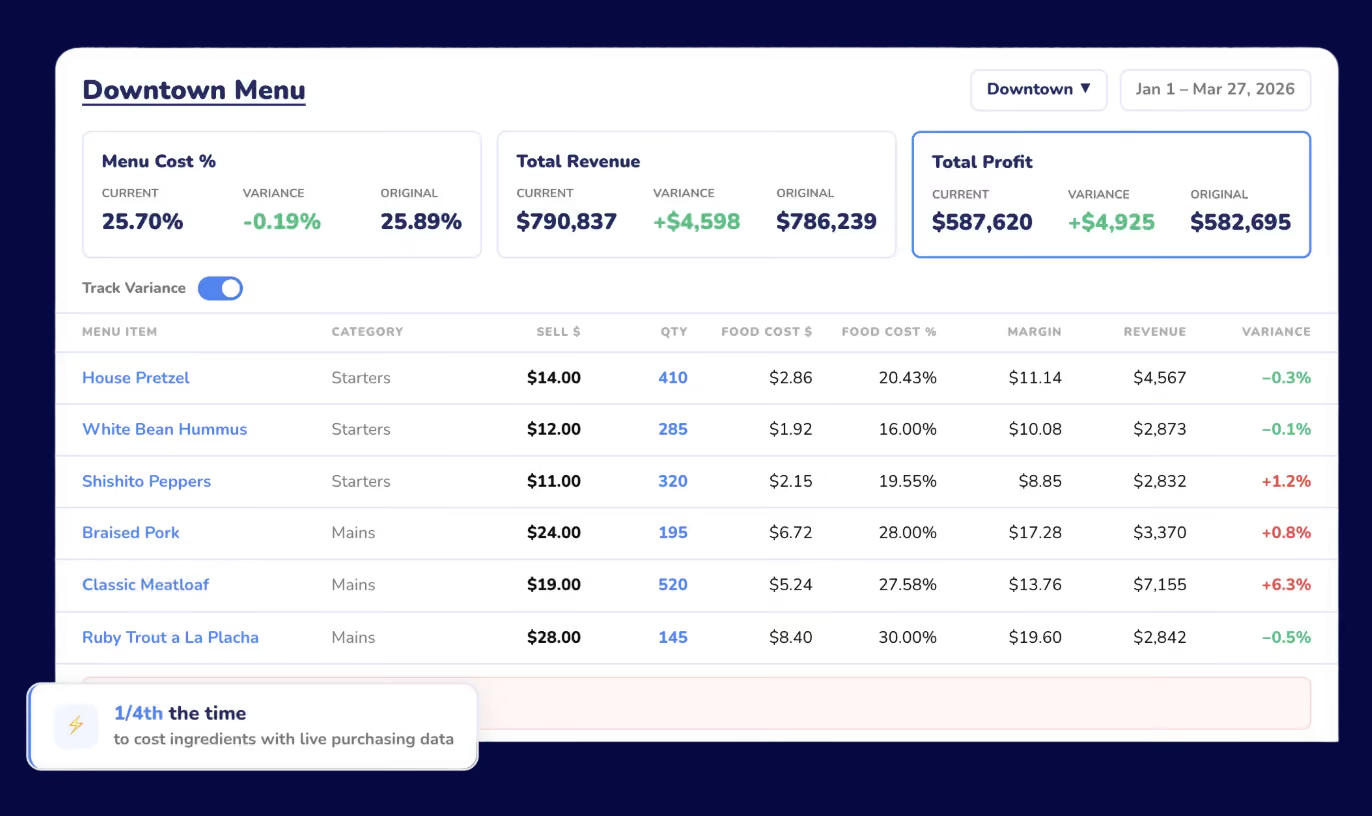
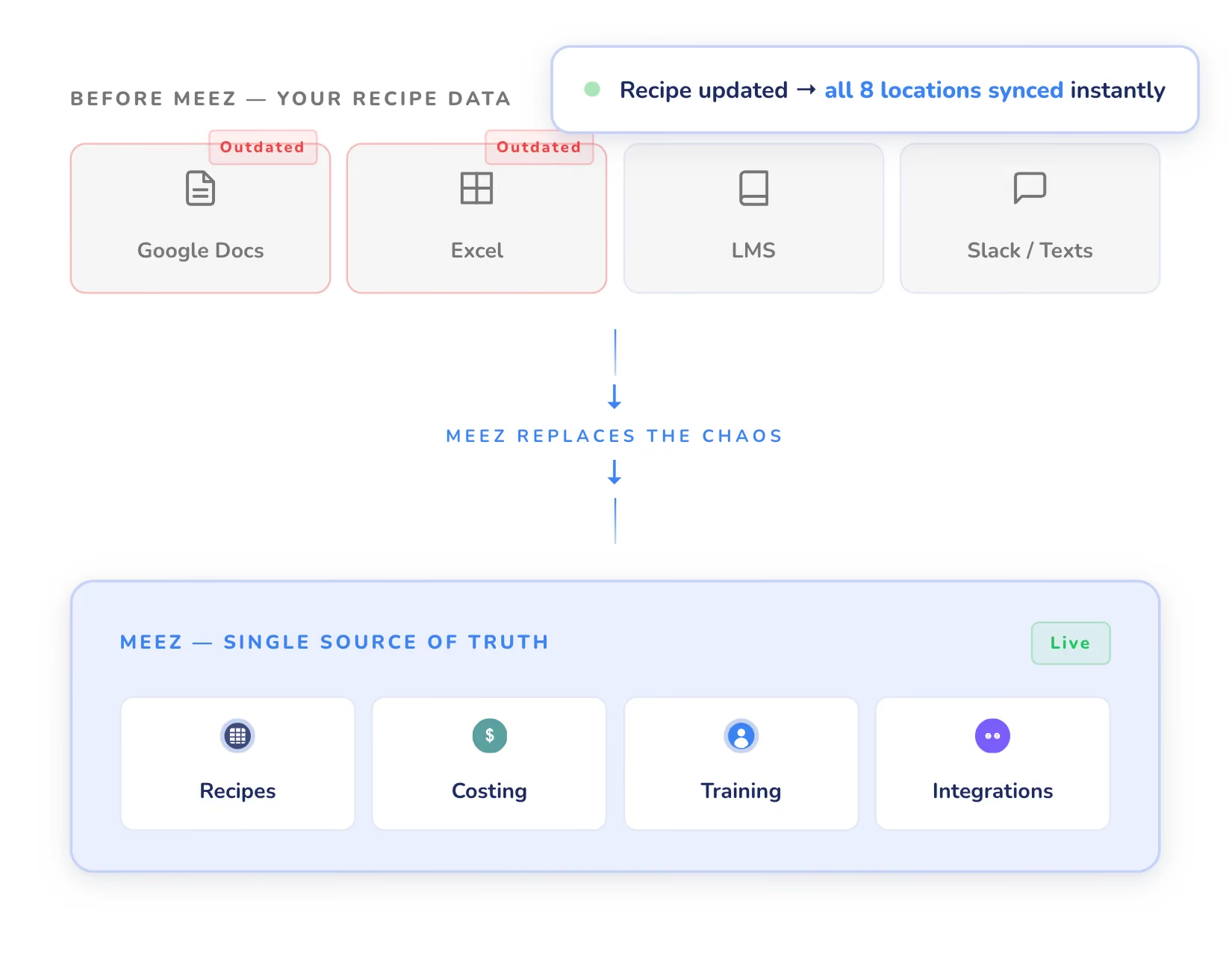
It is also the practical connection to meez. When POS sales data is connected to live recipe costs, a question like “Should we sell a $5 beer?” stops being a forty-minute philosophical argument and becomes a check of the pour cost, the item's contribution margin, the menu mix, and what guests buy alongside it.
The software does not decide what your restaurant should charge. It gives your team the numbers to make that decision on purpose.
The Window for Guessing on Menu Pricing Is Getting Smaller
Benjamin is not especially sentimental about where the industry is heading.
“Listen, I think our whole industry is at a tipping point right now. It doesn't matter where you are doing business.”
Eventually, guests simply say no. Not because they understand your food cost percentage or know what your insurance premium looks like, but because the value equation no longer works for them.
The National Restaurant Association's chief economist framed 2026 in nearly the same terms, saying success this year will hinge on operators' ability to “get the math right.”
That is where Benjamin and Conway turn out to be closer than the argument suggested. Benjamin is right that a $9 beer cannot be judged against its $1 wholesale cost alone. Conway is right that one deliberately inexpensive item can be financially harmless and potentially valuable. Benjamin's own Wednesday steak proves both points.
The question was never whether an item is cheap or expensive. The question is what role that item plays in the economics of the whole menu—and Benjamin has been doing that math on a Wednesday night for eight years.
See how operators model item-level margin before committing to a price with meez for restaurant owners.
The useful question is not whether a $5 beer is too cheap or a $9 beer is too expensive. It is whether the item is doing the job you designed it to do.
Listen to the full episode: Should Every Restaurant Have a $5 Beer? Plus the Industry Tipping Point, ADHD as a Superpower, Frequency Always Wins
FAQ
What is menu contribution margin?
Menu contribution margin is the dollar amount a menu item contributes after its plate cost is subtracted from its selling price. A dish sold for $20 with an $8 plate cost has a $12 contribution margin. Unlike food cost percentage, contribution margin focuses on the actual dollars available to cover overhead and generate profit.
What is the difference between contribution margin and food cost percentage?
Food cost percentage measures cost as a share of selling price, while contribution margin measures the dollars remaining after plate cost. The two metrics can point in different directions. A high-priced item with a relatively poor food cost percentage can still generate more contribution dollars than a cheaper item with an excellent percentage, which is why evaluating restaurant menu profitability on percentage alone can be misleading.
What is a loss leader in a restaurant?
A loss leader is an item intentionally priced at or below its normal margin to attract guests who then purchase more profitable items. Keith Benjamin's Wednesday steak frites is a clear example: he says he makes no money on the steak itself, but the promotion fills seats and creates opportunities to sell wine, appetizers, and cocktails.
How do you know whether a loss leader is working?
Do not evaluate the promoted item in isolation. Measure the attach rate, menu mix, and contribution margin of everything purchased alongside it. A loss leader works when the incremental contribution from the rest of the check exceeds the margin sacrificed on the promoted item. Without item-level sales and cost data, there is no reliable way to distinguish a traffic driver from an item that is simply losing money.
Should every restaurant have a $5 beer?
Not necessarily. The decision depends on what the beer contributes and what additional purchases it drives. Technomic reports that discounted alcoholic drinks influence restaurant choice for nearly two-thirds of consumers, but whether the strategy works for a particular operation depends on its menu mix, margins, and guest behavior.
How does menu engineering account for intentionally low-margin items?
Menu engineering evaluates items on both profitability and popularity, grouping them into Stars, Plowhorses, Puzzles, and Dogs. A deliberate loss leader typically functions as a Plowhorse: popular but low margin, retained because it drives traffic or supports profitability elsewhere. The important distinction is whether that low margin is intentional and measured. meez covers the full framework in its guide to menu engineering.
Why does cost of goods sold not determine menu price?
COGS is only one expense a menu has to support. Labor, rent, insurance, entertainment, utilities, and debt service vary dramatically between restaurants. Two operators can pay the same wholesale price for a beer and still need very different selling prices for their businesses to work.
How often should restaurants review menu prices?
Most operators revisit pricing around seasonal menu changes, typically two to four times a year, with smaller adjustments as ingredient costs move. Promotional items need closer attention because their margins shift whenever the underlying ingredient cost changes. meez covers the cadence in its guide to menu development.


Liz Van Hoose is the Marketing Director at meez, the recipe operating system helping multi-unit restaurant and foodservice teams standardize recipes, manage costs, train teams, and run more profitable kitchens. She has 12+ years of experience building and leading growth marketing programs for startups and growing companies, with expertise across demand generation, positioning, lifecycle, paid media, content, and SEO.