Matthew Conway wanted beef tallow to work.
He had good reason. Whole Foods put beef tallow at the top of its 2026 trend list, Steak 'n Shake converted every fryer in the chain and Outback has been piloting it in Florida. Industry reporting put sales of foods containing beef tallow at roughly $1.1 billion for the 52 weeks ending March 2026, up 275 percent from three years earlier.
Conway also knew what food fried in animal fat could taste like. When he developed Taquitoria, his taquito concept, he drew inspiration from La Posta in Hillcrest, San Diego, a restaurant that fried exclusively in animal fat. He remembered the flavor, but he also remembered the less romantic details: the smell outside the building and the smoke-stained walls.
Still, he wanted to test it in his own operation. Then his fryers gave him an answer.
"A busy service with a day of tallow is the same buildup and gunk as four days in vegetable oil."
That observation, which Conway shared on The meez Podcast with Josh Sharkey and Michael Jacober, gets closer to the real challenge of recipe development than most conversations about food trends do.
Whether tallow tastes better is not the only question. Neither is whether guests are interested in it. A restaurant has to understand what happens to cost, labor, equipment, recipes, training, and consistency once the idea meets an actual Saturday night.
For Conway, the numbers did not work. That is not a failure to follow a trend. It is exactly what good recipe development is supposed to reveal.
A Trend Can Be Real and Still Be Wrong for Your Kitchen
The renewed interest in beef tallow is measurable. Beyond Whole Foods naming it a major 2026 trend, brands including Utz and Conagra now promote tallow-cooked products directly on their packaging. Animal fats have returned to a conversation they largely disappeared from decades ago.
Jacober does not really see that as a revolution. He sees it as a return.
McDonald's fried in beef tallow until 1990 before moving to vegetable oil. The reason for this shift? Vegetable oils became dramatically cheaper to produce at scale and easier to source. Conway also noted the role agricultural subsidies played in keeping those prices low.
Consumer interest also barely existed five years ago. But a trend can only tell an operator what guests might be curious about. It cannot tell them whether the economics or execution will work in their kitchen.
"We really wanted to do that at Taquitoria and we just couldn't, because of the logistics. Cost, cleanliness, all of those things just made it, it wasn't worth it. Even though we knew it would taste better in the end, sadly."
That last sentence matters. Conway was not arguing that vegetable oil tasted better. He preferred the tallow. He had a restaurant model he admired, a clear point of differentiation, and a product he believed would improve the food. He still said no.
That is recipe development doing its job. The mistake is not deciding against the trend. The mistake is adopting it before testing what the change does to the rest of the operation.
The Ingredient Price Is Only the Beginning
Start with the obvious number: purchase price.
Wholesale beef tallow runs roughly $1.50 per pound, compared with about $0.60 to $0.70 per pound for canola or soybean oil, according to fryer-oil supplier analysis. That is already a 50 to 100 percent premium before the kitchen changes anything else.
But fry oil is not really a fixed cost per case. It is a cost per unit of usable oil life.
Modern Restaurant Management has reported that daily filtration can extend usable fryer oil life to roughly seven days, with about a five-day peak-quality window. Without regular filtration, that lifespan can fall to two or three days.
If a different fat degrades faster in your operation, the cost premium compounds. You are not only paying more per pound; you are also buying it more often. Then labor enters the equation. More buildup can mean more filtration, more fryer breakdowns, and more cleaning, all of which add skilled work to a kitchen that may already be tight on labor.
Equipment can enter the equation too. Conway raised ventilation as a possible consideration, while carefully acknowledging that he was reasoning from his own experience rather than citing a technical specification.
Why Operators Can Get Opposite Answers
The story gets more complicated because other operators report very different results. At the National Restaurant Association Show, a research chef from South Chicago Packing said operators switching to rendered fats have cited longer fry life and resulting cost savings.
That directly contradicts Conway's experience, but it does not necessarily mean either side is wrong. Oil degradation depends on what you are frying, temperature, filtration discipline, volume, equipment, and the physical setup of the kitchen.
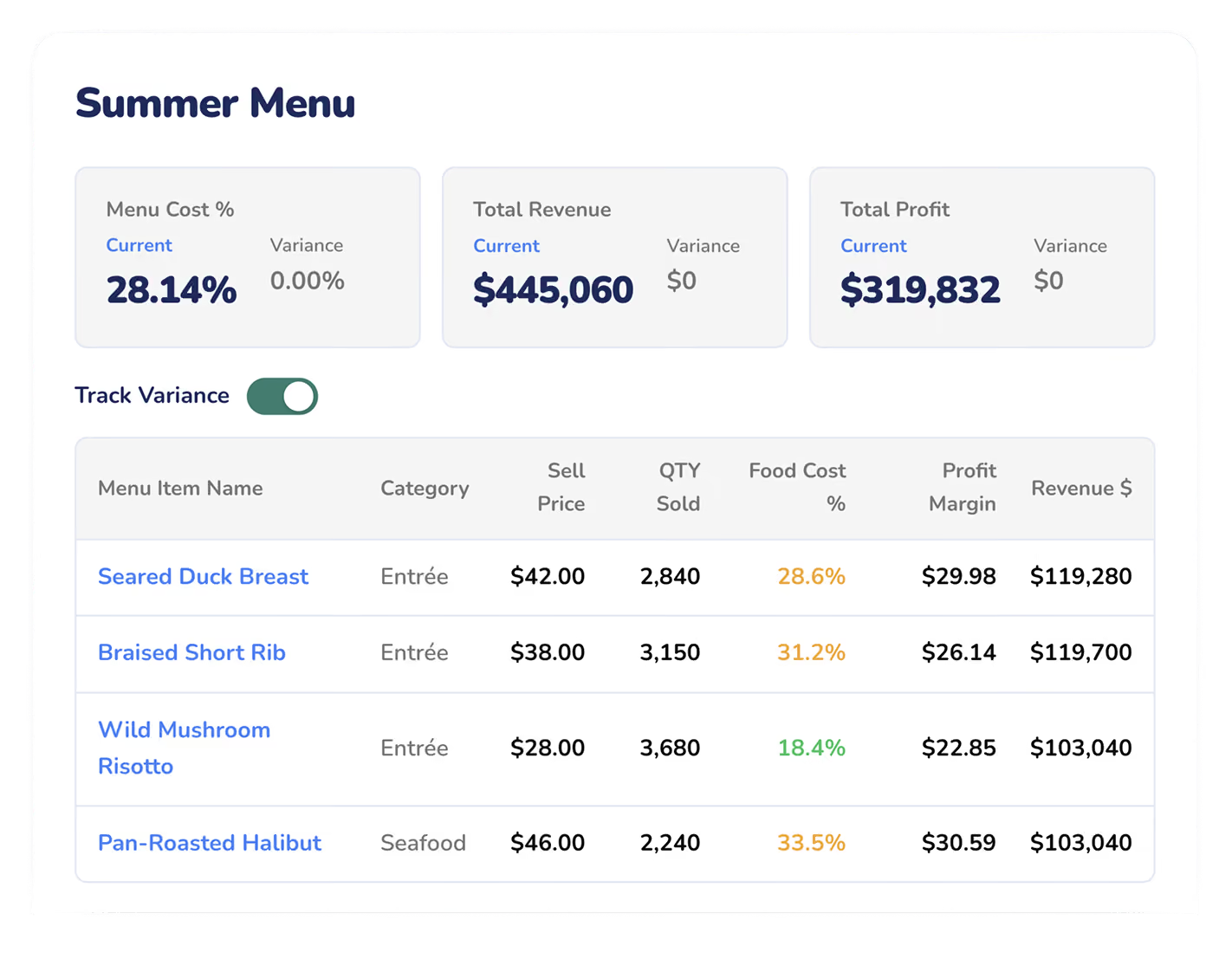
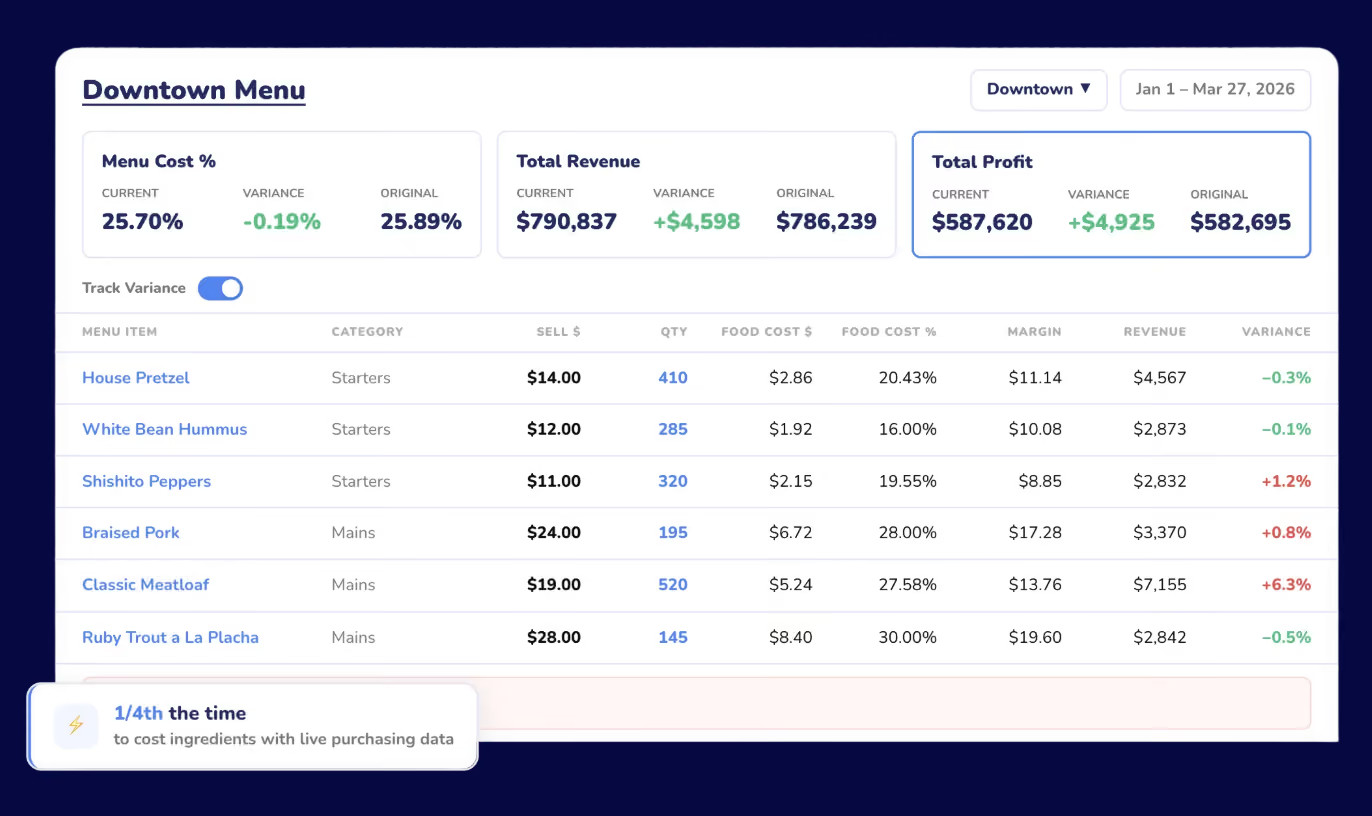
That leads to the only useful conclusion: you have to test it. Modeling an ingredient substitution before it goes live and costing it against sub-recipe structure are what separate a controlled pilot from a costly surprise. A live food costing system also makes it easier to see how the change affects plate cost as ingredient prices move.
Nobody can tell you exactly what tallow will cost your restaurant. They can only tell you what it cost theirs.
"On a Commercial Level" Is the Part That Matters
On a commercial level., beef tallow is simply harder to work with.
Cooking with tallow at home is largely about flavor, preference, and perhaps dietary considerations. Putting it into a fry station that has to survive a Saturday night is an operational commitment. The restaurant version has to answer three questions at once:
- Culinary: Is the finished food better?
- Operational: Can the kitchen execute it reliably at volume?
- Financial: Does the resulting margin still work?
An ingredient can pass the first test and fail the other two. That is exactly what happened to Conway, and it is a useful framework for almost any new menu development decision, whether the ingredient is tallow, a new protein, an alternative flour, or whatever shows up on next year's trend list.
The best ingredient is not necessarily the one that tastes best in a test. It is the one that still works when the restaurant is full.
Changing Fry Oil Means Changing Every Recipe It Touches
Switching cooking oil sounds like a purchasing decision, but it is not. It is a recipe change.
If one fryer supports twenty dishes, changing its cooking medium can change twenty dishes at once. At minimum, four areas need to be reconsidered:
- Cost. Every fried item's plate cost changes immediately. Because recipes use different quantities and have different selling prices, contribution margins will not all move by the same amount.
- Cook specifications. Temperature is a major driver of oil degradation, with the typical recommended frying window around 350 to 375 degrees Fahrenheit. A new fat may require different operating standards, cook times, or cues for quality.
- Dietary attributes. Beef tallow is not vegetarian. Every dish cooked in it needs its dietary information updated, and shared-fryer policies have to be clear.
- Cleaning and maintenance. Filtration cadence, fryer breakdown schedules, and discard standards may all change.
That last category is particularly easy to underestimate. A cook who has spent years reading the behavior of vegetable oil has learned a set of visual and sensory cues. Change the fat, and some of those cues may change with it.
If the new standard exists only in the chef's head, the system works until the chef takes a day off. That makes an ingredient switch a training and documentation event rather than a procurement event. Strong kitchen training turns the new recipe, cook standard, and maintenance expectations into something every cook can actually follow.
The change is not complete when purchasing orders the new product. It is complete when every affected recipe has been updated and everyone executing those recipes understands the new standard.
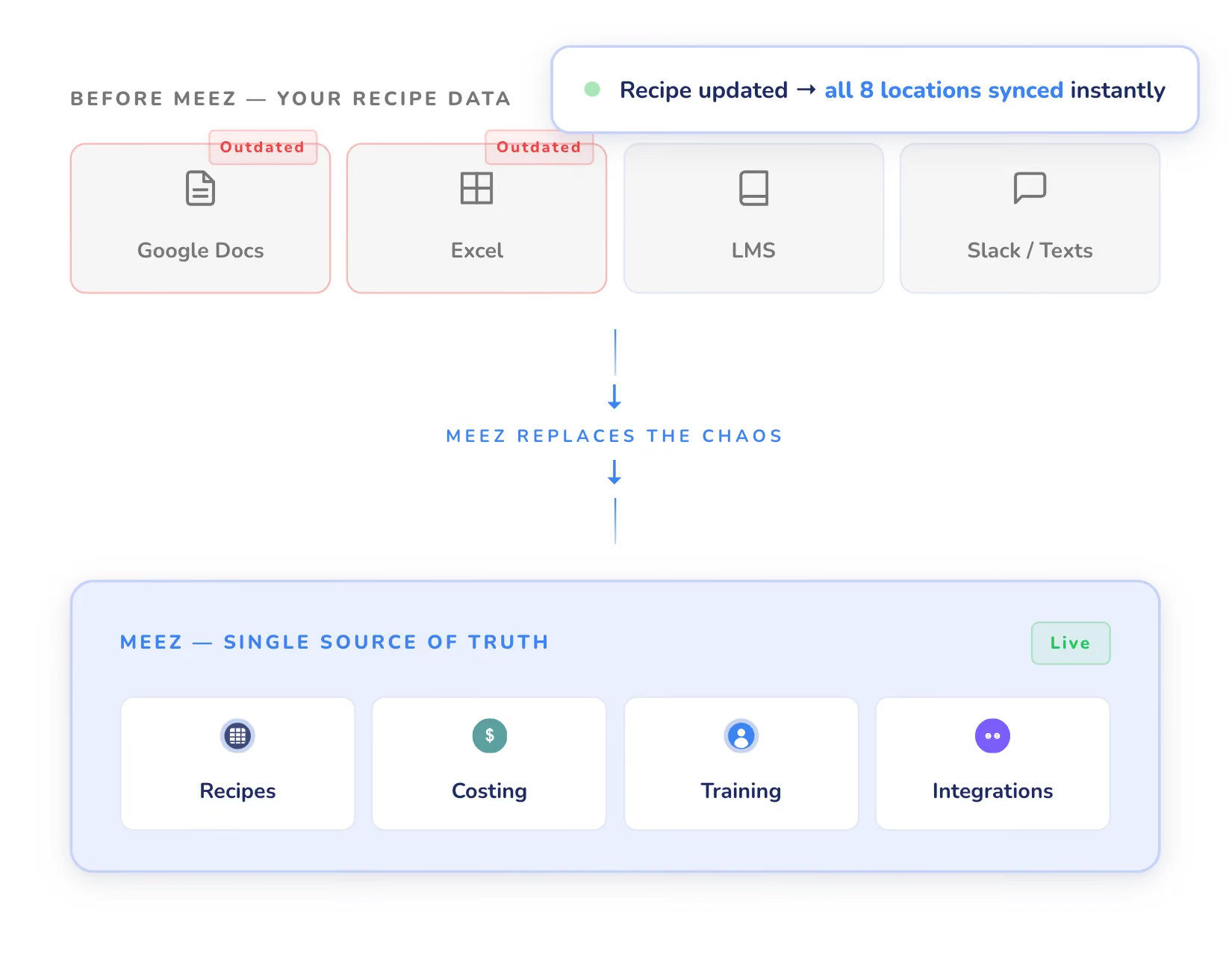
That is the argument for keeping recipes in one connected system rather than scattered PDFs and spreadsheets. A centralized recipe management system like meez gives culinary teams one place to update the ingredient, recipe specification, cost, and training standard instead of managing each downstream change separately.
At Multiple Locations, Variance Becomes the Bigger Risk
A single restaurant can test tallow in one fryer, taste the result, watch how the oil behaves, and adjust. A sixty-location restaurant group has a different problem: even a perfectly documented SOP does not guarantee consistent execution.
A useful example comes from 1788 Chicken, a 60-unit Zaxby's franchisee. The company had written standards for filtering and changing fryer oil, yet its vice president of operations told Modern Restaurant Management that it remained difficult to know whether those standards were actually being followed beyond what managers could see and smell.
The stakes were immediate. When the oil quality slipped, the chicken fingers stopped tasting like their chicken fingers. That is with conventional fry oil.
Now introduce a new fat with different maintenance requirements across sixty kitchens. The ingredient has not necessarily become riskier. The variance has.
A change that works beautifully in the test kitchen can produce different results if some locations follow the filtration schedule, some use the old temperature, and others do not understand when the fat should be discarded.
A Better Rollout Sequence for Multi-Unit Recipe Changes
For multi-unit groups, recipe standardization matters as much as the initial R&D. A deliberate rollout sequence helps turn a successful test into a repeatable operating standard:
- Test the change in one kitchen.
- Measure what actually changes: cost, oil life, labor, temperature, cleaning, and finished quality.
- Update the recipes and SOPs from what you observed, not what you expected.
- Roll out the documented standard across locations.
- Verify that execution matches the test.
The challenge is not getting sixty restaurants to buy the same ingredient. It is getting sixty kitchens to use it the way the recipe was developed. That is where recipe scaling and conversion controls and multi-unit operations systems become part of recipe development rather than separate concerns.
Conway's Most Useful Answer Was "I'm Not Sure"
At one point, while discussing ventilation and smoke, Conway interrupted his own argument.
"I'm not 100 percent sure on that, but I believe that to be true."
It is a small moment, but an important one. Published smoke points put beef tallow in roughly the same range as refined vegetable oils, suggesting Conway's experience may have had more to do with degradation, residue, equipment, or the specific food moving through his fryers than a difference visible on a specification sheet.
That uncertainty is useful because his kitchen is not your kitchen. His hood is not your hood. His filtration routine is not your filtration routine. His volume is not your volume.
Maybe the flavor improvement is worth the additional cost in your operation. Or maybe a longer fry life offsets the higher purchase price.
The point is not to arrive at the same conclusion Conway did. It is to arrive at your own conclusion with evidence.
Only a controlled test can do that, and only documented results turn that test into something the rest of the organization can use. The same principle applies beyond fry oil: whether you are changing a supplier, portion, process, or prep method, accurate ingredient yields and current menu engineering data help teams understand what the change actually does to cost and margin.
See how operations teams can model ingredient changes across affected recipes before committing to a rollout with meez for operations leaders.
Listen to the full episode: Who really is "The Man"? Plus tallow replacing seed oils, and slinging premade pancakes
FAQ
What is recipe development in a restaurant?
Recipe development is the process of moving a dish or ingredient change from an idea into repeatable restaurant execution. It includes testing, yield measurement, costing, standardization, and rollout. A strong development process evaluates three things at once: whether the food is better, whether the kitchen can execute it consistently, and whether the economics work.
How should restaurants evaluate a menu trend before adopting it?
Test the trend against your own operation rather than relying on what worked elsewhere. Model the ingredient change across every affected recipe, then pilot it in one kitchen and measure labor, equipment, maintenance, quality, and cost. Document any changes to cook specifications, dietary attributes, and cleaning procedures before rollout.
Is beef tallow more expensive than vegetable oil for restaurants?
On purchase price, yes. Wholesale beef tallow runs around $1.50 per pound, compared with roughly $0.60 to $0.70 per pound for canola or soybean oil. Total operating cost is less clear-cut because usable fry life varies by equipment, food, temperature, and filtration practices. Reports from suppliers and operators differ considerably.
What changes when a restaurant switches cooking fats?
At least four things can change: the plate cost of every affected dish, potentially the cook time and temperature, dietary attributes because animal fat is not vegetarian, and fryer maintenance procedures. Those changes belong in documented recipes and SOPs rather than being passed verbally from cook to cook.
How often should ingredient yields be retested?
Retest whenever you change ingredients, suppliers, or preparation methods, or when food cost moves without an obvious explanation. High-cost ingredients also benefit from periodic retesting because supplier quality and trimming practices can change over time. meez covers the method in its guide to ingredient yield.
How long does restaurant fryer oil last?
Modern Restaurant Management has reported that daily filtration can extend usable fryer oil life to roughly seven days, with a shorter peak-quality window of about five days. Without regular filtration, usable life can fall to roughly two to three days. Frying temperature is a major factor in degradation, with the recommended range generally cited around 350 to 375 degrees Fahrenheit.
Should restaurants pilot recipe changes before rolling them out?
Yes, particularly for multi-unit groups. A single-kitchen pilot exposes consequences that do not appear in a spreadsheet, including cleaning time, equipment strain, oil life, labor, and effects on other dishes using the same station. Those findings can then be built into recipes and SOPs before the change reaches every location. For more on testing and production changes, see the recipe scaling and conversion guide.
Are seed oils bad for you?
The nutritional evidence is contested, and this article does not attempt to resolve that debate. Sharkey explicitly said he does not believe seed oils deserve the reputation they have acquired. Operationally, however, guest interest in cooking fats has become meaningful enough that restaurants may need to account for it when developing menus. Anyone evaluating the health implications personally should consult a qualified health professional.


Liz Van Hoose is the Marketing Director at meez, the recipe operating system helping multi-unit restaurant and foodservice teams standardize recipes, manage costs, train teams, and run more profitable kitchens. She has 12+ years of experience building and leading growth marketing programs for startups and growing companies, with expertise across demand generation, positioning, lifecycle, paid media, content, and SEO.