Notes, stories, and conversations about food, hospitality, technology, and turning ideas into action.
Knowledge is power (for your AI)
September 10, 2026
Happy Thursday.
Here's an AI analogy for you restaurant folk out there :)
AI feels a lot to me like owning a restaurant and hiring the ten greatest chefs in the world to build your menu. Except those chefs have zero context into your operation.
They don't know the size of your kitchen. Team size and skill levels. Ingredients you already use that could be cross-utilized. Your customer demographic and pricing bands. Assuming you've already been open a while, all the things you have learned over the years serving those customers that worked or didn't, and why. Your equipment stack. Your core values. Competition nearby. Your beverage program. Your style preferences. The list goes on.
There are hundreds of these little details that matter. And without knowing them, even the most talented, intelligent, and skilled resources at your disposal will produce subpar results.
In addition to context, they need guardrails: how decisions should be made, when to push back, when to question biases, and when to take things precisely as you've instructed.
This, to me, is the power and risk of AI in a nutshell. And data is the bedrock of what unlocks all the paradigm-shifting potential we hear about.
I've spent the last nine months building a personal brain that ingests all of my disparate personal and professional data. Every conversation and text message. Apple notes. Therapy sessions. All my health data and sleep data. Personal goals, a personal CRM, family info. Everything I've emailed or Slacked over the past couple of decades. Diary entries, blog posts, podcast transcripts. Company info, goals, design guides, fonts, product preferences. Again, the list goes on. Plus agents that sweep the data for duplicates and facts that used to be true, and log every action they take so when the brain is wrong I can see where it got the wrong idea.
The brain is structured into a database that allows for semantic query, a fancy way of saying a way smarter search engine for your data. Plus agents that log actions and sweep the data to make sure it's accurate and up to date, and that the agents get smarter over time accessing the data. It's connected to an MCP that I now use, working in any platform, whether that's Claude or OpenAI or other applications that allow for MCPs.
It means things that used to take me weeks take hours. Things that would take months take days, and are better than I could have done on my own. I believe this is the future of AI for everyone.
Now, how does this relate to meez?
Restaurants now have access to much better software, whether that be back office/finance, POS, and of course LLMs. I get messages weekly from operators who are building their own bespoke systems that work specifically for their operation and look and feel the way they want.
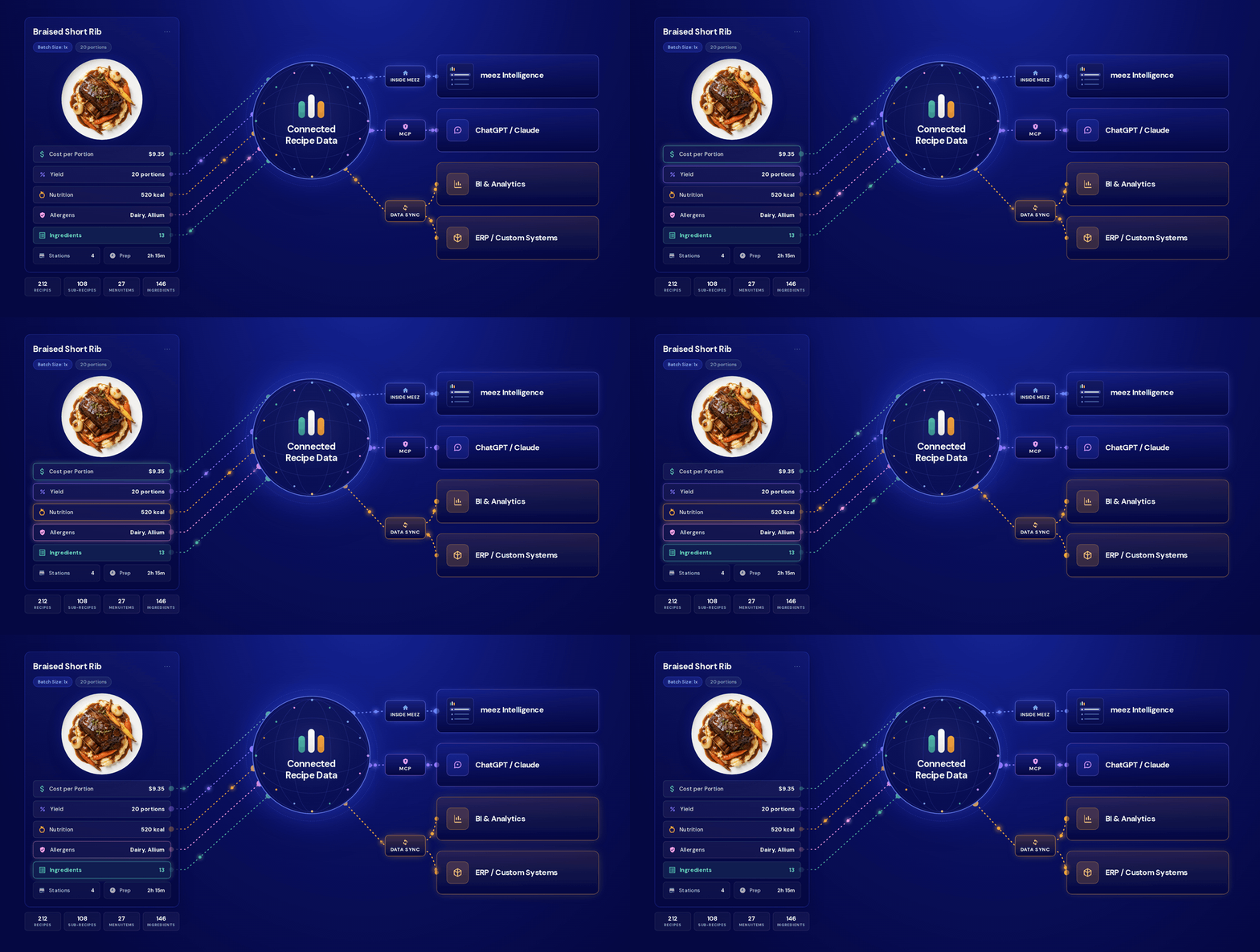
One of the most difficult corpuses of data to acquire for any food business is accurate menu item margins, and the recipe and ingredient data underneath it. And even in the small percentage of time recipes do load into those finance systems, they're an extrapolation, not the full recipe used for production. Because it requires an enormous amount of manual work repeated for each business to capture yields, unit conversions, allergens, nutrition, stations, the tools used, etc. Which means the majority of the powerful software now accessible to them, or the tools they build themselves, cannot provide the full picture to help make decisions.
Without that menu data, you are flying blind. The decisions you can make are limited.
Unless, of course, you have meez. (Yes, another shameless plug:)
This is why we launched meez Intelligence. And just as importantly, why we launched the meez MCP. Whether we help visualize this data for you the way that you need to make the right decisions, or you want to take matters into your own hands and leverage an MCP to build what you need with that data, we want to be there for you.
The best time to get started is now. Reply to the email or see below to find a time with my team.
Janello on Red Sauce Joints, Chicken Parm, and What Makes Them Last
We recorded this one upstairs at Da Nico on Mulberry Street. Jason Anello was the CMO at the restaurant group where I ran culinary and operations. We've been friends ever since, and he's spent the last few years building the Red Sauce Map, eating his way through basically every Italian American joint in the country.
He came in with rankings. I made him defend them all.
Janello is a very proud and quintessential Italian American. He's also pretty obsessed with red sauce Italian restaurants. He has been building a Red Sauce Map for years, which means he has eaten more chicken parm than any human should. So I asked him to rank them. To be fair, we did this interview AT Da Nico in NYC, but he was very clear that it's one of his favorites no matter what.
#5 Da Nico (NY) #4 Sodini's (SF) #3 JR & Son (Brooklyn) #2 Bamonte's (Brooklyn) #1 Camille's (RI)
I don't think I have enough reps in the red sauce circuit to have too much more of an opinion. However, we did spend some time reminiscing about some of the spots that have closed, namely Frost in Brooklyn and Queen (in Brooklyn as well), two of my favorites. And there is no denying that Angie Rito and Scott Tacinelli are definitely up there with Don Angie and San Sabino. I am 100% sure we are missing some other great ones here.
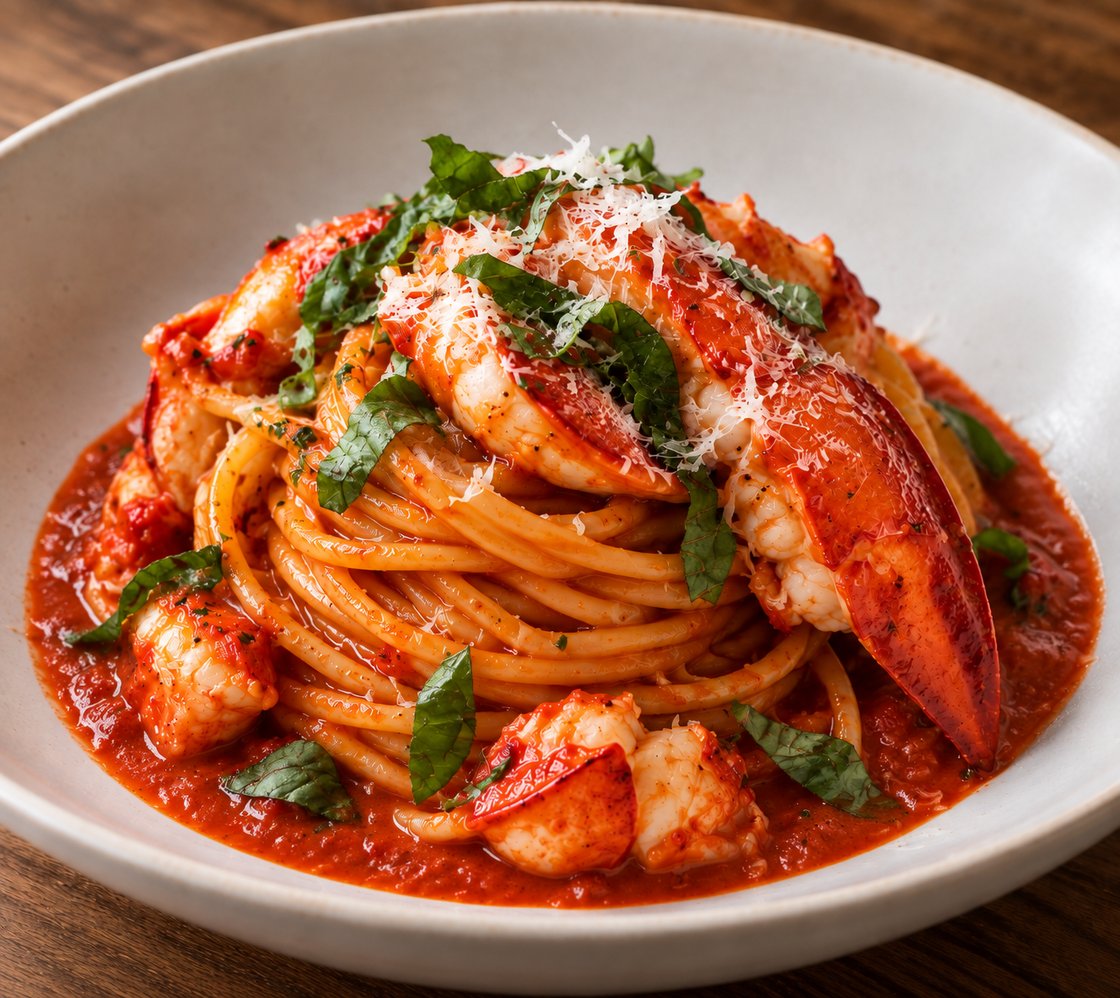
This is one of my wife's favorite ways to eat lobster, so I make it often. Also a very classic Red Sauce Joint staple. This recipe leads you to make a lobster broth, reduced and added to the tomato-based sauce. The extra work and using fresh lobsters is definitely worth the effort. That said, you could totally skip it and use pre-shucked lobster meat (Luke's Lobster has some great stuff from Whole Foods) and simply fold that into the tomato sauce.
Technically, you can also swap shrimp shells for the lobster shells to make the broth. About 6 to 10 shrimp shells per lobster body used. If you're up for that. But again, not necessary.