

Pinhook's Sean Josephs on Bourbon and Building Brands
This week, at a glance:
- Hot Take: 8 Takeaways from Sean Josephs
- Watch: Sean Josephs: The Sommelier who turned to Bourbon.
- Cook: Pinhook Bourbon Bloody Mary
🎙️ 8 Takeaways from The meez Podcast w/ Sean Josephs
1. Don’t ignore the proof of the whiskey in your cocktail recipes:
Historically, American whiskey was a higher proof than it is today. We were discussing the Boulevardier, a cocktail Sean and I share a love for (it was one of two cocktails at my wedding, though we added blood orange juice, partly so nobody got too hammered, but also because it's delicious). I asked Sean if he had thoughts on the ratio. It’s basically a Negroni with Bourbon instead of Gin, so I’ve always assumed 1:1:1. I was surprised, then not surprised when realizing it made total sense, that his answer was, ‘it depends on the proof’. Given that many Rye and Bourbon are closer to 80 proof these days rather than the 100-120 proof that likely existed when the drink was created, Sean opts for 2:1:1. The proof of a whiskey is adjusted with water. So in this case you're diluting the whiskey with Campari and Vermouth and ice. That dilution ratio changes when the proof is lower. I’m just annoyed that I didn't know this before.
2. A hack for adjusting the proof of your whiskey (and why it matters):
Sean shared a cool cheat code for adjusting the proof of your whiskey at home (assuming, of course, you have something that measures mL). Take 100ml of any spirit, and every 1ml of water you add drops it one proof point. Take a 140 proof pour down to 120 and taste them side by side. Different aromas are soluble at different proofs, so you're not diluting the whiskey; you're changing which parts of it you can smell. 👉 Clip here
3. Are all food and beverages objectively on a spectrum of good to not good? (no matter taste preferences):
Sean is a sommelier and has a great palate for food as well as beverages. He shared that connoisseurship is the ability to identify quality irrespective of preference. The example he uses is peated scotch. "You might need to taste six peated scotches and be able to say, ' This is an insanely well-made whiskey of high complexity and structure and depth and length of finish.' And I literally couldn't drink it, and it's an amazing whiskey." He blends against six benchmarks, none of which are flavor notes: complexity of aroma, complexity of flavor, harmony and balance across the palate, integration of alcohol, texture and mouthfeel, length of finish.
Are personal taste and whether something's actually well executed simply two different tests? Is mixing them up how you end up with a boring wine list or even overall menu? This takeaway is more of a thought starter, and I don’t want to presume to be definitive about this. In my opinion, I lean towards yes. And with cooking as well. Meaning food has to be executed well to be good. Cooked to the right temp, served at the right temp. Seasoned with the appropriate amount of salt (and the right amount of heat, acidity, sweetness, bitterness, and umami when applicable). With the right texture, consistency, and finish. These are all obviously spectrums in terms of it still being ‘the right amount ’; e.g., some things can be super spicy and still be executed well; other times, it’s objectively too much heat, and the balance of the other flavors is lost completely. So even if there are flavors or textures you don’t like in food, do you think objectively every single dish can be considered objectively ‘good’ irrespective of individual taste?
4. When a market saturates, and the biggest players take the majority of the market share, a way to win is finding a smaller audience and getting deeply personalized and connected:
Bourbon barrels aging in Kentucky went from 5 million in 2012 (a 30-year high at the time) to 16 million today. And Private Equity invested heavily along the way to consolidate brands. Sean says there were 4 craft distilleries in 2008 when he opened Char No. 4. It peaked at around 3,000 and dropped to ~ 2,280 today. Many of the big houses (eg Sazerac, Suntory Global, Brown-Forman, Heaven Hill, etc.) started buying up a lot of these distilleries. Others had a hard time making it and shut down. Instead of trying to out-market a flooded category, Sean's answer was Old Joseph's: "What if I find a thousand people who all are really into what I'm doing?" Subscription only, two bottles a year, spring and fall, label art by his mother-in-law Nancy. I think this is a brilliant idea. Clearly it’s working; he had immediate demand at launch. Way less risk, and frankly way more fun and rewarding, as he can have a closer connection with every customer. And yes, I’m now a paying member of Old Joseph’s as well. Very excited for my first bottle. Sean said he’s opening it up to more members soon, so I asked him for a link I can share (see below). And congrats to Sean on an awesome write-up recently on the project. I think especially as AI is making it easier and faster to communicate with an enormous number of people at once, this approach is going to happen more and more.
5. Scaling a brand requires consistency, but standardization often follows:
Most of those conglomerates I mentioned above target a very specific proof of their Bourbon, proofing down to ~80 to 86 proof. It's then chill-filtered: dropped to zero degrees so the lipids coagulate, then run through a filter so it never goes cloudy on a shelf or in a cocktail. Apparently this cloudiness is called whiskey snot. It's cosmetic, but you're pulling flavor and texture out with it. The point is, at massive scale, these Bourbons are completely standardized. There is zero margin for variance.
They are very precise with the proof and the structural outcome. The benefit is that every one of the millions of bottles is identical. The downside is that a lot of the character and charm is lost. Every barrel is a little different. Every vintage is different. You can create consistency in how you produce a product without standardizing and losing that natural variance that makes it unique. I’m not bashing standardization. Sometimes it works out great, and sometimes there is absolutely no way around it (think McDonald's). When you scale, you MUST create consistency in your brand. Standardizing, and to what degree you do that, is up to you.
6. Almost counter to #3, use your own judgment: if you like a bottle, it will save you a lot of money:
Sean remembers when Char No. 4 could get all the Pappy Van Winkle it wanted, and nobody cared. It is essentially the same wheated mash bill as a Weller 12, made by the same people at Buffalo Trace, and the bar was pouring Weller 12 at about $5 an ounce. Even wilder: a certain Kentucky Bourbon vintage 23-year rye, which he was buying at $58 wholesale, now goes for $10k 🤯. There are new bottles popping up often. More dollars don’t always equate to exceptionally better quality. I imagine scarcity and demand play the biggest role.
7. Sometimes we just put too much stuff on a plate. Great restaurateurs become great editors:
A buddy of mine, Matt Greco, was the opening chef at Char. He’s incredibly talented. He made these smoked and fried pork nuggets that were incredible. Sort of like fried head cheese, with a house-made hot sauce. Matt originally served them in a bowl, with micro cilantro, a scattering of peanuts, and drizzled sauce. Sean immediately asked to swap to a plate, kill the greens and the nuts, and just serve them piled up with a side of the sauce. They were one of the best sellers on the menu. Still Matt’s dish, still bonkers good. And way more aligned with the concept of a Bourbon bistro.
Sean shared a similar story at his next Bourbon spot called Maysville with another great chef, Kyle Knall. I’ll spare the details, but needless to say, a few sauce swooshes and a more elaborate interactive presentation were removed, involving some killer corn muffins and some crispy grits with ham. Drew Nieporent says that restaurateurs are the director of a cast. I think you can add editor to their JD as well.
8. It’s never too late to start something you might love:
Sean didn’t even start in the restaurant business until he was 30 years old. Less than 5 years later, he opened his first restaurant, Char No. 4. 3 years later, he co-founded a Bourbon company. He knew almost nothing about Bourbon a decade earlier and, in a short time, became the master blender. I think this idea is more important than ever today. Especially with the access to information we all have and the overwhelming capabilities of AI. It can seem like you’re already behind. You’re not. Just get started. Who knows, a decade from now you might be teaching others what to build with AI or launching your next Bourbon brand.
👉 Check out Old Josephs Membership
👉 Watch the Full Episode
Recipe:
Pinhook Bourbon Bloody Mary
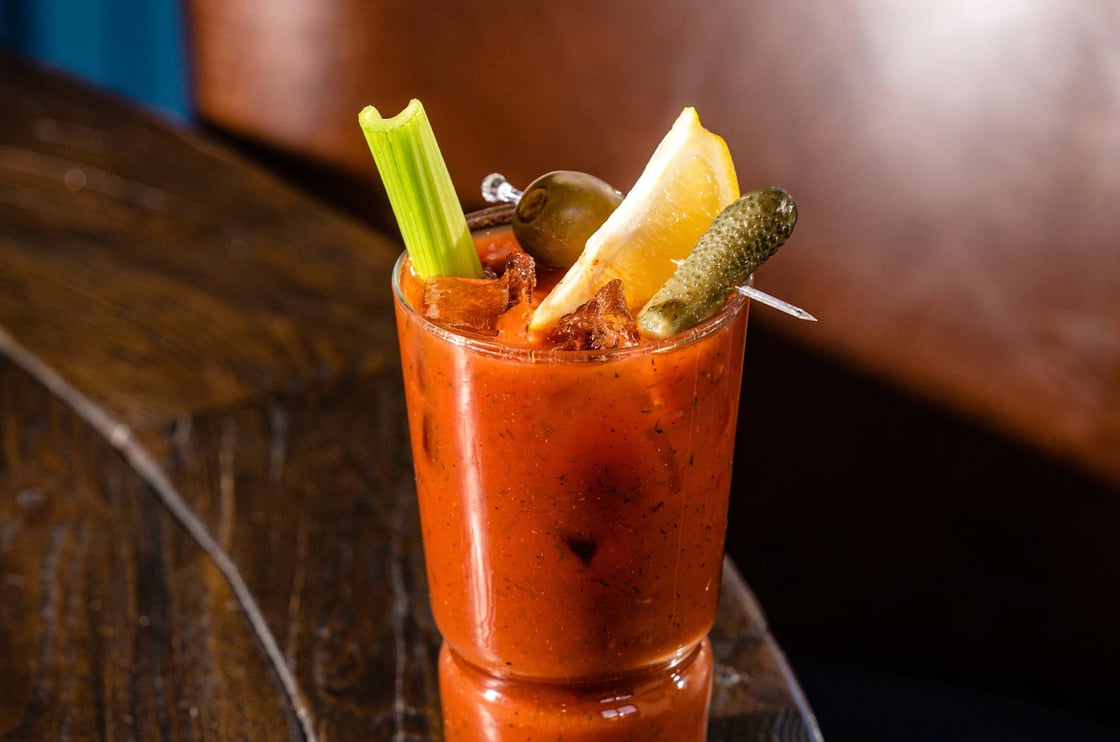
I've never been a huge vodka fan. The only time it gets used in my house is when I'm making Rigatoni with vodka sauce or sometimes in a tempura batter. So I love this version of Bloody Mary made with Bourbon. It's a recipe from Sean. There is some celery pureed into the mix, and the chipotle Tabasco works really well with the Bourbon. It's a batched cocktail, but of course you can scale it down in meez.
📆 See what's new with meez
The new recipe approval workflow is live. meez Intelligence is underway. The MCP is coming out of Beta. Automated server / menu build cards created from recipes coming very soon.
👉 Find some time with our team here to learn more, or just reply to this email
💬 Want to Be a Guest on The meez Podcast?
If you’re building at scale, or wrestling with hard zero-to-one problems worth talking about, I’d love to hear from you.
Apply to be a guest or nominate someone we should talk to.


meez is the recipe software that helps chefs create, organize, and execute profitable recipes with precision.


