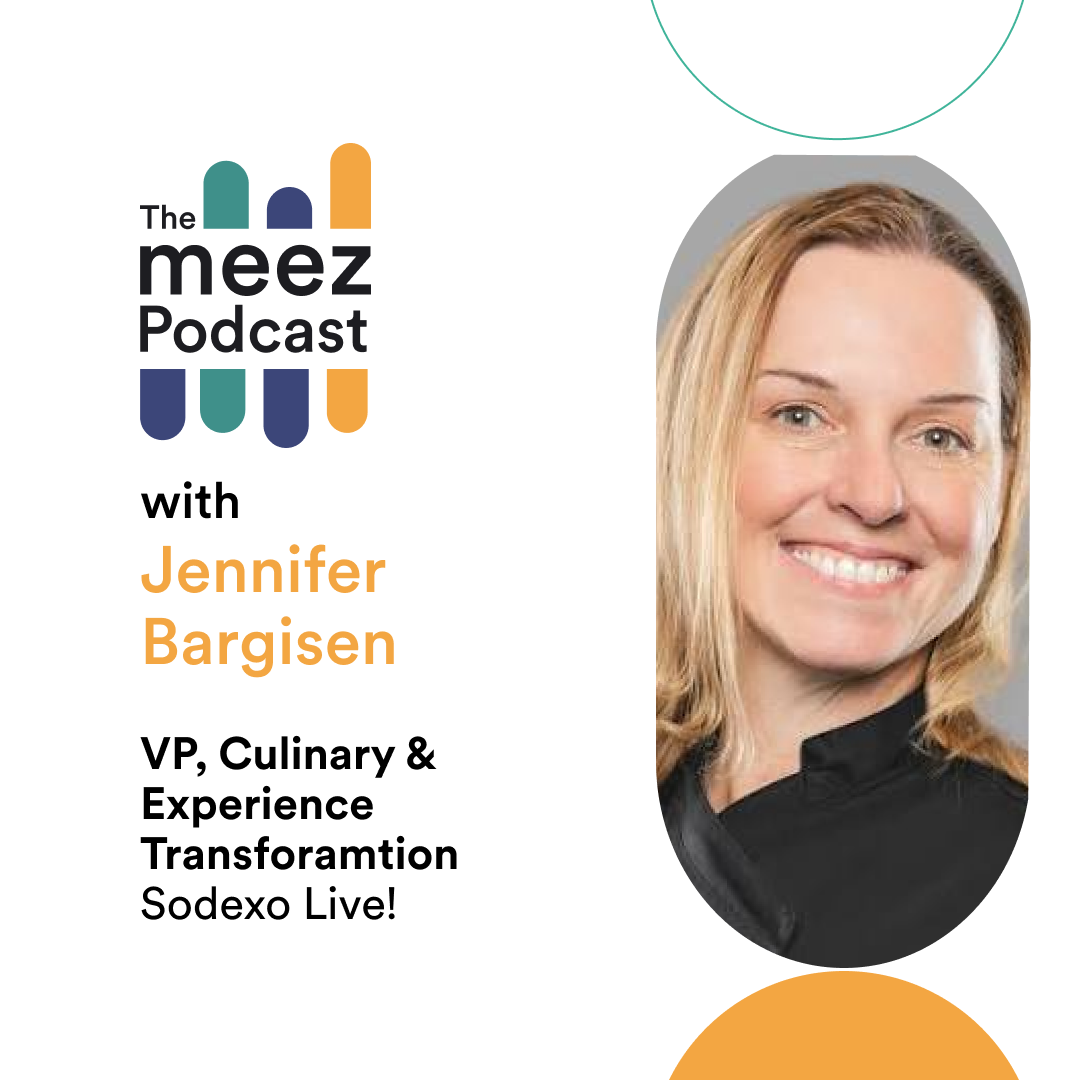
Jennifer Bargisen
Yeah, it it is. And it's it's funny you say that. You may not think about it, but I of course think about it all the time. It's in those spaces. And what could be better? you know, just like we all do in in our industry. Th there are there is definitely commonality between restaurants and contract food service in that we're all always trying to be better. We're all trying to be great at hospitality, we're all trying to be great at, you know, food, beverage offerings. But yes, they are largely contract based. They are only contract based, obviously. but we have any number of clients. It can be a city, it can be a team, it could be an individual. We did have an amphitheater that it was
Jennifer Bargisen (04:33)
i private owners that wanted some food service there. So we run the gamut of who our clients are. but then we also are guest facing in in our service.
Josh Sharkey
Yeah, speaking of like not thinking about it, now I'm now I'm actually thinking about the zoo and I'm like, yeah, how did they get all that food to the Asian area of the zoo? That's what by the way, that's just what it was called. It was like called Middle Asia, you know, where the pandas are and all that jazz. Like there's all these concessions. Like, where does that food come from? You know, like when you're at a stadium and you're eating a burger or something, like where where the hell does all this food come from? And how do you actually produce it at this enormous scale? Which we'll we'll we'll talk about. But like first, you so your background is you went to Emory and then Georgia Tech. You're now getting another degree from University of Denver, which I want to ask you about as well. But you went to CIA and and worked at a a a bunch of places around the world, Bermuda, right? Upstate New York. The Scottsdale, Vegas, which we had some really awesome stories about Vegas. So like what is like what is the path that gets somebody to become the VP of culinary for this massively scaled organization? Like how how did you get here and why?
Jennifer Bargisen
Well, when I was a little kid, I said I just really wanted. no, I I originally started in food. I I wanted to be a lawyer. I think I kind of every chef really wanted to be a lawyer one day. But when I was going to school to be an attorney in political science and Latin and all the things that you do to do that, I was actually cooking the whole time. And I was in some fine dining places. I was in a pizza place. I all those types of things.
Josh Sharkey
This is in in Atlanta.
Jennifer Bargisen
In Atlanta. And I kind of got to this crossroads when I said, Well, now it's time to go work on my J D or keep cooking or doing something else real in life. And I really came to a point and I said, I could either do ninety hours a week working in a law firm or I could do ninety hours a week doing what we do. And it was I I knew I was going to make more money as a chef, definitely at that point. So I took that route. No. from there. I mean from an hourly perspective, it might end up like long term it's very possible.
Josh Sharkey
Don't realize how many hours lawyers work. It's an insane amount.
Jennifer Bargisen
And well that was exactly what it did it for me. Not fun.
Jennifer Bargisen (06:56)
Well, and I also said I I and part of the reason I think I ended up largely in the point of the business I did is I didn't want everything to be the same every day.
Josh Sharkey
Yeah.
Jennifer Bargisen
You know? So obviously in restaurants, every day you're trying to drive that consistency and and excellence and and that part of it. It's a little more challenging in our world to stay at consistent and excellent at hospitality, food, but at the same time do it in scale, do it in all the these unusual places and logistics. And that honestly is what drew me to this point of the business. I didn't know any different. My first restaurant was I worked at Buckhead Life Restaurant Group and restaurant I I I don't think it's still there, but one three West. Anybody out there who knows Atlanta. and I didn't know any different that you weren't supposed to have five hundred covers a night do doing, you know, Dover Soul All of A Nude. I told you things of that nature. I that's what I thought you did in restaurants. So for me, the scale was kind of almost always just part of it and and from there I I just grew larger and larger. I went through hotels and rest resorts, casinos.
Josh Sharkey
So it's so hard to produce this much food at scale. Like we're we're going through these kitchens now. We're so we're on this sort of journey to learn more about how your world works and how you produce all this food, you know, all at once. Especially these live events and how do you do it on time in all the different disparate rooms and suites and clubs and concessions all at once. That's all so fucking hard. But it seems like you actually also I seem silly to sen say because we're all on culinary, but you really care about the culinary, you know, piece of this and quality and things like that. Which do you have to index towards more? Like making it food as delicious as possible or like getting it out, you know, efficiently and obviously cost effective is the is is obvious, but
Jennifer Bargisen
it's a good question. I think it's a balance, obviously, but for me and at my core, it's absolutely about the quality. It's absolutely about doing it at excellence. And you know, there's a lot to balance in that, obviously, right? I think we were talking a little bit about dissecting recipes to the point of going, what do I do on what day? And what how do I follow all of those steps to that degree that, you know, often you don't have to do in a restaurant setting because you, you know, you're clear this is going to service tonight. You know how many units you're probably going to do tonight or how many dishes you're going to do like that tonight. But I definitely work everything that I do.
Jennifer Bargisen (09:19)
try to index towards that quality, if that makes sense. I mean, I think it's largely some of the conversations we've been having going, how can we really support chefs in driving quality? Not not through consistency, but using tools like me's to get to the quality point versus just focusing on the volume. If it it's easy to get lost in the volume, right?
Josh Sharkey
Yeah. I mean it it's really easy to because anybody that's been on a station and then you're in the weeds and you're just trying Doing whatever you can to get the food out, you know is that that's it's just hard enough to dislike the food out at a restaurant, let alone thousands of thousands at once. So it seems like you you kind of gravitated towards live events, which by the way, I didn't even put two and two together if like Sedexo Live means that you focus on live, like in real time. Does it mean that by the way?
Jennifer Bargisen
It does.
Josh Sharkey
Okay. actually that makes sense. It's live events. So why live events? What what is it about that that drew you to like to doing this?
Jennifer Bargisen
Well, it's obviously where the most fun is. Right. I would say I naturally kind of gravitated towards in in hotels and resorts. I was with Fairmont for a lot of years and then overseas with them and then Las Vegas, MGM. And I think Las Vegas is really what turned it up for me that we do everything live there. I people have asked me before about working there and what that was like and I always say it was probably one of the best experiences I had because your competitors are directly across the street from you every single day, right? And sometimes even in your own company. And you are fighting to make your experience, your hospitality, your food, your beverage better than, you know, something that is directly across from from you and and in the volume that that is there, right? we don't accept something not doing well for very long until we're like, hey, they're doing it even better over there. So the experience part of it To me, it's I don't know, I even strive on that in in the back of the house solutions. Like I I don't feel like so me's again, I but part of the reason why I've gravitated even towards that solution is it's a great experience for our team members, right? It doesn't feel like it's this big friction point to use it. I I I just really tick on the idea that human human live experiences and I and I believe in technology now. This
Jennifer Bargisen (11:41)
I think it's coming back full soon
Josh Sharkey
as You're an engineer now. You're you're you're building all your own things.
Jennifer Bargisen
I mean, I'm I'm playing at it just like everybody else.
Josh Sharkey
You know, seems like it's working. But so okay, here's what would be really helpful.
Jennifer Bargisen
Sure.
Josh Sharkey
Because I I'm pretty sure if I didn't know this, that most people didn't I think a lot of people don't know this. Take this for what it was. Can you just talk us through like what is a typical operation? Like, you know, like we we go to a You you work for the Indianapolis Colts, Indianapolis Colts.
Jennifer Bargisen
No.
Josh Sharkey
that's a football team. But I'm not.
Jennifer Bargisen
Yes.
Josh Sharkey
Okay.
Jennifer Bargisen
They they play football.
Josh Sharkey
Gotcha. that's when they score the goals right now. So like you you go to a football game, you go to a baseball game, you go to a basketball game, and there's food there. Sometimes the food's really good. Sometimes it's just, you know, whatever it may be, but you you never think about like, I wonder how this is done. Can you just talk us through like whether it's a stadium or a massive university or a concession? Like what What is that operation like and how is it different from the restaurant?
Jennifer Bargisen
Obviously, there's a ton of logistics involved. If you are not somebody that enjoys kind of building puzzles from the corners in, it may not be the right place for for somebody.
Josh Sharkey
It's funny you say it's Yeah. It's actually it feels like a logistics business.
Jennifer Bargisen
It is largely logistics.
Josh Sharkey
Wrapped in culinary.
Jennifer Bargisen
It's very funny you say that. I've I've lately been wondering a lot how we could apply a lot of the best best practices from logistics entities into a a lot of what we do. But yeah, it it is that. So it it starts all the way from obviously you know now we we have BEOs and and a customer banquet event order. sometimes restaurant event orders and restaurants. but largely somebody plays an places an order with us somehow, whether it's in a stadium it you might see them in concession stands. You come up just as a customer. but also in premium spaces or luxury spaces like that, we would have an order that starts there. And the first thing we do is start saying, This is from a chef end. Obviously, there's a lot of planning that goes into it prior to that. What what do you want your event to feel like and how should it be special? Like obviously, even in a stadium, so something like Indianapolis Colts, they're gonna feel very different during, say, a Taylor Swift concert than they are during football games.
Josh Sharkey
Right.
Jennifer Bargisen (14:04)
And so there's a lot of planning that goes into that. And and truly, I would say everybody I know in in this business are thinking every inch of that of how is this going to feel? How are how is a guest going experience this? And, you know, how could we make it different? And and, you know, maybe it's a different smell, a different sound, a different yeah, all those things go into every inch of that planning. And often it's a year and a half two years out that those conversations start.
Josh Sharkey
yeah, 'cause those concerts are not happening like a week a week ahead of time. They're they're really planned out. So like when you have Taylor Swift concert or a Jay Z concert. Are you is is there is there food Taylor like you actually like thinking about a menu that's tailored to that?
Jennifer Bargisen
You didn't see the glitter cups during the Aeros Tour and you didn't see you know what?
Josh Sharkey
I have unfortunately seen the Aeros Tour on the movie version at home because my kids love it, like six times and I don't think I've spent paid enough attention to actually notice anything.
Jennifer Bargisen
Yep.
Josh Sharkey
I'm not the hugest Taylor Swift fan. You know, for what is I I I think by the way I think Lady Gaga is incredible. I think acoustically she is a brilliant.
Jennifer Bargisen
Yeah.
Josh Sharkey
Billy Eilish too. I feel it Taylor Swift is not my
Jennifer Bargisen
Okay, but but you see that there? That's the experience. You see how you're looking at that and you're saying, think of how I hear her acoustics when I'm there. Think of it. And I guarantee, and I'll tell you exactly why I got in the business. I said the part of the business I wanted to be at are at the part where the moments make a difference to people from the very beginning. If you ask me why I did this, it was think of your wedding. Think of this time this thing happened to you. Think of what you ate while you were there, or what you, you know, how how it smelled or how you experienced it, all those things. And I wanted to be the person making those things happen for people and f and making people feel that way. And so it's the same planning goes into this.
Josh Sharkey
What's an example of that? What's what is there a time when you when you just remember one of those events? You're like, man, this was so cool.
Jennifer Bargisen
Had so many of them.
Josh Sharkey
Other than Taylor Swift.
Jennifer Bargisen
I you know what, to this day. I'm a little biased, but to this day, Formula One still blows my socks off. Like why is that? First of all, the experience. I mean, just right. It's it's one of those things that just d to be a part of it is unbelievable. But on top of it, the creativity that goes into the planning and the attention to detail, it's not about the planning, obviously. The planning is there to support how that guest moment is going to be at the end, but bringing everything from you know, general admission guests.
Josh Sharkey (16:31)
Right.
Jennifer Bargisen
That are just there to have an amazing race. Have you have you gotten a chance to go to any of them? We do the one down in Miami often and s or every year. And you know, you have a whole area where there's like a day club going, whole DJ area, and all of the food is tailored to exactly that.
Josh Sharkey
Really?
Jennifer Bargisen
Yeah.
Josh Sharkey
it's awesome.
Jennifer Bargisen
Right. And the cars are coming around in a full turn there. But then we have suites, we have different premium areas.
Josh Sharkey
Yeah, I guess I'm I'm thinking now of like the US Open.
Jennifer Bargisen
Yeah, very similar. But but see the difference in those? See how when you're there and how it feels and you know, it it now when we get to tailor things to those events, it's unbelievable. It's unbelievable.
Josh Sharkey
Speaking of that, you were a big part of the Olympics in in Paris, right? Like what what was that like?
Jennifer Bargisen
It was big. And that's saying a lot.
Josh Sharkey
40,000 meals a day or something like that.
Jennifer Bargisen
It was absolutely that much. Well, it kind of c cascades up as, you know, as more athletes come on. it was probably one of the most unique challenges of my career. in that, you know, you have people there for a very specific purpose, right? They're not necessarily always coming in to have that experience, but they are there to have the experience of a lifetime, right? They've worked their whole life to be there. but but having to put menu planning together and and support that with the the teams in France for people from all around the world, all in one event, every single meal period, right? Think think of think of what that takes to to make everybody really happy.
Josh Sharkey
Build kitchens for that?
Jennifer Bargisen
there was a whole whole custom kitchens were built into the facility. It was it was actually the building and I'm not gonna do it justice, but it was a prior movie studio. Right. So it was already built all you know, like a very, very large sound stage. And it we built separate restaurants in there. There were for for the teams.
Josh Sharkey
That's wild. How long was that for?
Jennifer Bargisen
about two weeks were were the actual service there actually three. Three and then the Paralympics coming after that.
Josh Sharkey
Yeah. This show is brought to you by, you guessed it, Mize. Mize helps thousands of restaurants and food service businesses all over the world build profitable menus and scale their business successfully. If you're looking to organize your recipe IP and train your team to put out a consistent product every day in less time than ever before, then Mize is just for you. And you can transform all those old Google Docs and Word docs and PDFs and spreadsheets and
Josh Sharkey (18:56)
Google Sheets into dynamic actionable recipes and Miis in lightning speed. Plus, stop all that manual work of processing invoices, cause Mis will digitize all your purchases automatically. And there's a built-in database of ingredient yields, prep yields, and unit of measure conversions for every ingredient, which means you're gonna get laser accurate food costs in a fraction of the time. Visit www.getmeze.com. That's G-E-T-M-E-E-Z.com to learn more. And check out the show notes moving forward because We're gonna be adding promotions and discount codes so that all of you lovely and brilliant Me's podcast listeners get a sweet deal on Meese. So whether it's the Olympics or the Super Bowl or any sporting event or a you know bi a big venue, because you've done done all of those, it it feels like you you you have to come up with a menu for that event or that arena, and then you're sort of breaking that menu down into lots of different areas, lots of different rooms, lots of different teams over the course of one, you know, very short, you know, time frame. Is is that the hardest part? Is it condensing, okay, I have to make all this food and then I have to break it out into like suites and clubs and private areas and and general areas and you know ad hoc things and in betweens. Is that like the hardest part of it?
Jennifer Bargisen
Yeah. Probably is because as you know, most chefs don't naturally come to you know, a creative space and an artisan space and a craft space thinking, how can I map and chart and graph, you know, a an entire web of orchestration, right? It it's not necessarily the natural lean to for a lot of culinarians, but at the same time, I think there's a lot of systems in place to help support that and and there's a lot of longevity. in most of these roles where the chefs it does take a long time though, I I will say, to ramp up to really knowing it. It's not something you come into. And I've I've seen a lot of people come from different points of the industry and they think, two weeks I learn every any job. You throw me in anywhere in two weeks. And and it's like it's probably gonna be three to six months.
Josh Sharkey
That's one of the first things I that's what I was saying to your team in there is that, you know, like they're they're explaining all these things to me. And y you were too by the way. And you're like, yeah, well this part's obvious, right? No, not at all. None of what you just
Josh Sharkey (21:18)
showed me was obvious and I don't understand most of it and I need to really like it would take a long time to figure it out. There's so many systems and codes and, you know, and and tags and colors and different areas and and all for good reason, it it seems. I mean some things I think you have to you've sort of created a a bunch of layers of things because of maybe a lack of technology that can be fixed, but some of it is just there's just so much to learn that yeah, I feel like whereas I think about in a restaurant, yeah, you could get somebody trained up and couple weeks, it feels like it would take quite a while to get somebody really up to speed on how to do this at scale.
Jennifer Bargisen
Yeah, I would say there's definitely a moat there.
Josh Sharkey
Yeah.
Jennifer Bargisen
Around it it's a pretty high barrier to entry in some in some cases, you know, training wise. But we we do it in in bite sized pieces and we do it in parallel. You you largely learn cold kitchen first and then You know, hot production, things like that, pastry. And we we move through people through very similarly like you would on a restaurant line. I will say, in my opinion, cold kitchen is probably the most challenging out of all the operations, even though often you know i people think about the hot kitchen being the hardest.
Josh Sharkey
I would think you like that's the most stuff that you can do ahead and things like that.
Jennifer Bargisen
There's almost no event that goes on that doesn't touch the cold kitchen. Right. So if you think about it, every single breakfast is gonna have elements there, every single lunch. Break, you know, dessert, all all of those elements where the hot kitchen often will only have a lunch or a dinner. So that that's a lot of it. But at the same time, all of your condiments, all of your dressings, all of your right there if you actually think about a normal meal you have, there's many more things touching cold or ambient temperature items than a hot would.
Josh Sharkey
Yeah. It's it's also just wild the scale. I was talking to your Garmer chef today and he's like talking about lettuce, r romaine and and getting romaine in, make when they get the best romaine and upset when he doesn't get the best romaine. And he he's t he told me he's like, you know, we're spending forty thousand dollars a day. I think he said a day.
Jennifer Bargisen
It's possible.
Josh Sharkey
And I'm like, Man, that's insane. That's like what a restaurant spends in a month.
Jennifer Bargisen
Yeah. It would definitely depend on how big of a group was in house, right?
Josh Sharkey
But there's just the the scale is just insane. But w so what is your day to day like? I'm sure it's changed a lot, but
Jennifer Bargisen (23:39)
Well, even when I was at the Colts or in kitchens daily, it changed a lot every single day, right? We sometimes it would be ten thousand people, sometimes it would be no people, sometimes you know, tasting for just ten people. but now I primarily work on the solutions for the organization, around hospitality and food and beverage. So taking all the learnings and experience I have and applying them in ways to help the organization be more consistent. And drive excellence that way.
Josh Sharkey
How much of that is on better systems versus like finding better technology versus just finding better, you know, ways to do things or better infrastructure? Like is there is it sort of the world's your oyster? You just whatever you think you can improve, you imp you're improving?
Jennifer Bargisen
I do. I I largely am in that space, but at the same time I I align with where do we think our strategy is and Where do we want to? Maybe we know we either have a problem statement we want to solve or some direction we want to take the business. And I help drive and and kind of build our differentiation that way. But I'm not gonna lie, it's a lot of fun. There's a lot of the world as my oyster.
Josh Sharkey
What's what are of the most fun things?
Jennifer Bargisen
I love being able to take what I know about the the business. And, you know, like you've said, there's a lot there. It's a big bucket of a lot of moving parts. and think. what could be, right? Versus what is today and what could be. So some of the things I get excited about, most people don't. one of the large projects I've done in the last little while is around packaging, which doesn't seem that sexy, but when you start to get involved in it and you go, you know, you know how this really changes a customer's journey or or their event, right? Like if you now have this cool custom package that goes with the thing and it tells a story and you can experience it differently, but you can share it with your, you know, family member. that it's not the sexiest, but it actually is a lot of fun and people get really excited about it then when they get to start picking it up and going, What do think? But there's also things like how could we apply robotics in our roos receiving areas and look at our FID, you know, all the way out to guests. So those types of things, getting to kind of think bigger and and say, what could it look like or how could we make the team's day better or easier? I love being able to be there. I l I love being able to apply what what I've learned in all these years and and
Jennifer Bargisen (26:04)
And hopefully d you know, better than I left it.
Josh Sharkey
But I think is so impactful about this is that you're feeding so many people and there's so much scale and th and there's so much revenue behind it, right? That, you know, in in a in a typical restaurant, you know, you're gonna feed fifty, a hundred, two hundred, three hundred people a night, five hundred people a night. And that's your impact, right? And n now again, you could scale that restaurant, you can have lots of restaurants.
Jennifer Bargisen
Yeah.
Josh Sharkey
But on any given day, you know Sedexo, not lots of them, but there's a handful of companies like Sedexo that that it has have such like massive impact serving so much food. And, you know, the impact of change, I imagine, just is h has such an impact on the on on so many people, right? So if you I mean the the simple thing would be if you guys are doing forty five billion in purchases and you can shave one percent off of, you know, by finding some efficiencies, that's a lot of That's a lot of that's a lot of dollars that you're saving that you can do lots of things with. But that's just one thing that's it, can you how do you like making the food five percent better, you know, finding a way to train people five percent faster at that scale is just it's such it's such impact. I I I I imagine that must feel really good.
Jennifer Bargisen
Yeah, i I it does. One of the things I obsess about in that space, because we have such large impact, I feel like we have a huge ability and responsibility around our food consumption and and waste, you know, obviously in these spaces, it's always a topic of conversation. And I really look at a lot of the solutions we do and go, how can we improve the idea of food waste? Obviously, is always at the forefront of our minds when we're designing and and when you get to, you know, large volume, it's really a thing. But I think there's some other opportunities where we can go after it. And every time I think about it, I always think about, man, that had to get grown. And harvest it and get all the way to you. So the more I just think about it in a stewardship manner. While it does it's all these other facets, I just think of it in the stewardship process of we have a responsibility to try to
Josh Sharkey
I think that's also one of the really cool things about that much scale is you know, when you're at restaurant and you think of a you think of a great way to use the broccoli stems. You know, you you peel off the outside and y and y you know, there's lots of things to do the inside.
Josh Sharkey (28:28)
A lot of people just throw that away, fine. But when you when you go through 800,000 pounds of broccoli stems, you're like, my God, we just threw out 800,000 pounds of broccoli stems last year. You figure out a way you know, figuring out a way to to to use those is I'm just I don't know why I'm picking out broccoli stems, but there's a lot more inertia to to make this change.
Jennifer Bargisen
Yeah. One of the unique challenges in our space though too is the fact that the menus change every single day. So now what do you do, right? When you're in a restaurant, you can go, okay, let me You know, put something on the menu with that or let me think about that for next season or things of that nature. It i it is a very unique set of challenges in in these i i it's really in custom catering in general, but then when you take it to the scale we are, i it it we really have a a a a huge ability to make an impact there.
Josh Sharkey
Yeah. We didn't do this yet. I think we were we we were starting to talk about it. But can you just explain sort of at a at a at a macro level what what is Sedexo? What what do they do? What are all the things that they do? And of course, Sudexo Live, which is you know what you your company is, is a part of that. But what is what is Sudexo?
Jennifer Bargisen
We are an experienced company. The division I'm in specifically, obviously, and we're a hospitality company worldwide. we are pretty much every single country, and we do have separate divisions that do K through 12 schooling, universities, hospitals. My division is the live. division and we obviously as we've touched on it, we do all live experiences and anything that touches something like that, stadiums, convention centers, right? But we also have airline hospitality lounges in in that. And they are they touch a lot of really cool places all around the world. I think, and I I don't know I'm gonna do this part justice, but we're in almost every single country in the world.
Josh Sharkey
Do you have a sense of like the scale of Sedexo in terms of either Amount of food served per year or revenue per year in in in aggregate of the of the whole company?
Jennifer Bargisen
I don't because of all the different divisions. I know we're about four hundred thousand people worldwide. I can tell you that.
Josh Sharkey
Gotcha. Okay. Yeah, I mean it it's in the billions in terms of it is of of revenue.
Jennifer Bargisen
It is.
Josh Sharkey
Yeah, I mean it's a more more than a small than many small countries, it's it seems like.
Jennifer Bargisen
We are.
Josh Sharkey
I mean that has to be it just has to be d does does it also feel like there's a lot of pressure there too?
Jennifer Bargisen
It it does. I I think it does carry a lot of weight. I
Jennifer Bargisen (30:48)
It's exciting to get to be part of such a large company that we are impacting so many not not only guests and and clients, but team members. You know, that's I I remember sitting with one of our CEOs and talking with her. And we're a family owned company. I don't know if you know it we're publicly traded in the French stock market, but it was started by Pierre Boulogne in in Paris and largely a one generation to to this size and scale. And the responsibility that they felt to the decisions they were making, saying, you know, it's not just four hundred thousand people, it's all of the people that they touch and all of the people in their lives and in their communities and the decisions they're making. And it while it's exciting and it creates such huge possibilities of of where you could maybe work or how you could try a different part of the industry or, you know, learn a new skill or expand and grow at the same time, it it comes with a responsibility. I I feel it.
Josh Sharkey
Yeah. I'm curious what you think. would be like the biggest misconception or what would be the biggest what would surprise chefs from the restaurant world the most about this side of the business. I I think about Dan Juicy who, you left NOMA and now he's, you know, doing incredible work with brigade and schools and he's trying to promulgate this with you know with with school cooking, but it's the same thing here, right? There's there's you know, there is this sort of stigma around you know, like restaurants or s in a in a very specific kind of restaurant. is where, you know, culinary happens, but it doesn't, right? It happens, there's so much is happening here. What do you think chefs would be very surprised by about what happens or how this how this all works?
Jennifer Bargisen
The obvious one is the logistics and the executive skills and all of the other things that go into it. I think n i i often I joke about this. you know, if you're looking for me, I'll be in the tent somewhere cooking, right? And it's often seen like that because we're in all of these remote places. But Our kitchens are largely lights on, lights off operations with their own challenges around that, obviously. We are building infrastructure. There's, you know, I I think of it in spaces like I brought up like Formula One or tennis or things like that, right? Six months ago there was nothing there. Now there is something amazing there, some experience that can only happen on that day, in that moment, with those people, with that food, with all of that. And then the next day it is not there.
Josh Sharkey
And is culinary the ones that have to have to figure out.
Josh Sharkey (33:14)
Okay, how are we gonna set this up?
Jennifer Bargisen
We don't do a lot of the setup, but we are involved in all of those meetings, right? Because we need to know things like often in many of these large events, there's security parameters or there's receiving
Josh Sharkey
what I mean is but like within the within the within the confines of food has to get executed.
Jennifer Bargisen
Yep.
Josh Sharkey
is it just handed to the culinary team and say, Hey, here's here's your space, figure out how to make it work.
Jennifer Bargisen
largely. obviously we have menuing that goes on in collaboration with our clients and you know, all those goals. But yeah, it's it's largely it's handed to us and we have to think through all that.
Josh Sharkey
It's almost like you have to have two jobs. You have to be a logistics expert and, you know, an a a a chef. 'Cause when you see these teams working and they're all like figuring out the stuff, you know, for themselves often, which is a little bit wild. I mean it the r the redundancy is pretty wild, but
Jennifer Bargisen
like that's like where we like to get crazy with the creativity.
Josh Sharkey
I mean, it's yeah, there's the there's it's it's a lot more happening on that side of the of the of the business of this These chefs are just trying to figure out how do I take these thousands of orders that come in and figure out how to time every little piece of what has to happen with every one of those recipes and menu items at scale. And you don't go to culinary school for that.
Jennifer Bargisen
I remember being in one high volume class in in culinary school.
Josh Sharkey
Really? I I don't know if I don't I don't I don't know if I remember
Jennifer Bargisen
I I think even at that point I knew more about the rationale leven than the instructor did.
Josh Sharkey
Yeah. Because it's a it's a totally different ballgame. And by the way, you can there are ways to learn how to do it that are, for better or for worse, shitty. Right. You can just you could put out a ton of food and it could just really suck. You know, you just put it on cambros and let let it be what it is.
Jennifer Bargisen
Yeah.
Josh Sharkey
You know, but to do it well and the stories you were telling me about how you and you 'cause you work with some incredible chefs and you know Cooked for, you know, you know, presidents and you know, and it's it's almost like this, you know, this like secret forces that comes in and figures out how to execute this thing at scale. And even if you're an incredible chef, it's a it's a completely different skill set.
Jennifer Bargisen
Yeah, I think what like when we were talking, and I've had the luck to be able to work with a lot of different restaurant chefs and, you know, some of the big names that we we mentioned, and and it's been pretty awesome.
Jennifer Bargisen (35:39)
when they can come and they say, Hey, I know this amazing part of the industry. And I say, yeah, I know this other part. And we can work to collaborate and bring some of those things to life. And yeah, you can get lost in the logistics sometimes. You can get so hyper focused on is everything where where I wanted it to be at the right time and the right numbers and those things that you can get a little lost in, is it amazing?
Josh Sharkey
Right.
Jennifer Bargisen
It it's really, really easy to do. But the flip side of that, and I always say this that, you know, anything in some amount is great and and too much. is not necessarily great, whether it's ingredients or personality traits or things like that. By breaking it down like that, you actually are able to execute that excellence that we all strive for, right? I mean, there's a reason that every Michelin chef everywhere is extremely thoughtful and purposeful about how they are getting to that service that they are, you know, anticipating. And it's the same attention to detail, but just applied in, you know, logistics often.
Josh Sharkey
It's funny because I I was saying this to you today. One of the and and this is one of my favorite parts of cooking. I I love prep more than like service. any day of the week, which I I think maybe might be be different for us because you're you you the live events thing is obviously so much service, but I love planning an entire day. Like, okay, at seven AM, I'm gonna get in and I'm gonna turn these stoves on, and then at seven eight, I'm gonna start this thing and get this over here.
Jennifer Bargisen
I think you're actually a banquet chef.
Josh Sharkey
And and we you we came here today. And, you know, you already have an en this entire world of things you have to get done and you built an agenda for us and literally it was, you know, like you're planning out, okay, from this time to this time it'll be this and from this time I'm like, that's we clearly have a chef on our hands. And it's just I I think that chefs can do a lot more than than I think than a lot of people probably, you know, give them give them responsibility for. I wanna curve all for one minute because we talked about something that I've been thinking about a lot that I think you've done, but This is completely sidebar from from Sedexo, by the way. Although I don't know, maybe Sedexo does some of it. But we were talking about prepared foods and retail. And like there's a whole new ball game that I think we can do with by the way, this is total, totally random. It's just a I just really want to talk about this. With markets. You know, we have we you go to a supermarket and like sometimes there's some good food there, sometimes there's not. You you're shopping for all your stuff. But like, what if a chef brand
Josh Sharkey (38:05)
Your supermarket. What if like the chef curated the entire thing? So like the butcher shop and the and the bakery and the fish and the prepared foods and every every part of it was run by and curated by a chef and the products that you could buy were part of those. And and it's funny 'cause we were saying er everyone does this pretty, you know, really well. And I think they consider themselves a restaurant actually, more than a a market. But man, there's so much opportunity there. And it sounds like one, you did a bunch of that before. And it's something that you actually might have a little bug for in in the future.
Jennifer Bargisen
Love that space. But see how excited you just got there? Yeah. See the experience that just came up in you when you said, Imagine if this space was like this and what it could be. You're ready to be in our world. I I see it. no, yeah, the retail space gets me super excited. I I think I kind of mentioned to you when I first went into it, I was like, Ooh, I don't why am I a chef and why am I in this space? And I'm not quite sure if it's the right fit and I don't know. I and I kept trying to, I don't know, do things the way we would do them in restaurants and even the way their financials run are very different, right? And and so that was a big learning curve for me. But when I got into it, and you threw me a curveball, so I'll I'll give I'll throw you a little bit of one. You're gonna have to go on a storytelling mission with me, but I'm gonna give a shout out to Rick Hopkins, wherever you may be, out there. he worked with me at Diane Eagle and he was market district is where I was and he was prior Disney, prior Marriott, all all of that. And so you can imagine bringing that level of energy of imagineering into that space. And every day I kept saying, you know, f in the beginning, I was like, Well, I I'm just running a restaurant here or I'm just you know, just trying to make sure the case is full with this the the quiche program that I was telling you I I put together in those sorts of things, right? And he he kept going, Yeah, but We're in the selling business and we're in merchandising and we get people excited about food, all these things. And you know what my biggest fear was in life? Was talking to people because I had been in kitchens so long and I'm like, I didn't show up here to talk to guests every day. That that's not my angle, right? And he would just be crazy and silly, like you can imagine. And and he was a pretty big personality, anyways. And finally one day he shows up at work and he has he says, Today we're gonna get excited about selling one of the most mundane things in the world. And I'm like, What's that? He goes,
Jennifer Bargisen (40:27)
Potatoes. We're in the potato selling business today. And I'm like, you're crazy. We're not doing this. He had gotten potato outfits and forced me. Yes, you can imagine.
Josh Sharkey
Are there pictures of this?
Jennifer Bargisen
I was so uncomfortable. No, but you can probably find people that would attest that to this happening, right? And he pretty much shoves me out front and is and says, you know, we're selling them until all of those are gone and we're gonna be the number one in the company today for potatoes, and you're gonna have done that, right? I I gotta tell you, after that day, I just took so much pleasure. And I think it's a little bit of what I said to you, why I loved it so much.
Josh Sharkey
Yeah.
Jennifer Bargisen
It was the one point of the industry where as a chef, I could be right in front of the guests and right with them and talking to them. And when I made something, they would come in the very next day and tell me how much they loved it or hey, next time could you make it a little more this way? And to have that just ignited a a a part of my desire of why I got in the business in the beginning again, you know?
Josh Sharkey
Yeah.
Jennifer Bargisen
Yeah.
Josh Sharkey
It's funny. Like I think my takeaway from all of this, other than sort of the logistics, that this is a logistics business is yeah, that it's an experience business. And and really I think all of hospitality is gravitating to to experience. Even if it wasn't before it it all is now. So it's just incredible that there's so much there's so much scale of this that you can start to do what you're doing.
Jennifer Bargisen
You get to play. Yeah. I mean, the best part is you can write a new menu every day. You can write that that i while it's a challenge to have a custom different menu every week, like i i it can be seen as a problem statement. But the truth is you don't have to write a menu and then live that life for the next three years, right? You can that didn't work. Now I'm gonna make it even bigger and and better next time.
Josh Sharkey
Yeah. Yeah. Thank you. again.
Jennifer Bargisen
No, thank you.
Josh Sharkey
This was the whole day was amazing. We got the tour around all this kitchens and I I mean getting lost to the hallways of how massive this kitchen space is. But y taking the time to show us and and you know spending the time with us to sort of walk through what will be helpful. I'm just really grateful and and just grateful that you are using me's and giving us feedback and and and I I hope we just keep can keep doing more for you.
Jennifer Bargisen
You know how grateful I am that you're willing to come in and
Jennifer Bargisen (42:41)
think what could be with me and I'm I'm waiting until we can suit you up and you're being foot chef now
Josh Sharkey
so great thank you thanks thanks so much for listening to show if you liked this episode or any other ones you can actually check out more of this at get me's dot com slash josh that's G-E-T double e Z slash J O S H. I have my podcast there. The Meese Podcast plus some other shows and interviews. Starting to write some stories and blog posts, some recipes, recaps, things like that. So I think you'll enjoy it. Again, it's getmeese.com slash josh G-E-T-M double easy dot com slash J-O-S-H. Thank you very much. Very grateful for all of you.