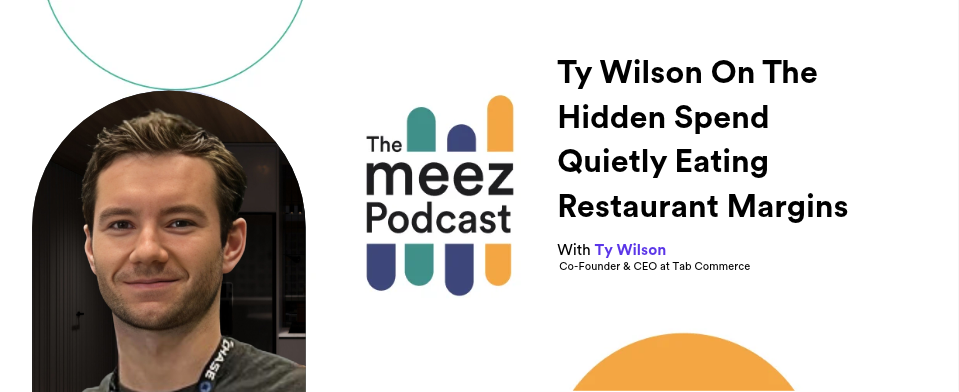
Josh Sharkey (04:09.806)
And I didn't even realize that Tab was Tab Commerce Company was was something different than it is today. What was the original plan? Sorry.
Ty Wilson (04:19.042)
Our our actual like legal name is Square Market Technologies. So we initially thought that we could stand up a digital marketplace for local restaurant vendors and restaurants. And I think it's a good idea on paper, but the idea like if your restaurant you want to source locally, you're gonna go onto this marketplace and find XYZ farm or some brewery or some product. So we started there. We were serving both like distributors, vendors, different brands and restaurants in a marketplace model. And then about a year in, you're like, hey this
marketplace model doesn't really work that well. I think there's versions of also what we did was just said, like, we know restaurants better. We don't know distributors. We don't know the vendors. Let's just focus totally on restaurants. Let's like really go deep on that side. Let's go deep on the financial management side and the back office side. And just like stopping a marketplace and be back office financial management platform for restaurants. There are versions of us sort of on the distributor side that I think several of them started in the same lens. Like let's be a marketplace, it's bringing us supply chain online and no one's been able to crack the marketplace model. So I could
Probably count four or five companies that try to be a marketplace to start and then pivoted to one of the sides. And a lot of them, most of them went to the distributor side and built software for distributors. And we went on the restaurant side. And so maybe eventually that that business model like ends up working. We decided let's just focus on restaurants. That's all we know. Let's make things better. Let's go deep in the back office on the financial side. And then we evolved our way into payments. So it wasn't like we're sort of payment business on day one. It was just like this slow evolution working alongside our customers. We were in Canada. So we our first
Three years we're entirely in Canada, entirely software. And then when we moved into Vangel Services, we moved to the US, moved to Texas, and then launched our initial product.
Josh Sharkey (05:54.86)
I'm so curious because it's so hard to decide to make that big change. So you're in, you're like, h I started this business, this model doesn't work. I'm just gonna go fucking change it. Do you have investors at at that point?
Ty Wilson (06:07.718)
yes, we had we did our we had like an angel nostr and we had two angel nostrils and we had we ran like an accelerator. We had some money.
Josh Sharkey (06:18.102)
And was the like was the conversation, all right, we're scrapping this and starting over. There's no path forward with this. And you just decided to kind of like scar start from square one. Obviously it happens often, but it's such a hard move, man. Yeah.
Ty Wilson (06:34.014)
a little easier than that only because the with the marketplace we were solving mostly issues on the restaurant side. Like you you can go to a distributor and offer them access to net new customers and they're gonna sign for that all day long. The issue with marketplaces are the retention of of the the the commerce, the transactions on the platform. And so we actually spent a lot of time building on the rest for the restaurant side anyways. And the move is more or less like let's let's change your business model, but we're just gonna stop serving this distributor, this vendor side and just keep all the stuff we've already done.
On the restaurant side and just doubled down on that. So it wasn't like this massive switch. It was just like what's cut out the side of business that is very distracting. And then that was actually like we moved into more of like cost analytics, invoice processing to Dart and then evolved into payments. And actually the move from just being purely software into financial services. And it's not just like payments where we're like plugging Stripe. Like it's a you know, we have capital, we have banking, we have our own visa business cards, like that move was a lot more.
terrifying because the amount of effort to build those products was so hard. And the metal like regulation and things that we have to follow to to like make that product work. Like it took over a year just to get it to the MDT. Like the the minimum, the first product we could ever bring to market was over a year. That was the harder part. That was that was the terrifying part. And that was ready to move to Texas. 'cause this is a this wasn't available in in Canada. So we moved to Texas to do that. And that that first year was incredibly tough, just in terms of like the waiting game. But yeah, it's that's what it takes for financial services.
Josh Sharkey (08:01.228)
You know, I I actually just wanna jump right in into that 'cause I I have a million questions. We use a service right now and Tapcommerce made a hundred percent sense to me. I was just telling you when I when I when I realized the difference between you know, a service like that for everything other than a restaurant business and then restaurants. I don't want to forget to to ask you about your barbecue side quest with your with your family. So we'll we're gonna we're gonna circle back to that 'cause I wanna hear about Canadian barbecue. Yeah. We use a
a company called Brex and we might actually be migrating to Tap Commerce, but the services that are just like cards that you can give to your teams and then you get to track all the purchases, you get rewards from these things, and then a a number of other downstream things that happen. And Brex would not fucking work for a restaurant. Yeah. As I was just thinking through the the model, you know, like we were just talking about this, like the way that you underwrite, you know, credit for you know, for these businesses that are not, you know, for someone like Brex is how much cash they have in the bank.
the investors that they have. Yeah. You gotta pay in full every single month. Yeah. You know, the the rewards are on things that like restaurants would very seldom buy. Yeah. It makes a ton of sense that you you built this r you know specifically for restaurants. But maybe like can you just kind of just give me like the high level what is Tab Commerce today? Why? And like how are restaurants using it and why are why are they using it?
Ty Wilson (09:20.718)
I mean, so before that, before we got into this, we were, you know, on i in the back office, on the cost side of things, doing a lot of analytics and front vendor price tracking and all that stuff. And when we decided to go into this, we didn't actually say like, you know, Brexit and Ramp, they're not working for restaurants, because they were so they they were fairly new and they you know, we've never spoken to a restaurant that was ever using them. It was more so like current financial services could do a lot more for restaurants. Like ninety-nine percent of restaurants are just gonna be on a regional bank and having the same card they've had for a long time.
And then trying to bolt that into their accounting software. And that that was like the extent of the financial management stack for restaurants. So it's more so like the current stack is not working for restaurants. And then we started to see like the ramping products of the world get bigger, mostly in like enterprise and for other startups. And so we like that model. We said the idea of combining financial services with software very closely was going to be something that looked pretty obvious in like a decade plus. If you have like the the two like traditional banking and interfaces like side by side with like
Australian break, I it's not any difference. It's it's it's a completely different experience. So we said, okay, well, that's gonna be how financial services operates probably for every business. And we knew I already knew that restaurants were unique in in sort of their needs on the software side and even as they go to market and marketing service and support. So we said, Well, that's kind of going to be how things operate and how businesses manage their money. Let's start building out for restaurants and they're what we know and bring those two together. So this trend is is only gonna accelerate.
a lot of these regional banks have opened up their capabilities to like open a business checking account and issue a visa card and doing these things via APIs. And so you could actually just be a software company plugging in their APIs and then have those two financial services and and and software really closely intertwined. So that was sort of the insight. it's still very, very early. I think maybe like less than five percent of every business in any industry is on any sort of modern system like ours. so I think it'll it'll look obvious eventually. The key thing is
needs to be incredibly easy to use and switch too. Like the our biggest sort of like growth inhibitors is the switching cost is high for fashion services. Like you have a card, you have your accounts, you have yeah, things like that. migrating is really tough. So we try to make that as easy as possible. And it's just a lot of things that need be for operators in terms of the software you provide. But at a high level, like we're modern fashion management for restaurants, our main product is the business credit card. So they come in, we underwrite them for a a credit limit on our cards that could range anywhere up to two million dollars.
Ty Wilson (11:45.036)
You can use DABA cards as well if a restaurant wanted to, and they can preload cards to spend. But most customers come in, they use our business credit cards. And then you have all the team management, location management, you integrate your accounting system, and then you issue virtual and physical cards to anyone on your team. And they use the card. They're wanting to automatically get a text to code the transaction and to add the receipt and do all these things. And we automate a lot of that work. And then we help the typically a controller or the owner or VP VP Finance.
manage those expenses. So for restaurants that looks that's where a lot of the difference is like they're splitting between locations, they're using different categories. They're wanting to like allocate different budgets. And then we just integrate to the accounting stuff first. So we don't need to be in the accounting system. We just sort of like, hey, we'll plug into it. And in most cases we're just replacing a traditional card versus a BREX ramp. We rarely see them and we've I think we've converted a a handful, maybe like a dozen customers off of the system. There's a typically larger groups that are like thirty, forty units. You've converted dozens off of them.
We've never lost one to them. So I think that sort of just points to how unique restaurants are because they've obviously raised billions of dollars in Embrex as part of Capital One. I think we're, you know, still relatively small, but just that kind of tailoring to restaurants and the uniqueness about them is really impactful. So that's kinda where where we are.
Josh Sharkey (12:56.64)
Yeah. What were they doing before they had Tab Commerce? Like what was the exp experience like before I'm just picturing like yeah, I would go to the green market, I would usually have petty cash. Or if I went to the store, I don't I don't remember like giving a lot of my team credit cards. I don't I mean I just what's it like before Tab Commerce? Yeah.
Ty Wilson (13:12.59)
I think every every card issuer and provider is getting a little more into software, but like beforehand was you have like a piece of plastic that's like your like maybe the owner's card or maybe you have a business credit card or something. And like you can't issue multiple versions of that card or create virtual cards. You couldn't set limits on it. And so as a result, that card not only became this like really inefficient way to spend because now you have like an expense report, it also became insecure because you couldn't see the transactions in real time.
You couldn't set controls that proactively manage spending. so like a a card essentially created work and it created insecurity financially for for us for us. And so like it just wasn't used. So it was kind of withheld on you know into the back office or with the owner. And then things like petty cash were used or reimbursements with employees. And both those like quite terrible options in terms of you know, they're also very hard to manage and they they're costly to reimburse them to figure out petty cash and all that stuff. So the the setup was just like a lot of mess. What we said was.
If we could create the card, you know, there's no personal liability on the card. We had to write the business. You can stamp unlimited virtual physical cards. You can set very tight controls and limits. You get real-time visibility. We automate all the work after the card is used. If we did that, restaurant owners could use cards a lot more. And not only are they, you know, they give you cash back, but it's just now it's easier, it's safer, it's more efficient to use. So the idea was can we take this massive sort of like restaurant tail spin? Because most cases, like some restaurants could pay Cisco and US foods with with cards.
But a lot of time it's like the the tail. It's this long tail of running out, buying stuff, paying a service provider, subscriptions, things like that. It's really, really messy. In in every view, what we've seen is of course food costs are important, but that tail spend is where a lot of the margin erosion happens. Like it's unexpected expenses. Fridge broke down and you know, big expense came up, or the service provider double charged, or you have duplicate subscriptions, or somebody went rogue and spending on something they shouldn't have. Like there's lot of these tail expenses that stack up.
It's hard to build that into a model if you're a restaurant trying plan and forecast cash and and and you're in your PL. So you know, we said, if we could build this, not only are we going to make it easier for operators to like control that tail spend, we're just gonna save them time. We're gonna actually we pay you to use the product via the cash back we gave on the card and rewards. And so just kind of hit all those those buckets that we wanted to do. And we were kind of doing that before with our software anyway. So we rub those two together. And the benefit of being with in the actual financial services is that we could do a lot more, you get a lot more control.
Ty Wilson (15:38.092)
lot more admissibility. it makes the product free for restaurants. and so there's just a lot of synergy there. It was hard to get the actual financial services into our system. But now that we have it and we're scaling it fast and a thousand restaurants use our system and hundreds more every month. But you know, it it it's just it's a way of like controlling that sort of like bottom forty, bottom fifty percent of spend that's kinda outside of the distributor.
Josh Sharkey (15:59.158)
Yeah. And also, I mean, it it seems like petty cash is dead. There's no more petty cash.
Ty Wilson (16:04.064)
even having cash coming in the restaurant anyways, right? Like my parents they love to get paid more cash to their restaurants, but it's just not happening. Yeah. Having cash there. Plus like the idea of like grabbing cash for the tail and then running out the store. Like I even think that that longer term like idea of running at the store and grabbing something coming back. Like there's gonna be ways that you can plug into third party delivery or first party delivery and bring stuff to the store and buy supplies from local local stores and do all that stuff. So I think the idea is like what matters in a restaurant is like
the food and the guest experience and obviously the staff experience. Anything that's not that should you should try to automate that and try to eliminate that, make that more efficient. So you have more time and resources to just spend on the important thing. That was always our thing. We went after receipts to start, which seems small, but if you kind of scale back out a lot of these things compound over time. And some of the like customers we have now are like hey, well, I'm not going to go home earlier because I have a lot to do, but now get to focus on more important things versus like closing my books and doing all these things. So yeah.
Josh Sharkey (17:00.312)
It's funny, I am seeing a lot more of that direct ship to you know, In Instacart, for example, is is selling to restaurants now. And I think a lot. I think it's growing a lot.
Ty Wilson (17:08.301)
I I'm I'm really excited about that because think about a restaurant, like they're obviously in oftentimes like dense urban areas. there's tons of inventory sitting directly around them at all times, like whether it's a restaurant depot, Hostco business, Walmart business, any grocery store, like a lot of those products are actually priced more attractively than from the distributor. So it is very attractive. There's something that we're looking at quite a bit. NAIS CROB is making a big push in there and a few others as well.
Josh Sharkey (17:35.894)
I'm trying to look up now like what kind w how much market share Instacart now has. I bet they grew really fast because there's a lot of restaurants that are using Instacart business. But were you the one telling about Websturant that there's massive market share that's
Ty Wilson (17:48.334)
Stop our top merchants. We look at, you know, we analyze what our customers are spending on quite a bit at a meta level. And Webstron is is the top merchant right now. Web Webstron and Restaurant Depot, which I think says a lot about restaurants are spending, and that's actually going up by quite a bit. They obviously have attractive prices. those two those two stores. I even the Cisco CEO said restaurant depot is ten to twenty percent cheaper than buying from them because you're cutting out logistics, obviously, and you have to self self handle that. But I think it's also the ease of experience. Like if I'm sitting there and I need something.
Going online, adding to cart and checking out like it's an Amazon experience is attractive and getting good prices. And then the the restaurant depot side, just running out to the store, you know, walking around and getting things you need. Those are very like simple and easy experiences. and we're seeing a lot more of that come up. So we're seeing those those accelerate and we're seeing other versions of e-commerce stores come up. And yeah, obviously a lot of software for distributors trying to bring their catalog online to online ordering. So there's a lot of things happening, I think, for restaurants, but like
A lot of these things are great for restaurants, but everyone is doing their own thing. And restaurants now have to manage like several dozens of systems across their whole stack, like to place orders, to buy the supplies, to manage expenses, to manage inventory. Like restaurants have probably never had as many subscriptions that they have now by a mile. And maybe you have to see that shrink over time. but it's it's definitely a problem. This is a lot going on outside of just food costs.
Josh Sharkey (19:11.81)
Yeah. I mean it it makes sense. I was just on the web strong website and there's way more stuff on here now. I mean you can get I mean there's so much like dry goods, produce, pantry stuff. Yeah. I I don't know the price difference, but if it's twenty percent cheaper, this is so easy to buy. Yeah.
Ty Wilson (19:27.598)
We run we run some analysis there. so we're able to see comparisons across like WebShot and Restaurant Depot, and a bunch of other stores. And a lot of products they they beat it. There's still a volume component to it. Like if you order more, you're gonna get a better price. But a lot of products it makes more sense to buy from them or from some sort of e commerce or a restaurant depot. If you're really looking to drill down costs than it is to buy from your main distributor, the issue is just a tart, right? Like if it's it's nice having one stop where you go on, you you buy everything you need.
but that convenience comes at a pretty large cost, and that cost is is quite quite hidden for operators. And that was the initial like going back to the beginning was seeing my like dad with massive stack of invoices, and each invoice has three or four pages and hundreds of items on them, and he has eight locations. How do you properly manage all that? There's software, obviously, like that that is making it easier. But that was called five years ago. It was a mess. And so like
during COVID prices start to go up and they change and they they you know they go sideways. Next thing you know your menu item is not profitable anymore where it was before. And so there's just so much data that restaurants sit on that's sort of hard to access. Obviously we're both working on ways to to make the debate easier.
Josh Sharkey (20:38.656)
Yeah. Yeah. Can can you can you talk a bit about like the rewards? Like how does that work? Is it like anything or is it you get more points for for like things like restaurant than you would for other yeah, things that you buy?
Ty Wilson (20:50.976)
stay at the gate, like we're just gonna be when we first launch it's like they'll just give you cash back. Like we'll give you cash, dub point, not anything here, here's cash. And typical about one percent. Here you go. And every month it goes into your account and you can just withdraw it where wherever you want. We've been working on for the past few months tab rewards now. and really beefing the rewards interface up. So we still always give you the option to withdraw cash and do that. That's always there. but what we'll be releasing soon is is a combination of things.
One's on the reward issuance side where you get more rewards, and then on the rewards redemption side. So on the rewards issuance side, we're starting to partner with companies that restaurants already buy from. They in some cases fund additional cash back rewards. Obviously, for them it's loyalty, it's driving the business. so that's one side where you can get two, three, four plus percent cash back. And that is funded by the the vendor in many cases. Cause the the card itself, like obviously restaurants are familiar with like the interchange fee that they pay at the point of sale.
Like that, that's the business model for us when you you know, when a restaurant runs to restaurant depot, restaurant depot's paying interchange. We get a lot of that as our revenue, and then we pass majority of it back to restaurants and we take a very small piece at the end of the day. That is how we fund the base rewards. but where we're going is vendors are gonna start to boost and and add more to drive more volume from that. And and people are used to cards being that interface for like, okay, rewards where I get higher cash back, where can I use my cash back? That's the two sides of it. So nation side, we're adding partners.
on what restaurants actually buy to give them higher cash back on various supplies. And we have a couple small distributor partners. We have some other vendor partners on equipment that we're working with. And then on the redemption side, again, you could withdraw with with just in in cash whenever you want. and we're starting to work on ways to let restaurant operators convert points to if they want, you know, liberty at certain airlines or hotels to do that, to redeem and at partners on things they're actually buying across supplies and everything. So I think it's
It's gonna be a lot more important for us in the next few months. It's kind of an exciting area 'cause it's something we haven't done before. But y you mentioned Brexit rewards, like that is a good rewards program if you're a startup and you're you your technology company. we're building a very tailored program before restaurants.
Josh Sharkey (22:59.854)
How that work? Is it like an interface where you go on and then you're actually like ordering through Tab Commerce from these other places?
Ty Wilson (23:07.468)
No, so it's all behind the scenes. So, you know, just say for example, if we if we had a deal with a local store that a cash and carry store, you know, which we're working on a couple there, if we had a deal that was three percent cash back, you would go and buy the buy from that store as normal. And we see the transaction real time, we came like that and we manage the money flow on the back end with the with the vendor with the store and then distribute that to your rewards account at the end the month. So it's all behind the scenes.
We are bringing some sort of discoverability, like, hey, where where can I get more rewards? Where can I get better deals? I wouldn't think that we'd get into a complete shopping experience the near turn. going back to that marketplace model, like I think there's there's some interest there. I think there's a lot of things that have changed, but it's still quite hard. And yeah, and so really it's behind the scenes for now with some discoverability and then we'll see where that takes us.
Josh Sharkey (23:56.12)
about you. But my wife once a month says, Josh, I just saved us five hundred bucks. What are you talking about? Well I just spent all this money on Amazon and we get five percent back. So I save five hundred I was like, you didn't save us five
Ty Wilson (24:11.296)
Yes. Yeah. The rewards are they're they're they're double as
Josh Sharkey (24:14.862)
By the way, I was just I'm I'm messing by the way. I don't know about anybody else out in the world, but that's the that's that's the justification for what we buy on Amazon.
Ty Wilson (24:24.404)
If I the the awards interesting because I'm saying like i like Amazon, like a lot of these consumer brands and even some D D V brands are are having their own cards. Like Amazon has their own business card and consumer card. Walmart has the same as well, and Walmart obviously bought one financial something to launch their own financial services. So like brands are realizing that financial services is like really good for loyalty and retention and and driving incredible volume. but rewards can be double edged stored, 'cause in many cases you can sort of sacrifice a real, true, better price for higher rewards and and we'd align the path. And like our goal is to
lower restaurant costs, like save the money. And so why we launched without having any rewards, because we viewed when we first launched rewards as being something that was like not actually going to help restaurants save. It was like if you're trying to reward max, you're you might be paying higher prices. So we always had the lens of like how do we save restaurants money? And as we've now grown and you know we've been in the market for over a year with the card, there are opportunities to actually do both and save restaurants money and give them these rewards.
And it just took things like the partnerships were doing to have like the vendors' fund rewards and do all that because that is essentially the the vendor paying their own CAC or their marketing cost to directly.
Josh Sharkey (25:31.19)
restaurant. Yeah. Yeah. I mean it it it's a no brainer. Like if you know if you're a restaurant and before you were using petty cash or you were using you weren't using your card all the time because you you couldn't give it to everybody and now you're getting cash back on all these things. It's a it's it's a no brainer.
Ty Wilson (25:46.338)
Yeah. The majority of the savings does come from just the the the the control, the visibility, and the automation. Like those three things. you know, we see we we've had customers say, you know, between five and seven percent of like savings on costs. And some are hard dollar savings, like they saw duplicate expense, duplicate service charge and and then and then got rid of that. A lot of it's like automation and they're spending twenty, three hours less on this task that we've now automated. and then a lot of it's just visibility. Where am I spending? Where's my money going? And how do I
you know, make sure that that is within budget 'cause again this like tail spend is there's not really great like system for tracking all the services that a restaurant uses. Like you're talking about like, you know, if you you use like a restaurant technologies for like oil management, like that's that's gonna be in some cases it's free and they might pay you for that with the the oil fund. Like a lot of them are you pay for HVAC, landscaping, pest control, cleaning services. Like there's just so many things that stack up. Yeah.
And I pretty much like sign a contract, but five like my dad is like sign a contract five sixty years ago. And it's just like it's it's happening, but the actual staying on top of that is the the really hard part. So we just make that real easy.
Josh Sharkey (26:49.56)
And I'd love to get a sense of what's the type of like data that you're giving back to them. One one thing I've always thought would be interesting was, you know, if if I pay for all my tech stack through Tab Commerce, right? And you have the data of how much I'm paying per seat for everything versus per store or per location per usage, and you can tell me, hey, you know, here's here's what you're spending on your tech stack and then you could probably then
Eventually an aggregate say, Okay, here's what the industry is spending on average for this part of the tech stack versus this versus this.
Ty Wilson (27:22.008)
Yeah, tet so yeah, those those two areas are probably the biggest opportunity. So like technology and services or those those two things. so we see really good data on the cost and and so when somebody spends on our card, they upload the invoice, the receipts, we get lattice and details. And so right now we service all that back to the restaurant, they get great analytics, they get great reporting, they get a single one invoice to pay from us every every single month. So it's it's a it's a cleanup of that tail spend. It's
Consolidation and then it's the analytics on top of that. And I think over time we'll get good enough data to start to really benchmark. But I even a step further is like, can we negotiate better pricing on on certain things? Can we help you save on on XYZ service? Obviously, that model exists via GPOs today. I think there's a lot of room to to improve that. So that's something we're looking at. I think we to be a bit larger. but the data right now we you just solely provide back to the operator and say, like, you know, here's what you're spending on, here's perhaps areas you can save. I don't I don't know if you've ever used
like a rocket money, for of your personal finances. That is like the the one of the best app experiences that I've ever had. and I got this a few weeks ago. You come in, you plug in your bank accounts and your credit cards, and it just has an exceptional model of like giving you historical forecast and saying, Hey, you have two, you know, Netflix subscriptions. And then you can actually just hit a button and they go and cancel it for you. That is where things are heading with with AI agents, of course, and things are getting more
in the lens of like let me do it for you versus let me just give you the data. So that's kind of where we're heading as well as like how can we provide that experience to restaurants knowing that they have a lot more spend and they have a lot more complexity in their spending. so that's that's where we're heading. and services and subscriptions are two major, major areas for us.
Josh Sharkey (29:02.05)
Yeah. This show is brought to you by you guessed it, Mies. Mize helps thousands of restaurants and food service businesses all over the world build profitable menus and scale their business success.
If you're looking to organize your recipe IP and train your team to put out a consistent product every day in less time than ever before, then Mii's is just for you. And you can transform all those old Google Docs and Word docs and PDFs and spreadsheets and Google Sheets into dynamic, actionable recipes and Miis in lightning speed. Plus, stop all that manual work of processing invoices, because Mii's will digitize all your purchases automatically.
And there's a built-in database of ingredient yields, prep yields, and unit-immeasure conversions for every ingredient, which means you're gonna get laser accurate food costs in a fraction of the time. Visit www.getmeze.com. That's G-E-T-M-E-E-Z.com to learn more. And check out the show notes moving forward because we're gonna be adding promotions and discount codes so that all of you lovely and brilliant Me's podcast listeners get a sweet deal on.
There are there any like common themes that you see or like wildest like you know, like breaches of what they thought they were paying?
Ty Wilson (30:16.27)
When we have more customer, like our embodiment processes a day or two. and we like to take in their previous card statements and analyze those and look at you know where they can where they have to migrate. See some cards, some vendors have cards and file, some employees have cards, like there's there's a lot of chaos just within existing cards, but so we analyze that. And then you would think that okay, we're we're giving you cost controls and we're giving you all these things. Like you might be spending less on card with our card versus other ones, but we see that expansion because you you get more people, more cards.
put more bills and more vendors on cards than you were before because it's the most secure and efficient way to spend. And so we see a lot of people that had these large recurring expenses before that th those disappeared and never migrated to our card. And of course we could tell like hey, you know, where did this migration fall off? And they were just like, well, I didn't even know I was paying that expense. I didn't realize 'cause that that that expense was sort trapped in some old GM's email where the invoice was received. It was charging our card on file automatically every month. And I would it would be buried on page five of my credit card statement. That that was like
i in you know restaurants are spending several dozens of times per day on card. And so like the ability for them to go through card statements and look at all these recurring subscriptions like I don't even do it my personal side like as much as I should. Rocky I thought Rocket Mike's helpful. But there's many cases where they've caught a an expense that should not have happened while they migrate and while they on board to us. And so that's the cool thing. And then as they've gone on so we've had customers that have been on on us for a year, we're now able to flag certain things and said, Hey, you have two subscriptions here, you have
Two different vendors. That that's actually one big one is hey, you have like say you have sixty locations, you have three different vendors kind of doing the same thing. You know, if you wanted to consolidate, you might be able to save. And some of them have done that and and saved, some have kept their vendors, but they just this data is trapped in PDFs in legacy systems. And because it's now on our on our platform and we see it in real time, there's just so much more we could do proactively for operators and and we're heading the direction of doing more and more of the work for them. In the past, it's been like, hey, I'll just flag it to you.
And now it's like, Hey, we're gonna flag it to you and then give you a clear path to for us to go and and solve that for you, whatever that looks like.
Josh Sharkey (32:20.224)
What are like the the biggest like misconceptions or things that people get confused about when you're selling this to restaurants?
Ty Wilson (32:26.542)
I think almost all operators have cards today and they use cards. And so I I think maybe it's a fault of our own getting marketing sometimes, but they just view us as as the the next card, right? if you're a consumer you get hit by card marketing all the time, like my mailbox is full of cards. So you're kind of already like a bit tired about getting sold cards as a on the consumer side. And so we kinda get lumped in with that a little bit. And so we have like I see some kind that come in and, you know, right away like I'm not interested, but don't care. But you if we have another touchpoint or they come on and see the product and
Yeah, more than like two minutes to talk about our system, the conversion is incredibly high. So I think it's just like the card is is a a bit of a dirty product because it's like just so chaotic on the consumer side and there's just so much going on, so much noise that it leak kind of leaks over the business side. but really for us that just takes a little more time and effort to kind of convey the value of what we're doing and how you know, we have our own card, but we're not just a card. It's it's more so software, it's spending control, visibility, automation. We do expense management, counting automation, all these things.
that's the real product that we provide. The card is just the best mechanism for us to deliver that through. so that that's that's kind of one thing that you know, we've noticed is it takes a little more time to kind of break through that that noise. But once we do, we're we're in a good spot.
Josh Sharkey (33:38.486)
That makes sense. Could we just talk a little bit about like starting the business? So w by the way, when did you when did you found the company? Is that the right word? Is that is that the is that the proper grammar? Found when did you found the
Ty Wilson (33:45.762)
Ty Wilson (33:50.272)
Yeah, think so. 2021, I quit. I was in banking, I was in investment banking for three years, working in mining. so I worked in like with mining companies, helped them like buy and sell mines and raise capital and do all that stuff. And then two years into that COVID hit, and so I kinda was in downtown Toronto, left, was just in my tiny apartment for I think a year, just working insane hours. And and then finally said, Okay, I'll go back to my parents' house.
And lived there and worked there. And so I lived and worked there pretty much alongside my parents while they were trying to keep the restaurants alive. They they they lost one restaurant during COVID. but was right alongside them as they were managing that. And then that's kinda where the idea came from. It's just okay, well, I started to get more involved and I was becoming less interested to pursue a career in in finance directly. And then the thought of like going back into business started to come back up, which I sort of forgot about for a little bit. And then that's kind of all when things collided and where
quit, kind of just cold and I'm done. And then went into working a bit more with my family restaurants. And then that kind of evolved into the starting tab. And it wasn't like we founded it and you're off to races. It was a long period of just like you know, building some stuff with my family restaurants, some local restaurants nearby, spending a lot of time with them. And then I'd say the first two years we weren't even really a real company. We were just kind of a side project. And then we evolved from there.
Josh Sharkey (35:14.454)
Who was building? Did you see you were were you funding this yourself or how
Ty Wilson (35:17.282)
Yeah. Well the first year was I think right right before I quit, I think I I got my bonus, which wasn't substantial, but it it kind of kept me going for a little bit. So we just unfortunately it was before where you could kind of use AI to build apps and test things. So we we built like on Shopify, we built with all these no code stuff. Six months in I met my co-founder and CTO, he started writing some software for it. So I was using whatever I could just to kind of build the early version of the experience. And then when my co-founder Sam joined, then we brought on one engineer and kind of slowly
built up that way. but our first product, like the marketplace, was built on Shopify with a bunch of Shopify apps. And that was like how we first started off.
Josh Sharkey (35:54.862)
How far along into the process did you raise capital?
Ty Wilson (35:57.962)
do your first check about a year in and I think that was a eighty five thousand dollar round from an ancient investor in in Canada. And then shortly after that
Josh Sharkey (36:08.022)
How did that go down? Like did you know the person?
Ty Wilson (36:11.118)
There like these fundraising platforms in Canada where you like post your pitch deck like an investors find you. And they found us through that and then put put a small check in and then shortly after we did an accelerator.
Josh Sharkey (36:21.164)
Toronto based accelerator.
Ty Wilson (36:22.642)
Los Angeles based. It's called Micro Capital. they they have an accelerator. So same same concept as as a big accelerators, you get out small track, you get hands on help and everything. they have a guy in Toronto who who's, you know, the first first one involved in I I didn't even know what technology was. I didn't even know what a startup was. I was so hardcore financing restaurants like my entire life. I was the university I was heads down, like all I have to do is get a job in investment banking and my life is set. That was like my four years of of college. Got it and then it wasn't until like
around the time I started the company it was like researching what company startups were and what venture capital was. I somehow I never heard of these things. Like university was never there was never like I've never heard of someone starting a company. so it was it wasn't really even something that I thought about. I was just like building software tools for for my family. And then when we took the money from Anchor was like, okay, well, here's this whole new, you know, world you could raise venture capital, you can, you know, hire before revenues, you can you can scale and and then obviously you learn the
the the importance of like things like go to market and and scaling. so since then we've ra we've raised about nine, nine out of eight million so far. but yeah, it was a very, very, very slow burn at beginning, which I think was good. And it let us kind of, you know, f teal things out a little bit and and learn a lot before we really got into the races. But yeah, it was a whole whole new world from from restaurants and finance.
Josh Sharkey (37:44.138)
What w what were your like biggest fuck ups? Like the biggest things that you're like sh
Ty Wilson (37:48.536)
Yeah. In fundraising or just in general?
Josh Sharkey (37:50.964)
No, just in general. I mean, I'm happy to share a bunch of mine, but it's in retrospect it's you know, it is what it is. But same thing. Like I I yeah, I had no idea venture capital was completely foreign to me. And I you know, I I owned restaurants before this and the idea of like spending dollars when we didn't have the revenue coming in, I'm like, No, I won't do that. That's crazy. Why would I do that? Yeah. And and it turns out, you know, you were supposed to do that and among
A thousand other things that that I didn't know. Yeah. And I screwed up. But I'm curious what what what did you miss out?
Ty Wilson (38:27.66)
earlier on and this we learned this like the really hard way. Like and at first fear as a company is extremely, extremely painful just because we were doing things the first time. and we had this this notion that if like you you built like a really good product that like of how things should be, you know, that would just everything would kind of migrate and and and come on to your system. and so to me probably logged in that I would like to learn that like you know you really need to build on Rams into a new process and you have to like actually respect
the way things are done today, even if it you know doesn't seem right. I when we first pulled the marketplace, you know, we saw like a chef would pick up phone and call vendors and like text vendors for orders and was like, that should be digital, of course. Like that that that should be online and that's the way things should be. And like it just is so clear. And then you go and build it, no one uses it. And then you're like why, you know, you go and ask your chef, why it's not using your system. He's like, Well why would I? I'm calling my buddy or I'm calling this guy and text this guy that I've known forever.
Why do want to go sit the computer, log in, add the card, put payment? Like it's way more steps. and so we just learn like the really hard way that like you have to really have respect for how things are done today and the way things are, even if it's inefficient, because switching costs are just so high and learning new processes so high. So respecting switching costs has been a painful lesson early on. So that's a big one, spending a little too much time on kind of idealistic solutions and things that, you know, might make sense on paper, but in reality don't as much. Learning that earlier has helped us like with what we're currently doing. Like we
Have a lot of product ideas, we have a lot of big things we're trying to do, but having that rooted in reality, staying as much time as possible with customers, like directly in their the stores or at things like conferences, they have to you you have to have the a grand idea, but you have to have the the on ramp to get there. And that on ramp has to be it has to be effective for for the end user because they had a lot going on.
Josh Sharkey (40:15.992)
Yeah, I think one of the biggest I may not call it a screw up or just didn't know early on enough of like like your go to market strategy is actually it's a part of the product. It's a part of the product. If you don't have that like really dialed in and that you're not like dialing it in all the time as you go, it just doesn't it it won't work. There are I think there are exceptions. You know, I obviously like you someone like Buffett is gonna tell you, just make your product better than last year, every year and you'll be fine. But I I I think that
regardless, you you still need, you know, distribution and reach and things like that. And you know, Tesla doesn't have advertisements, but technically they do with, you know, things like that. I don't want to say I overestimated the importance of product because I don't think you can ever do that. I think I think there are many times when I think I underestimated it and I didn't we we didn't do enough often enough all the time. Because I think no matter what you do after always just be getting way fucking better with your product, you know, especially with in SAS because you're paying your recurring fee which means it needs to
keep getting better, but I definitely have underestimated the importance of like figuring out go to market.
Ty Wilson (41:22.19)
Yeah, so did I. I was lucky enough to bring Tesla and Kaman James who leads growth for us early on and he's one of the greatest sales guys of ever and probably the best of every in my life. So he was he came on early in that sales motion. We started to really figure that out. But quickly it was like, Okay, well, if you're a restaurant or you're getting hit with a sales rep like multiple times a day, probably from all the different vendors. So how do we improve that process? How do we stand out? What else can we do? Are there partnerships? Is there different things? So
Most of our growth is through referrals from existing customers. That is the the best by mile. And we don't incentivize that. We don't give that any sort of benefit. And I think that we wanted to do that out of the gate just because if we we got more referrals, if we just built a great product and a great experience, yeah. That then if we were to offer offer like a cash incentive and eventually we'll maybe combine those two things. But when I write out like our products and like what we actually are building here, I have like business credit cards, the business checking accounts, expense management, accounting automation.
And account management is a is a product that we consider. So we actually like we have that and we aim to sort of product test that as much as possible. But what what we would learn there was when we had s we've had a dozen plus groups switched from having wrecks to to us. And when we asked them why they did that, it was a blend between the software work better, like met my needs, of course. It was like the team is so good. Like the the first time I met at your team, I met them at a conference, they got to introduce them through a friend. They know restaurants, like girl, we hire from restaurants, we hire people that know them, love industry.
And that service component was major. And those larger companies, one, we're trying to automate as much as possible because they're in the enterprise and they're in startups who are fine with that. but also they do not know and understand restaurants. And so we said could actually be a huge competitive edge for us is we have incredible account management, incredible service and support that puts real people to right alongside our customers. And then you automate everything behind the scenes. So it lets that real person handle.
call like a thousand accounts versus just a hundred accounts. So we're kind of doing the inverse, which is a lot of companies and we still do some automation like support and articles and all that stuff, but we really aim to be that place that our customers text and call when they need something and we try to help out wherever we can. And then we're still obviously in financial scope. But as we expand that, we need to be on a text basis with as many customers as as soon as possible. And so scaling that that up, it used to be just me and then it was me and James and now it's we have a team doing that. But
Ty Wilson (43:44.398)
Scaling that up is is really, really important. And I just got an email this morning based from someone that said like our new account manager is the best he's ever experienced. And the guy's been on the job for a week at Tab. So I think that that's something we're really leaning into is the service and the so the we in the past we called it like hospitality. Like we're trying to bring hospitality to restaurant and financial services, which is an area with fairly low MPS scores, like kind of faceless brands. And we're trying to kind of switch that up.
Josh Sharkey (44:08.748)
Yeah. I couldn't agree more. And I it's it's funny because there's so much correlation between like I mean, for me, cooking and and and and you know, restaurants and and running a t a tech company, but like the service piece is is a big one. You know, because as a chef you're always like, you just make delicious food, that's all that matters. But there's a saying in restaurants, which you brought as well, like you know, like great service will save mediocre food, yeah, but great food will not save you know, mediocre service. Yeah. And
It happens with us all the time. Because, you know, also in tech, you're gonna have bugs. Shit's gonna happen. Something's gonna go down. AWS last week went down and we you know, we had customers like, hey, I don't my data's gone. I'm like, no, it's not gone, but yeah, we're dealing with the ADS AWS is whatever. And you know, we have to deal with that. And like how you deal with that is so much more important than than just the fix. And that's that's for us is like, you know, a huge part. I will say, I'm so mad and jealous of you.
'Cause you fucking came up with some system somehow where you like hired Olympians and when we were at dinner, you were telling me your like your team, like, yeah, you know, you have these these folks, some of them aren't even aren't even full time. Yeah. And like half the time they're training for the Olympics and half the time they're they're working for Tap Commerce. Yeah. And I was so angry when I heard you telling me the story 'cause I was like, why the hell do not have Olympians on my team? Yeah. How how did that happen?
By the way, I know you said like, maybe I just I just found them, but like there's just something else there. Like how how did that happen? 'Cause I think you have a couple of them, right?
Ty Wilson (45:42.25)
yeah, just just two guys and it was really James's thing. So James is a huge runner, very, very good, casually, but very, very good at running and and does a lot of stuff with coaches and run clubs and everything and he met an individual, Andrew, who more or less said, like, you know, I I like the company, you know, obviously love restaurants, looking for a job, but I you know, I think it like I can't work Thursday evenings because I have this training thing. I can't find a job that will let me just take Thursday after mute off or whatever. We said, Well, you know
We'll we'll give you that. Like we don't need you know nine and five, like we have tasks that you need to do, but we'll give you the flexibility. And it just worked well. Like he came in and crushed it and it's incredibly good at his job. And he's been on for a few months now. And then we found another individual, that that he was connected to and that came on with a similar capacity. Like they just need more flexibility in their their work schedule. and we just made that happen. And so two two for two that one guy I mentioned on the attack management side that he used our second one and yeah, like sometimes they're out doing something crazy.
I believe I might get this wrong, but earlier this year, Canada national pencate championships and they were one and two in Canada for 10K or one and three or something. so they're obviously crushing it and doing really cool stuff and working really hard. But it was just a combination of an environment where they could have more flexibility of schedule. And then we also have a kind of a culture internally where very, very little sort of like down at the detail structurally. Of course, we care about the details, but it's a lot of like outcome driven. So we bring on someone new and that they're like very entry level.
or a bit more senior. It's like, here's what we're trying to do. Like we trust you to figure out the best path for that. And then let's just give them the structure to like iterate and and continuously improve and and do all that stuff. So I think we built a good culture still small, but I would like to continue that and scale that up 'cause it's it's worked so well.
Josh Sharkey (47:21.462)
So you're gonna figure out how to operationalize hiring more Olympians?
Ty Wilson (47:27.384)
Perhaps, yeah. Or just even athletes in general.
Josh Sharkey (47:29.186)
I mean all you should do is, you know, just go find where they're training and wait outside the training, hey, what do you do in the off season? You're gonna get one one year every four years where you're actually doing this.
Ty Wilson (47:39.32)
So sponsoring some some some running teams and whatever. We've not gotten to the point where like I'm spending all my time in hiring. Like I think start up CEOs talking about how they're vulnerable in hiring and whatever. We're not we're not there yet. you know, we're twelve people. But when you're twelve people, like every person really, really matters. Like we add a new person as ten percent the team. So we're really careful with me bring on I think we have a good good culture so far. We're starting to scale them a bit more, but
We we've had people come on in the past and leave and I think what we've ended is like a really good core team that we could build from and yeah, th that that's gonna start to expand, I'd say, in the next few months.
Josh Sharkey (48:16.686)
It's awesome, man. Well, I want to round this out with barbecue in Toronto. Yeah. So first of all, you told me this story and I remember some of it, but not all of it. Yeah. How did you and your family get into barbecue and what is this like barbecue festival that you guys run? Yeah.
Ty Wilson (48:33.506)
Yeah. So they have at the time they had their one, maybe two restaurants and we're running those and you know, my my dad's back house, my mom's front house, and they're just incredible operators. And but yeah, they're at the point where they were in the restaurant every single day, seven days week plus. And the opportunity came up that so there there was already a barbecue food festival coming up into Canada. And so there was this group I I believe that started in the US doing barbecue food festivals and
tried Canada and it worked better essentially because there's just less options in Canada for barbecue. So people like the sort of the novelty of getting barbecue and it is all the US theme. Like the recipes, the the way it's cooked is everything is based on American barbecues. There's like one for Kentucky, Louisiana, Texas, like New Orleans, there's all these brands. So you're essentially it brings Southern and US barbecue up to Canada, and that's sort of the novelty of it. but somebody else did that.
And I think it was one weekend they needed more help on one of the opera. Like they're they're all rigs, like they get towed in. There are these huge rigs with like smokers and ovens and grills and everything and they get unloaded off these huge trucks. And it's a competition. So you're competing against the rig beside you. And whoever operated it needed some help one weekend. Me and my parents, they said, Let's go and try it. They went and ran the rig for a weekend, really liked it, did it again, did it again, bought a a small piece of it, ended buying the whole thing instead of sort of traveling in this.
traveling, you know, there's like twenty cities every every summer in Toronto, every new every weekend's a different city, and eventually made the move to go and do their own festival and actually have a a second sort of circuit going on around the kind of Ontario area. And so now they own the entire thing and my brother works there. I I work there every summer for like three years. and it's just a care of essence it's fun. Like you you you you travel typically within six hours of of Toronto in every direction. You come there on Thursday.
It's this massive ratio to tow in like twenty different rigs and the trucks that carry like fencing and quarter parties like it's full stack integrated. And then you spend all Thursday just unloading this. called seventh day. You just spent all day long like unloading these things. You start at 8 a.m. You finish around probably six or seven. And then you go back to the hotel, you wake up and Friday, Saturday, Sunday, it's just early opening. All day long you're smoking ribs and chicken and and and brisket, parks get crazy.
Ty Wilson (50:54.446)
like thousands of people show up to these things in in every town and it's just like the hardest work ever, but you're out in the sun. It's fun when I was working is all my friends that work there, mostly like high school and college kids that work there. So it's just a it's an absolute bless Yeah, and they just finished up Australia last weekend. So they came down to Austin last week.
Josh Sharkey (51:07.15)
Still going on today, right?
Josh Sharkey (51:11.97)
So basically your family has a lockdown on barbecue in Canada.
Ty Wilson (51:15.148)
It's still a little competitive, but they they have a good a good share. They have a good share. And like, you people grew up go like I grew up going there and my my wife grew up going to Ribfest in Mississauga near Toronto. And that was like I was part of working when she was there when we were we were younger. So
Josh Sharkey (51:30.082)
Well one your teammates who was I think we met him at the at the dinner, he's a younger guy called it, he was just like in awe of that like of of this barbecue fest 'cause I it it's he made it sound like it was a very big deal in Canada. It sounds like you're downplaying a bit but
Ty Wilson (51:44.198)
I think I think it's a I mean it's does it sucks. I know I've never gone to a Rib Vest and not like worked, right? Essentially so I've always just been behind the scenes and you're you're just slugging it all day long, but like you know, the the ribs come in these massive boxes and they're frozen. So you have a hammer and you're like breaking it apart before you put it in the smoke or like that always the all summer long. So I've never actually like gone to Rib Vest, gone on the rides, watched the concert, ate the food and left. So my experience has a bit different, but it is crazy and pretty much everyone that I know in Canada knows Ribfest, has been to one.
And it is really cool. And there's just so few barbecue options in Canada that are like permanent that it makes it like an outing for for families during the summer. So like the little they were in Young Dundas Square, like right in the center of Toronto at a festival this summer. Then they go up to the cottage country and then it's over to the town four or five hours away. So it it's it's a crazy summer. but it is it's a pretty big deal.
Josh Sharkey (52:34.53)
Yeah. When you're back in front of where do you go eat? Where what are your top spots?
Ty Wilson (52:37.838)
I went to University of Toronto. So I've I've been I lived there for like eight years and not a huge foodie. Like I I I'm not seeking out extremely unique food experiences. I'm very much like pub food is like pub food like my thing. Like that's grew up in pubs, I love pub food. But I found myself around friends that are extreme into restaurants and like their their friends were the owners and all that. So I've been always around those guys. And so we had like a set of three or four restaurants that are still there that are like our absolute favorites.
It's a couple of them are all within one young group of guys that came from Montreal. It's a restaurant called Bernhardt's Tavern. It's a classic, just like chicken, shareable sides, all that, really good wine list. they own a place crossed recalled Vildas, which is like sandwiches that are extremely good. They own another place called Dryfist that it's like darker, sort of candlelit, but extremely complex food. So those three places I probably went fifty times plus over the last few years.
And Toronto's like very good. There's a place called Pompet, which is French. They're all from France, like extremely good scene. And Toronto has that with people come in from across the world and start something. And that was my first day with my wife at Pompet and I've gone back a bunch since then. So yeah, d there's a lot of good stuff in Toronto. lucky to kinda be in the friend group that knows where to go and I've star sort of got my footing in at least in Toronto. Often I I I have very poor footing, especially because having a in the last year, like I don't really go out too often but
Josh Sharkey (54:02.262)
Yeah, I've I think the first three years of our you know, of our first two kids, I think I probably went out to dinner like four times. Brutal. Now we're now now we're able to.
Ty Wilson (54:14.252)
Where where do you go? What's your what's your what's your spots?
Josh Sharkey (54:17.622)
I mean to pay in New York, you I I don't get to go out to eat that often, but I love Thai Diner. It's like I mean th Thai Diner is the second restaurant from the restaurant that closed during COVID, which was my favorite restaurant of all time, called Uncle Boone's, which is TI TIE Spot, which is just like unreal. so I love I love Thai Diner. I love Coat. I mean Coat's Coat's incredible. Yeah. If you've been there, but I haven't been to the new spot, but it's just
Solid, always executed really well. I mean, I don't get to go out that often. I really do love Mpeyong. and even the one in like midtown, because that's a closer to when I have sometimes have meetings and it's around there. Alex is is is super talented. what else do I like? There's a place called Seschuan Mountain. In Flushing. Is it Flushing? Yeah. That's bonker's good. it's it's Sichuan food, but it's really, really, really good. I don't I just don't get to go out to eat them, which Teresi is
Insane. impossible to get into, but yeah, I mean there's there's there's there's so many spots. I don't
Ty Wilson (55:24.662)
Have a favorite big chain? Like full service big chain?
Josh Sharkey (55:28.598)
Okay. That's a great question, by the way, because I got made fun of for this two weeks ago by my wife of all people who I, you know, brought her into all kinds of things. She didn't eat mushrooms before she met me, all kinds of things. But like I love Cheesecake Factory. Here's why. First of all, like there's a million options and I love having tons of options and I'll order a bunch of different things. Yeah. So I can I can crush some Cheesecake Factory. When you say change, you mean like
Big big chains, right? Hillstone's good, but I I feel like Hillstone is not in the same realm of scale as like a you know, as like a a a cheesecake factory. But like yeah, I I Cheesecake Factory to is really good. Also, I went to culinary school in Rhode Island like thirty years ago. Yeah. And at the time, Cheesecake Factory was like one of the major externships that you did. Because there's a big Cheesecake Factory in Pro in Providence. And like that was one of the big externships was was Cheesecake Factory. So I think people, you know
Ty Wilson (55:59.232)
The chilies
Josh Sharkey (56:27.714)
I mean obviously like I from the fine dining world you get you know say it and and it is what it is. But yeah, I think it's really good. I don't know what other ones. That's a that's a really good question. Chains that I like. Like sit down.
Ty Wilson (56:39.958)
Sit down. Yeah, like not a McDonald's, not a you know, sweet green, like full sit down, full service, but big big chain.
Josh Sharkey (56:47.832)
I don't I I just don't go to them very often. But I would I would definitely like I'll definitely smash a cheesecake factory. What what what do you like?
Ty Wilson (56:55.15)
In the US, like Texas Roadhouse is like my go to if I have found my I always d I drive back to Toronto, like twice a year from Austin. I don't sometimes stop at those. I like those mostly from like just the watching the machine of of a a Texas Roadhouse work, like the efficiency and just how busy they always are. I love that. have you ever heard of the keg?
Josh Sharkey (57:15.565)
No.
Ty Wilson (57:16.6)
So it's a steakhouse in Canada. I think there's some in the US. But yeah, I don't know how many units there, quite a bit. But that's always when I ask some some like really good chefs where they like to go, they go to the keg, you get it just a very, very good clean cut of steak insides for a good price point, and you can bring your own wine and they always bring a nice bowl of wine and then have have the keg. The keg is where everyone goes for birthdays, funerals, weddings, everything. That's like the spot. But it's definitely it's
It's not too chainy, but it's quite bar quite big.
Josh Sharkey (57:50.296)
There's a place near me, I don't I think I'm pretty sure they have a lot of scale, but I'm a big protein guy. I eat like, you know, I gotta get like hundred and fifty grids of protein a day. Yeah. And there's a place by me called Texas de Brazil.
Ty Wilson (58:03.086)
Yes, yes. Yes, I've heard that.
Josh Sharkey (58:04.748)
I'm pretty sure there there's a ton of And it's fucking great, man. Like there's just like tons of stuff, you know, this come they come they come by your table. It's like there's like a buffet. Yeah, like there's a buffet, you got like all like little sides and the soup and things like that. Really great beans. And then they just have like tons of different types of of of cuts of meat. Yeah. And I just crush that. You know, I can get I can get a hundred grams protein in one sitting there. And it's good. Like they they they do a really good job with the
Ty Wilson (58:14.542)
we only steak house type model? Yeah.
Josh Sharkey (58:34.37)
You know, with the cuts. And it's not crazy expensive either. So I like that place. I I don't have to actually like Google how many I'm I'm pretty sure they have a bunch of scale. Yeah. My wife and I, so there's like a little like rock climbing place that like the kids have birthdays at sometimes. Yeah. And whenever they do, we'll like drop them off there, run across the street and have d and have Texas Day Brazil. Come back. I love it. That's a great question.
Ty Wilson (58:42.318)
Sure, yeah.
Josh Sharkey (58:58.776)
Ty, this is awesome, man. First of all, I'm really stoked with what you're building and it's like a light bulb moment I have when I realized like, shit, I can't believe restaurants don't have like a version of this. Yeah. So kudos to you for for building it. And I think you have like a really well, I mean you're kinda you know, you're you're you're lucky. Like you have this like restaurant background that you were born into, but then you went into finance. It's like the perfect combination for what you're building. So you were sort of born to do this.
So I'm stoked to see how you keep building it, man.
Ty Wilson (59:30.67)
Thank you. Appreciate it. Yeah. It's it's enjoyable. It's not a hard industry, it's not an easy industry to to to build in in any capacity. But it's once you're in it, you just sort of fall in love with it and you can't can't quite leave it. But it is a great business. It my my favorite part about it is you could literally walk inside your your customers' restaurants. Yeah, and it's a physical and you know, they're you know, some of the most intense people, but they also just deeply care about their product and that's sort of a a good customer's cell too it's good partner to have, so they really care about it.
and as long as you it's a business where you're gonna get a combination of like customers saying fuck off and that they love you and like everything in between. we like that. It's it's it's it's quite rewarding. So
Josh Sharkey (01:00:14.786)
Yeah, I a percent agree. It's fine. We have we have like our vision at Mize is to be the universal recipe medium for every professional kitchen. and you know, it takes a that's a very that's like a decades long thing to get to. But a way we I'd like another way that we say it is I w I wanna never like walk down a street that doesn't have a kitchen using Mize. Yeah. And luckily I live in New York and tons of restaurants use Mies there. So like I could it's it's very hard not to walk past one that d that doesn't. Yep. but it's a great feeling, you know, when you're somewhere and you're like, they use me.
You know. Yeah. And it's it for you know, in in restaurant tech I think that's a really great it's like a really rewarding piece of is when you, you know, see the customers are using it.
Ty Wilson (01:00:52.91)
Yeah, my drive to the office. drive past a couple of customers on the way in. I think three, four, three or four is my count right now. and I see the ones that aren't, I'm like sending to our team. Let's let's try to get them on. But it is really cool to see. just the real world of customers, 'cause you know, we're very virtual all the time with running a technology company, but the physical component is make is is quite exciting.
Josh Sharkey (01:01:13.794)
Yep. All right, brother. Well this was awesome, man.
Ty Wilson (01:01:16.716)
Yeah, thanks for having me on.
Josh Sharkey (01:01:18.85)
Thanks so much for listening to the show. If you liked this episode or any other ones, you can actually check out more of this at getmes.com slash josh. That's G-E-T-M-D-E-Z slash J-O-S-H. I have my podcast there, the Meese Podcast, plus some other shows and interviews. Starting to write some stories and blog posts, some recipes, recaps, things like that. So I think you'll enjoy it. Again, it's getme's dot com slash josh.
double easy dot com slash J O S H. Thank you very much. Very grateful for all of you.