
How to Become a Personal Chef: A Practical Guide From a Chef Who's Done It for 11 Years
What is a personal chef?
A personal chef is a chef who cooks for multiple clients in the clients' own homes, typically preparing meals on-site for special occasions, weekly meal services, dinner parties, or culinary instruction. Unlike a restaurant chef working a single kitchen for many guests, a personal chef brings their tools, ingredients, and skill into each client's space and tailors the menu to that household's preferences.
People often confuse the term with private chef — a related but different role. A private chef is typically employed by a single household, family, or principal, often full-time and sometimes live-in, working for one client at a time. A personal chef works for many clients. The skills overlap; the business model and lifestyle do not.
Here is how the two roles compare at a glance:
My personal chef story
I started my personal chef business, Perfect Little Bites, 11 years ago with the goal of bringing the fine dining experience into a customer’s home. In a lot of ways, I am an entertainer. I bring everything with me - china, linens, equipment - cook the food on-site and oftentimes, do culinary instruction.
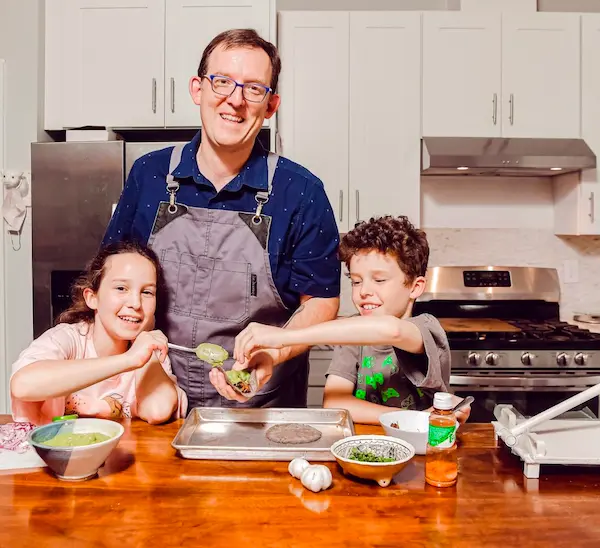
It took me several years to figure out my process and build up momentum enough to become a personal chef full-time. I’ve found my footing and have even developed a community of like-minded industry experts called Chefs Without Restaurants for customers in need of a personal chef in Maryland-DC-Virginia.
From costing, to scaling and planning, as you can imagine, being a successful personal chef has a lot of challenges. People are always asking me for some tips on how to start a personal chef business. So here are a few things I recommend as you start your journey as an entrepreneur.
What does a personal chef do?
A personal chef's job is roughly half cooking and half running a small business. On the cooking side, the day-to-day usually includes:
- Menu planning around a client's preferences, dietary needs, allergies, and budget.
- Grocery shopping and ingredient sourcing — often the chef does this themselves to keep quality consistent.
- On-site cooking in the client's home kitchen, sometimes for a single meal, sometimes prepping a week's worth of meals at once.
- Service and presentation — plating, serving, sometimes leading a small kitchen with hired help for larger events.
- Cleanup — leaving the kitchen better than you found it is part of the job.
The business side is the part most chefs underestimate: marketing, booking, invoicing, follow-up, review collection, and managing a network of clients and referrals. The cooking is the easy part.
A private chef working for a single household has a similar daily cooking workflow but typically deals with the same kitchen, the same pantry, and the same principal every day, plus duties like managing household inventory, family travel meal planning, and sometimes overseeing other house staff.
Personal chef requirements: education, certifications & how to get started
There is no legally required path to becoming a personal chef in the U.S. — no state license to call yourself one. That said, most successful personal chefs share a similar background:
- Cooking experience: most personal chefs have professional kitchen experience — line cook, sous chef, executive chef — before going independent. The volume and variety teach you how to cook fast under pressure in any kitchen.
- Culinary education (optional but common): a culinary degree from a school like Johnson & Wales, the CIA, or ICE helps, but plenty of personal chefs are self-taught or learned on the line.
- Food-safety certification: ServSafe Food Handler or Food Protection Manager is the industry standard and is required in most jurisdictions if you handle food for hire.
- Personal Chef Association (PCA) certification (optional): the United States Personal Chef Association offers a Certified Personal Chef (CPC) credential. It's not required to work, but it's a credibility signal for clients.
- Business license and insurance: a local business license and general liability + product liability insurance protect you and reassure clients. Check your city and state requirements.
- A portfolio and reviews: photos of plated dishes, testimonials from early clients, and Google/Yelp reviews are how new clients decide whether to hire you.
Personal chef salary: what do personal and private chefs make?
Compensation varies widely depending on whether you work as a personal chef serving multiple clients or as a private chef employed by one household, and on where you live.
As of 2026, the U.S. average for a personal chef is roughly $55,000–$70,000, with most landing between $43,000 and $90,000. Private chef positions (single-household, often full-time) pay more — averages cluster around $80,000–$95,000 with most positions between about $52,000 and $120,000. Senior private chefs working for ultra-high-net-worth households can earn $150,000–$250,000 or more, especially when the role involves travel, multi-property duties, or rare cuisine specialization.
On the personal-chef side, income is also a function of how you price: cooking weekly meal services for five regular clients produces different math than booking premium one-off dinners. Most personal chefs grow income by raising rates with experience, building repeat-client revenue, and getting into the high-margin niches (vacation rentals, special-occasion events, culinary instruction).
How to Become a Personal Chef - 5 Tips for Success
Do - Practice with friends and family
To become a personal chef, the first thing you need to do is get out there and practice. Cooking in your home or at a restaurant is so different from cooking in other people's houses. Find a neighbor, a relative, or someone who has an anniversary or birthday, and just offer to cook for them.
It could be as simple as a two-course dinner to see what it's like to take all of your stuff into someone's house to cook on a stove you’re unfamiliar with. You also need to understand how you cook with people talking to you and watching.
As a personal chef, you have to be able to deal with whatever comes your way, whether that's a dog or kid running through the kitchen, having five things cooking at once, or people asking a whole bunch of questions. You can’t just think, “I’m a chef, I make good food and will just go to a person’s house and cook it.”
Don’t - Focus only on your food

As a personal chef, you’ve been hired for more than just your food. You need to think about what your experience is going to look like overall. For a lot of chefs, this is really hard to accept. You have to let go of some of your ego to be succesful.
For example, when I was starting out, I told myself I wouldn’t make something like a chicken parmesan because it seemed a little mundane. But if it’s a client’s favorite dish, why should my personal bias get in the way? You’re a chef and can do a great job of it. Why not make the best chicken parmesan they’ve ever had?
Do - Ask for reviews early on
Once you start booking clients, reviews are super important. A lot of my customers today tell me that they went to Google and picked me because I was the top-reviewed chef in the area.
People love social proof. And when someone says they had an amazing time, they want to experience it too. Because only 25% of people actually write up reviews, make sure you ask everyone you can as early as you can.
I pride myself on the fact that I have exclusively five-star reviews on every platform - Google, Yelp, and Facebook - in the 11 years I’ve been a personal chef. It can feel like a lot to repeatedly ask for reviews, but being persistent can help your business grow significantly.
Don’t - Underestimate the power of a network
A lot of personal chefs come from big operations, where you have a lot of people to bounce ideas off of and work with. But when you start your own business, you don't usually have anyone. Most of us are a small team, if not just one person.
Since we’re doing everything, including business development, having a stream of referrals can really help you out. If you’re booked on Friday night, but someone wants to hire you on the same day, it’s great to have another chef you can recommend. Not only will your prospect be grateful, but your referrer might pay it forward to you later on.
Being a personal chef is much easier if you have people to lean on who know what you are going through. Even a network of just four chefs in your local community can be a huge help. You are not only sharing job opportunities, but resources and advice.
Do - Work with vacation rentals

I did a whole podcast episode on this, but I would say that one of the biggest business drivers for me has been working with vacation rentals like Airbnb. They account for about 90% of my business these days.
If a guest is hosting an event, then more than likely they are looking for someone in the area to cook for them. Reach out to the owners and operators of vacation rentals, not Airbnb directly. Ask them if they will pass on your contact info to upcoming guests.
A lot of times people say, just leave a card. However, by the time guests get to a house, a card's not going to help if you’re booked out two months in advance. Make it easy for the owner and operator and put together a media kit or PDF they can share as a welcome package.
Don’t - Rely on a recipe journal or binder
As a personal chef, it just makes sense for your recipes to live in a digital format. You’re always somewhere new and can’t risk leaving a notebook or binder at home. I find meez to be the most dependable professional recipe tool out there.
Being able to take my recipes in my pocket everywhere I go has been huge. I want everyone to be a better cook and mention meez to clients whenever I can.
Here are four ways I use meez as a personal chef:
1. Sharing
Some of my clients ask me to send them recipes. This is so easy to do with meez. I can just pull up the recipe on my phone, type in their email, and share a link with them instantly. This is also really helpful when I am planning a cooking lesson at a client's home and working with freelancers. Instead of printing recipe packets for everyone, I can just email them a meez recipe.

2. Scaling
meez really comes in handy when you have to create a recipe for an odd number of guests. All you have to do is put in how many people you are cooking for, and it scales the recipe exactly. That means I can leave a house with little to no food waste, whether I’m cooking for five or ninety-nine people.
3. Organization
As a personal chef, you are at someone else’s house, not a commercial kitchen or your own place. Previously, I would bring a little manila folder with all these paper recipes. Keeping them organized was hard, plus they often weren’t scaled or converted. Now I can just bring a tablet or my iPhone, pull up the recipe in meez, and get started.

4. Search
As personal chefs, our menus change every day. And sometimes you make a dish, prep too much, and have to use an ingredient by the next day. For example, I do an apple fennel celery salad and almost always have fennel leftovers. Before, I wasn’t sure what was the best way to use an ingredient like this. But now with meez, all I have to do is type’ fennel’ into the tool and it will pull up all recipes with fennel listed as an ingredient.
How to start a personal chef business
Once you've practiced enough to know you actually want this life, the business build-out has its own checklist. The good news: a personal chef business is one of the lowest-overhead culinary businesses you can start — no rent, no commercial kitchen build-out, no staff to begin with.
Here's a working sequence:
- Pick a niche and define your service. Weekly meal services? Special-occasion dinner parties? Cooking instruction? Vacation-rental guest dinners? Each has different pricing, client acquisition, and time commitment.
- Set your pricing. Most personal chefs charge either per-event (flat fee covering shopping, cooking, and cleanup), per-person, or per-meal for weekly services. Build in food cost, your time including travel, and a margin — you are running a business, not a hobby.
- Handle the legal basics. Get a business license in your city, an EIN, ServSafe certification, and general liability and product liability insurance. Many states require a separate food handler card.
- Build a simple online presence. A one-page website with menus, sample dishes, your story, and a contact form. A Google Business Profile is non-negotiable — it's how most local clients find you.
- Build referral and review systems. Reviews on Google, Yelp, and Facebook are your single biggest growth lever. Vacation rental owners, event planners, and other chefs are your second.
- Standardize your recipes. Documented recipes with accurate yields and scaling are what let you cook for 5 or 95 without surprises.
Conclusion
Being a personal chef is an extremely rewarding career choice if you have a passion for cooking and entertaining. Like I mentioned before, dipping your toes into it is a good first step. Cook for friends, family or people they know to get a feel for the experience. If you love it, then it’s time to start making your business and outreach plan.
About Chris Spear

Chris Spear is the chef and owner of Perfect Little Bites, an in-home personal chef business based in Frederick, Maryland. You might also know him as the host of the Chefs Without Restaurants podcast, and the man behind the culinary networking organization of the same name. Chris graduated from Johnson & Wales University with a B.S. in culinary arts, and has been working in the foodservice industry for almost 30 years. Now Chris splits his time between cooking unique dishes for his guests and engaging with the culinary community he built. He has written editorials for StarChefs, and some of his recipes can be found on the Garden & Gun and Imbibe websites.
How meez helps personal and private chefs run cleaner kitchens
Whether you're cooking for one household full-time or rotating between five clients a week, the operational pain is the same: recipes that scale to whatever number of guests show up, costs that update when ingredient prices change, and a kitchen-ready format you can actually use on someone else's countertop. meez is a recipe operating system built for exactly that. Personal and private chefs use meez to standardize recipes with accurate yields, scale up or down on the fly, share recipes with clients with a single link, and keep ingredient costs current so pricing stays honest.
If you're a personal or private chef looking to stop wrestling with paper recipes, see meez in action or start a free trial.
Related resources
- Executive chef: job description, duties, skills & salary
- 9 qualities of a great culinary director
- How to cost a recipe: the complete guide for restaurant operators
- meez recipe scaling and conversions for chefs
Frequently asked questions about becoming a personal chef
What is a personal chef?
A personal chef is a chef who cooks for multiple clients in the clients' own homes, typically for special occasions, weekly meal services, dinner parties, or culinary instruction. They bring their own tools, source ingredients, cook on-site, and tailor menus to each household's preferences.
What is the difference between a personal chef and a private chef?
A personal chef serves many clients in different homes, typically on a per-event or weekly basis. A private chef is employed by a single household, family, or principal — often full-time and sometimes live-in — and cooks for one client at a time. The cooking skills overlap; the business model, lifestyle, and pay structure are different.
What does a personal chef do?
A personal chef plans menus around clients' preferences and dietary needs, shops for ingredients, cooks on-site in clients' kitchens, serves and presents the food, and cleans up afterward. Roughly half the job is cooking and half is running a small business — marketing, booking, invoicing, and managing referrals.
How do you become a personal chef?
Most personal chefs build cooking experience in professional kitchens first, get food-safety certified (ServSafe or equivalent), and obtain a local business license and liability insurance. From there, the path is practice with friends and family, build a portfolio with photos and reviews, and start booking clients — typically through word of mouth, vacation rentals, and Google Business Profile listings.
How do you become a private chef with no experience?
Without professional kitchen experience, the realistic path is to build it: a year or two on the line at a serious restaurant teaches speed, consistency, and station discipline that home cooking can't replicate. Some private chef positions hire on culinary school credentials plus strong references, but most ultra-high-net-worth households expect a verifiable kitchen track record before they let you cook in theirs.
What are the requirements to become a personal chef?
There is no legally required path in the U.S., but typical requirements include cooking experience, ServSafe or equivalent food-safety certification, a local business license, general liability and product liability insurance, and ideally a Certified Personal Chef (CPC) credential from the United States Personal Chef Association. A culinary degree helps but is not required.
How much does a personal chef make?
As of 2026, the U.S. average personal chef income is roughly $55,000–$70,000, with most earning between $43,000 and $90,000. Private chef positions employed by one household pay more — typically $80,000–$95,000 average, with senior roles for ultra-high-net-worth households reaching $150,000–$250,000+ including benefits.
How do I start a personal chef business?
Start by picking a niche (weekly meal service, dinner parties, vacation rentals, or instruction), setting pricing that covers food cost plus your time plus margin, and handling the legal basics — business license, EIN, food-safety certification, and insurance. From there, build a simple website, claim your Google Business Profile, document your recipes for scaling, and start cooking for friends and family to build a portfolio of photos and reviews.
Do you need a culinary degree to be a personal chef?
No. A culinary degree from a school like Johnson & Wales, the CIA, or ICE helps with credibility and technique, but plenty of successful personal chefs are self-taught or learned on the line. Food-safety certification (ServSafe) is much more commonly required than formal culinary education.