Burlap & Barrel Spices: Inside the Company Redefining How We Source Flavor
When you open a jar of Burlap & Barrel spices, you're not opening a commodity. You're opening something with a specific address: a farm in the highland cloud forests of Guatemala, a family pepper operation on Bangka Island in Indonesia, a multi-generational spice-blending family working out of Istanbul's Grand Bazaar. These aren't marketing claims — they're the actual supply chain, made visible.
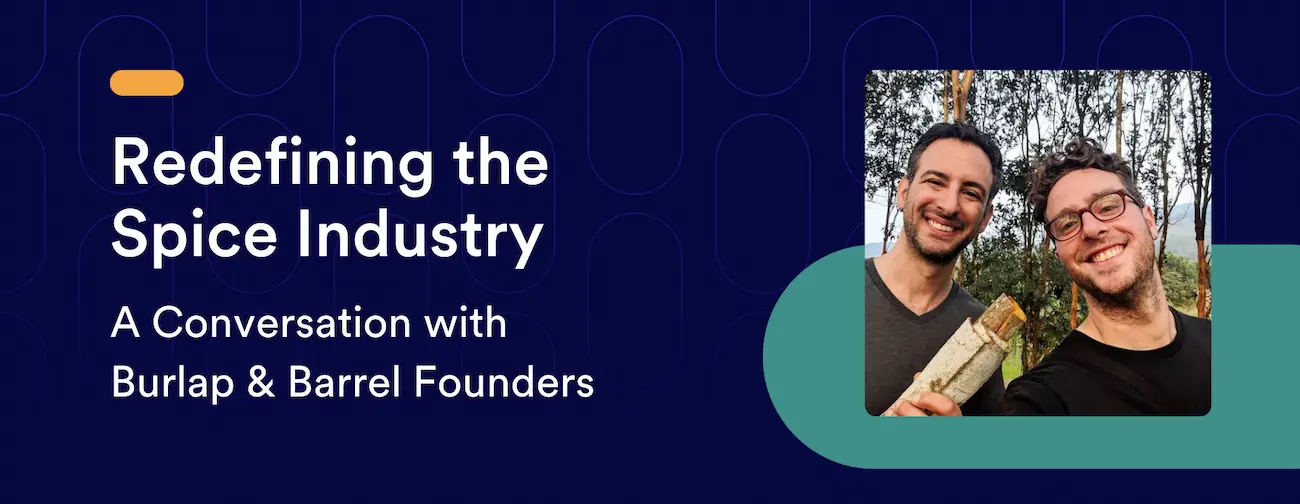
Burlap & Barrel is an American spice company and public benefit corporation founded by Ethan Frisch and Ori Zohar in 2016. Their model is built around one deceptively simple idea: source single-origin spices directly from the farmers who grow them, pay those farmers fairly, and let the flavor speak for itself. The result has earned them over 13,000 five-star reviews, a Shark Tank appearance, and a devoted following among professional chefs and passionate home cooks alike.
In Season 1 of The meez Podcast, Ethan and Ori sat down to share the stories behind the spices — the sourcing adventures, the farming relationships, and the philosophy that drives one of the most interesting food companies working today. Here's what they shared, and what makes Burlap & Barrel worth knowing.
What Are Burlap & Barrel Spices?
Burlap & Barrel spices are single-origin, directly traded spices sourced from smallholder farmers and foragers across more than 25 countries, including Guatemala, Afghanistan, Indonesia, Vietnam, Turkey, Spain, Tanzania, and Iceland. Every spice is traceable to a specific farm or cooperative, harvested in small batches, dried naturally, and transported whole to preserve peak freshness.
The name itself is a nod to history. "Burlap" and "barrel" reference the traditional packaging materials used to transport spices along the historic spice trade routes — a deliberate callback to a time when spices were precious, specific, and provenance-tracked. The modern spice industry lost most of that provenance along the way. Burlap & Barrel is bringing it back.
What Makes Burlap & Barrel Different from Supermarket Spices
Most commercial spices follow a long chain from farm to shelf: smallholder farmer sells to local broker, broker sells to regional aggregator, aggregator sells to international commodity trader, commodity trader sells to a spice processor, processor blends and packages for a brand. By the time a jar reaches a grocery shelf, the spice inside could be a blend from multiple countries, harvested across different seasons, processed and re-blended to hit a consistent (mediocre) average.
Burlap & Barrel extends farm-to-table values to spices for the first time, emphasizing the terroir of unique varietals that are grown, harvested, and dried using traditional techniques. Their spices are naturally free of gluten and other additives, colorings, anti-caking agents, and fillers. LinkedIn
By sourcing directly, Burlap & Barrel shortens the supply chain, pays farmers 2–10 times the commodity rate, and offers unique, high-quality spices made from historically overlooked plant varieties. Market Hall Foods That premium reaches the jar — these spices taste demonstrably different from their commodity counterparts, and professional chefs who have cooked with them consistently describe the difference as immediately noticeable.
From Ice Cream Carts to Revolutionizing Spices: The Founders' Story
Ethan Frisch and Ori Zohar didn't start in the spice business. Their partnership began over a decade earlier with Gorilla Ice Cream — an activist ice cream cart operating in New York City during the summer of 2010. The concept was flavors inspired by revolutions and political movements, with profits donated to the Street Vendor Project, a nonprofit advocating for street vendors' rights. They rented kitchen space overnight, crafted unusual flavors, and sold them at markets and restaurant stoops. Short-lived, but enough to prove they worked well together.
After the ice cream chapter, Ori co-founded a Silicon Valley mortgage startup — raising $32 million, scaling rapidly, and eventually navigating the challenges of unsustainable growth and a forced sale. The experience taught him lasting lessons about focus, prioritization, and what it actually means to build something durable. Meanwhile, Ethan was working in international humanitarian development, spending years in remote regions including Afghanistan.
Seven years after Gorilla Ice Cream, the two reunited — bringing sharper skills, hard-won perspective, and a new idea that would eventually become one of the most talked-about food companies in America.
The Origin Story: A Roadside Meal in Afghanistan
The seed for Burlap & Barrel was planted, unexpectedly, during Ethan's time working in Afghanistan's Badakhshan province. He was monitoring construction projects, meeting with local governing councils, and visiting small villages deep in the mountains. During those travels, he encountered wild cumin unlike anything he had tasted — and the realization hit him: even the finest restaurants in New York City were working with subpar spices.
In 2012, while working in Afghanistan for Doctors Without Borders, Frisch saw a vendor in a marketplace tossing cumin into the air to separate it from the chaff. Frisch, who had worked in kitchens, bought some of the cumin, was impressed, and took some home with him when he returned to New York and shared it with chef friends. Wikipedia
Those chefs responded enthusiastically. Here were restaurants sourcing premium meats, hand-selected truffles, and artisan cheeses — and yet their spice cabinets were filled with mass-produced commodity blends. Ethan began bringing wild cumin and other Afghan ingredients — saffron, dried fruits, nuts — back to the U.S. on each trip. The reaction from the culinary world was consistent: these are extraordinary.
Burlap & Barrel officially launched in 2016. Ethan and Ori built it on a simple but radical premise: treat spices with the same sourcing rigor that the best chefs were already applying to proteins, produce, and dairy.
How Burlap & Barrel Builds Relationships with Farmers
What makes Burlap & Barrel's sourcing model genuinely unusual is not just that they pay more — it's how they find farmers and build the relationships that sustain the supply chain over years. Their partnerships often begin through personal connections: nonprofits, friends of friends, social media, chance encounters. Three of their most significant sourcing stories illustrate how this works in practice.
Cardamom from Guatemala
Through Ethan's involvement with Heifer International, an NGO he worked with during his nonprofit days, he was connected to a cardamom farmer in Guatemala. Ethan arrived with empty duffel bags and left with them full. The farmer was initially skeptical of this newcomer — understandably so, given how often farmers in the developing world are promised premiums that never materialize. But the partnership held and grew. That initial trip has since become a seven-year relationship, with Burlap & Barrel now serving as the farmer's largest customer.
The result is their Cloud Forest Cardamom — sweet and tart, reminiscent of summer fruits, fresh herbs, and cut grass, coming straight from a single-estate regenerative farm in the high-altitude cloud forests of Guatemala. The fruit turns yellow as it ripens on the vine and has a softer, sweeter flavor that makes it a perfect upgrade to standard green cardamom. Burlap & Barrel
White Peppercorns from Indonesia
Before a planned trip to Indonesia, Ethan was specifically searching for a fermented variety of white peppercorn known for its funky, umami-rich flavor profile. Weeks before his departure, an email arrived from a pepper farmer on Bangka Island, offering his pepper for sale — an almost improbably well-timed connection.
When Ethan arrived, he visited multiple farmers in the area. The farmer who had reached out stood out for both his product quality and his entrepreneurial spirit. That chance email marked the beginning of a five-year partnership between Burlap & Barrel and this family farm — and produced one of their most distinctive offerings.
Coffee and Peppercorns from Vietnam
In Vietnam's Dak Lak region — a coffee-growing area where farmers intercrop coffee and peppercorns, with the vines providing shade for the coffee bushes — Ethan and Ori faced a different challenge: trust. Many farmers in the region had been burned by foreign buyers making promises they couldn't keep.
The Burlap & Barrel team's response was immersive. They stayed on the farm. They ate with the families. They joined the harvest — including a memorable moment where they climbed a precarious ladder to pick peppercorns, were assured it could hold four people, and discovered that "four Vietnamese farmers" does not equate to "two American men." The ladder gave way. Nobody was seriously hurt, and the incident ended, as Ethan described it, with plenty of beer and laughter.
This approach — being physically present, sharing real experiences, building trust before business — is core to how Burlap & Barrel works. As Ethan put it: "You can't do this over text or WhatsApp. Spending time on the farm, sharing dinner with families, and hearing their stories — this is what connects the dots between our two worlds."
Finding the Right Farmers — Not Just Any Farmers
Burlap & Barrel doesn't seek out any farmer willing to grow spices. They seek out a specific type: farmers who have already independently concluded that the commodity system isn't working for them, and who are committed to quality, sustainability, and culturally significant or heirloom varieties.
As Ethan explained: "We're looking for farmers who have already concluded independently that the system sucks." These are growers who prioritize flavor and practice over volume and yield — who resist the pressure to switch to high-productivity commodity crops because they believe in what they're growing.
Before committing to a partnership, Burlap & Barrel visits every farm: meeting farmers, walking the land, understanding growing and drying processes. Their pricing model is farmer-forward: farmers set their own prices, and Burlap & Barrel pays upfront, often making purchase commitments a full year in advance. They also provide support like organic fertilizers to help farmers prepare for the next harvest. The goal is a relationship that's genuinely mutual — not just a premium transaction.
The Spices and Blends: What's in the Burlap & Barrel Lineup
One of the things that distinguishes Burlap & Barrel spices is how specific and unusual many of their offerings are. These aren't just "cumin" and "paprika" with a pretty label. Each spice has a story, a specific variety, and flavor notes that diverge noticeably from commodity versions.
Signature Single-Origin Spices
Some of the most celebrated Burlap & Barrel spices include:
Wild Mountain Cumin — the descendent of that original Afghan cumin that started everything. It has a savory, penetrating aroma and bright, umami flavor evocative of grilled meats and sweet caramelized onions. Burlap & Barrel
Zanzibar Black Peppercorns — award-winning, vine-ripened peppercorns that are carefully hand-picked and sun-dried for a bright, lemony, and spicy result that's unlike standard black pepper. Rich, chocolate-colored with dense wrinkles and a bright, fruity spiciness. Burlap & Barrel
Herati Saffron — uncommonly delicate threads with a beautiful floral flavor, golden color, and warm, honeyed fragrance reminiscent of dried roses and fresh hay. The threads are pulled carefully from the flower, leaving a characteristic flame-colored tail. Burlap & Barrel
Black Urfa Chili — from Urfa, Turkey, where it has been grown and cured for centuries. It has a rich, malty flavor with a lingering burn. The chilis ripen to a bright red color, then are laid out under sheets in the hot summer sun. Burlap & Barrel
Cured Sumac — an easy swap for lemon juice in any recipe, with a bright, sour, salty, and slightly fermented flavor. Use it to add character and brightness to salads, fish, meat, or dips. Burlap & Barrel
Origin Blends: Made at the Source
Burlap & Barrel's Origin Blends are a product line that takes the single-origin model one step further — the blends are made at origin by the people who grow the spices, adding value locally rather than sending raw ingredients to be blended elsewhere.
Three of their standout Origin Blends:
Turkish Baharat Blend — A rich mixture of two types of chilies, cumin, allspice, and garlic, sourced from a multi-generational spice-blending family in Istanbul's famed Spice Bazaar.
Herbes de Provence — A classic blend from a French co-op that not only grows but also dries and mixes the herbs. True to traditional ratios, it pointedly avoids the lavender that has crept into many commercial versions of this blend.
Vietnamese Five-Spice Blend — Not the standard five-spice most cooks know. Burlap & Barrel's version includes Macken, a wild relative of Sichuan peppercorns, adding a citrusy, tingly note that sets it apart from its Chinese counterpart.
Chef Collaborations
One of the markers of Burlap & Barrel's standing in the professional culinary world is who they collaborate with. Their FC Masala Blends, developed with the late Chef Floyd Cardoz and his wife Barkha Cardoz, include a line of Indian-inspired blends with $1 donated for every jar sold. They have also collaborated with Sohla and Ham El-Waylly on a line that includes ranch-inspired, seafood, and pizza seasonings, with Bon Appétit's Test Kitchen on a set of versatile everyday blends, and with Chef Marc Murphy on a classic salt-and-pepper seasoning.
These aren't celebrity endorsements — they're genuine culinary partnerships where the chefs' expertise shapes the product.
The Shift from Restaurants to Home Cooks and Back
Burlap & Barrel originally focused primarily on restaurant supply. The professional culinary world was a natural early market: chefs are knowledgeable about ingredient quality, willing to pay for premium sourcing, and influential in shaping what the broader food culture values.
Then COVID-19 hit. As restaurants shut down, home cooking surged — and Burlap & Barrel pivoted rapidly to meet the demand. The home cook market brought a wave of customers genuinely interested in elevating their pantries with ingredients that had real provenance and real flavor differences.
Today, 80% of Burlap & Barrel's business is e-commerce — a direct-to-consumer model that gives them unusual speed and flexibility. New products can be introduced to a large audience through their newsletter and tested in real time. Spices that don't sell quickly enough can be retired to make room for new sourcing experiments without the inventory pressure of a traditional retail model.
As restaurants have recovered post-pandemic, Burlap & Barrel has seen renewed interest from the foodservice sector. Their goal is to maintain a genuine presence in both worlds — not to prioritize one at the expense of the other, but to keep a foot in both so they can adapt as conditions shift. It's a model that values flexibility as much as it values flavor.
Why Burlap & Barrel Spices Matter for Professional Kitchens
For culinary professionals thinking about ingredient sourcing, Burlap & Barrel represents something worth paying attention to beyond the flavor upgrade.
Their model demonstrates that it's possible to apply the same provenance standards to spices that the best kitchens already apply to proteins, produce, and dairy. A restaurant that specifies heritage breed pork and sources heirloom tomatoes from named farms but uses commodity cumin and paprika has a gap in its sourcing story. Burlap & Barrel closes that gap.
There's also a practical flavor argument. The gap between commodity spices and single-origin spices from a named harvest is at least as significant as the gap between commodity chicken and a well-raised heritage breed. Cooks who have worked with both consistently report that the difference is immediate and meaningful — not subtle.
For chefs managing menu development and looking for ways to add genuine specificity to a dish's flavor story, starting with sourcing that has real provenance is a higher-leverage move than most people expect. And for restaurants managing food costs carefully, the traceability that comes with single-origin sourcing makes it easier to predict price stability and build supplier relationships that aren't purely transactional.
For more on how ingredient quality connects to recipe consistency and costing, see Why Chefs Should Never Assume 100% Ingredient Yield and A Chef's Guide to Accurate Recipe Costing.
Frequently Asked Questions About Burlap & Barrel Spices
What does "single-origin" mean for Burlap & Barrel spices?
Single-origin means each spice is sourced from one specific farm, cooperative, or foraging region — not blended from multiple sources to hit a commodity average. This matters for two reasons: flavor and traceability. Single-origin spices reflect the specific terroir, variety, and growing conditions of their source, which is why Burlap & Barrel's Wild Mountain Cumin tastes fundamentally different from the cumin in a standard grocery store jar. Traceability means you can know exactly where your ingredient came from — which is increasingly important to both professional chefs and discerning home cooks.
Where can you buy Burlap & Barrel spices?
Burlap & Barrel spices are available directly through their website at burlapandbarrel.com, where they offer individual spices, curated collections (including the Fundamentals Collection and the Chef's Collection), Origin Blends, and gift sets. They also have retail distribution and supply foodservice customers. Their direct-to-consumer model means they can offer products that aren't widely available elsewhere — limited-run and experimental spices that wouldn't survive in traditional retail.
What are Burlap & Barrel's best-known spices?
Their most celebrated individual spices include the Wild Mountain Cumin (Afghanistan), Zanzibar Black Peppercorns (Tanzania), Cloud Forest Cardamom (Guatemala), Herati Saffron (Afghanistan), and Black Urfa Chili (Turkey). Their Origin Blends — particularly the Turkish Baharat, Vietnamese Five-Spice, and Herbes de Provence — have also developed devoted followings. The FC Masala Blends, developed with Chef Floyd Cardoz and Barkha Cardoz, are among their best-known collaborations.
What does "public benefit corporation" mean for Burlap & Barrel?
A public benefit corporation (PBC) is a legal business structure that formally commits the company to pursuing a public benefit alongside financial returns — not just profit maximization. For Burlap & Barrel, this means their commitment to fair farmer compensation, transparent sourcing, and equitable trade practices isn't just a marketing claim. It's embedded in their legal structure. They publish an annual Impact Report tracking how their purchasing has affected the farmers they work with.
How are Burlap & Barrel spices different from other premium spice brands?
Most premium spice brands still source through traditional commodity channels — they may offer higher quality than supermarket brands, but the supply chain remains opaque and the farmer relationship is indirect. Burlap & Barrel's distinction is direct sourcing: they visit farms personally, establish long-term relationships, pay farmers between 2 and 10 times the commodity rate, and make upfront purchasing commitments. The spices they source are often varieties that have never before been imported to the U.S., grown by farmers who prioritize flavor and traditional techniques over volume.
Did Burlap & Barrel appear on Shark Tank?
Yes — in April, Burlap & Barrel introduced their social enterprise to millions of viewers on national TV. The Sharks' response was notable, and the appearance helped them grow while staying true to their mission and their partner farmers. Burlap & Barrel
Listen to the full conversation with Ethan and Ori on The meez Podcast