The world has opened up for you, Josh.
Open time. How long were you a chocolatier for? Or I make us pastry and chocolatier.
So was at, so my career started at a place called Sucre here in New Orleans. It was kind like the Laudere of the South. And I was there for about two and a half years, of which a year and some change was spent as head chocolatier.
What's your go-to couverture? What's your Valrhona? Does it matter? Your go-to chocolate is like Valrhona.
Elizabeth Tilton (02:39.246)
Wait, what was the question? I'm sorry, the good one.
Elizabeth Tilton (02:44.398)
Oh man, I'm an equal opportunity chocolate eater. I would say I like to try different ones. I tend to like dark chocolate, kind of that 70 % and higher. But I really do like it when it has like whole hazelnuts or something that's caramelized or something like that in it. That to me is prime time.
Is there one that you like the most for cooking with?
Velrona, for sure. That's what we cast the most with. Um, Felklin was also a really beautiful chocolate out of Switzerland. But I would say there was Velrona came out with this like one caramelized, they basically caramelized the, uh, the cocoa fat and so, uh, the cocoa butter. And so when you ate it and taste it, was like the consistency, the, I still remember it was called Caramella, I think was when it came out. This is like back in, these are deep cuts like 2010 or so, but I remember trying that for the first time being like, shit, this is so good.
Like fill my pockets. Yeah, so was like a caramelized, like almost like a caramelized white chocolate, but it had a little bit more body to it and it almost presented itself more like caramelized fat.
Paramelize the cocoa butter?
Joshua Sharkey (03:52.174)
Man, that's nuts. Valeron for me is like the best cocoa powder. I got this one chocolate, it was this thing called like a Toaq or something like that, that someone got me as a gift and it was like this insanely expensive chocolate. Offensively expensive, but it was insanely, I mean, I didn't pay for it, but was also insanely delicious. mean, it was like ridiculously good. But there's this whole world of like.
That's great.
Joshua Sharkey (04:20.012)
Very, very, very, very small batch expensive chocolate that I'll eat anything. I mean, I'll eat a fucking Hershey bar and then I'll eat, you know.
My favorite chocolate I've ever eaten was, I was doing a tasting when I was working with like NOAA projects and NOAA out of Copenhagen and they had some chocolate from Mexico that was like hand picked and I was like, holy shit. Like this is, it's kind of that same thing where like Paris score through renaissance of chocolatiers and you can kind of see it transitioning right now around the world. And, but that to me was like, just, was like, is what cocoa tastes like, you know, it just felt so, I don't want to say pure, but just.
like weighted and just, you know what I mean?
It was great. still remember like being in Oaxaca and like being in the little corner, the shop where they're like grinding the almonds and the vanilla and the chocolate and it's just that aroma like the almonds and the chocolate vanilla all together. It's just it's insane. It's so...
Yeah, well, we'll bounce back and forth. By the way, didn't know that you, you know, obviously in doing some sleuthing, that you went to Catterskill for your team outing. Have you been there before, Catterskill Falls? Like why don't you choose Hunter Mountain, like the Hunter Mountain area?
Elizabeth Tilton (05:31.234)
Yeah, we did that. actually, it truly was about two years ago, we brought the whole team. So my team's fully remote for both companies. And we decided to go upstate because my COO, Jessica Abel, who's been my, I just, I don't know where I'd without her. She just had her daughter. And so we decided to kind of go up there so she didn't have to be as far away and make it accessible from her from the city. So that was the main reason we went up there. But we got to go to Scribner's and and bopped around and it great.
been assisting out there. It's a beautiful part of the state.
house there like a ski house up in the mountain we don't ski but I bought it for for like you know Airbnb and that the falls are just gorgeous
Yeah, it's a beautiful part. I wish I had known more about it when I lived in New York. I think I would have fallen even more with that part of the country.
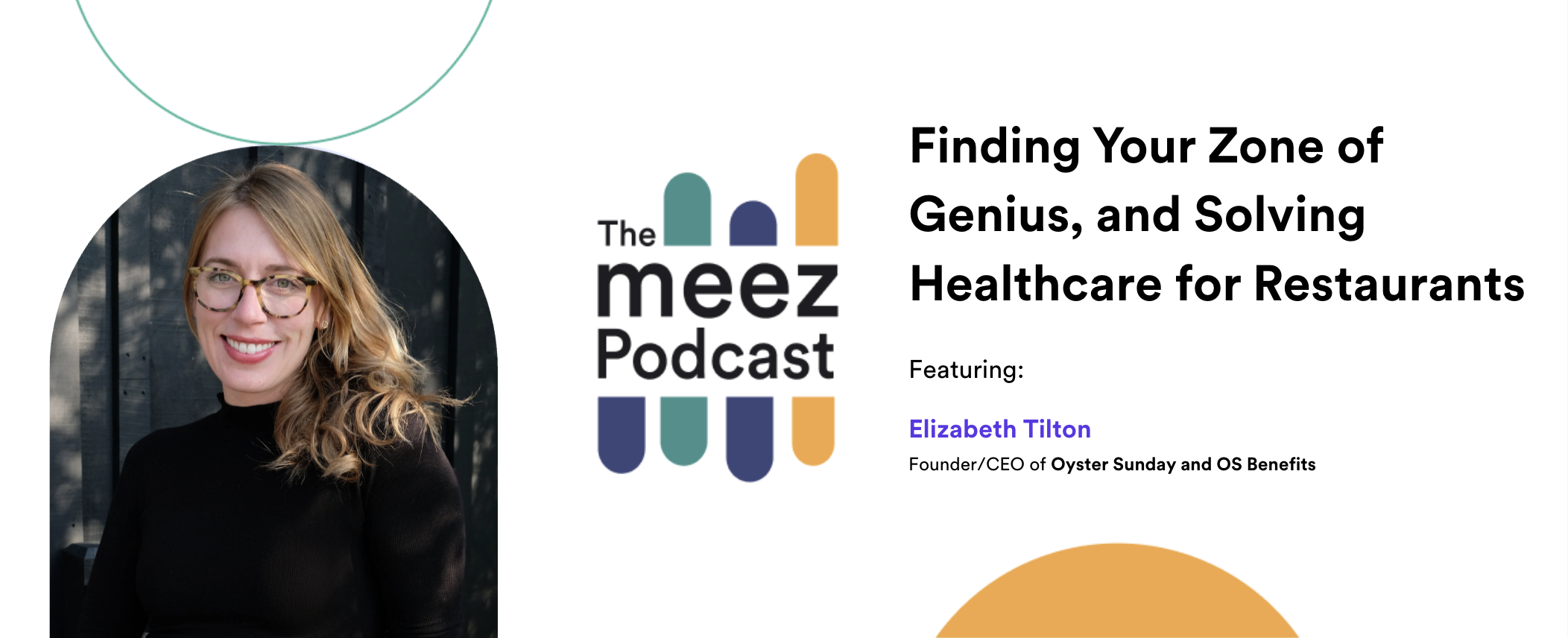
Yeah. Well, let's we'll wind you up now. You're on the show. I know you have anybody that doesn't know Elizabeth Tilton, although most people know you. have Oyster Sunday, which is essentially like a consultancy at score. But I know you talk about it as sort of like a corporate office for independent restaurants, which I love. want to sort of have a million questions for you about that. And then you have OS benefits, which is what it sounds like benefits for. Well, if it doesn't, if it's not clear benefits for for restaurants. So I want to obviously have a bunch of questions about
Joshua Sharkey (06:48.386)
how you started those and things like that. I didn't know that you were pre-med before this.
I was, yes. I wanted to be a pediatric oncologist. I went to UVA in Virginia. And yeah, that was my path.
Were you from Virginia? Like what Virginia for that? Just because they're the school there had a good had a good program.
Yeah, no, I'm from New Orleans. I sometimes joke, I'm willing to tell you I'm from New Orleans if I gave you my first name, because it means so much to me. I'm like, I'm from New Orleans, name is Elizabeth. But no, I'm a New Orleanian to my core, and I just loved UVA. My dad went there, and my senior year was the year Katrina hit. And when it came down to I was looking at a couple of different universities, and it came down to it, they had unbelievable academics. And the way that his community from UVA showed up for us in the midst of so much chaos after Katrina.
i think it really did sway my decision to go there
Joshua Sharkey (07:40.172)
Yeah. New Orleans is one of those places, I should have known by the way, like I knew you were from New Orleans but I forgot because we've had this conversation many times, but like it's one of those places that it's so unique that first of it's one of the best food cities in the world. But what do you think, like how do you define a New Orleans? Because they're a unique person.
I like to define New Orleans as a city if it could be a person. It's like Aunt Betty. It's like 2 p.m. on a Tuesday. She's got a scotch in her hand and a bow and a long cigarette just being like, just living life. Like that Jodevieve that kind of isn't moving too quick, but has unbelievable conversations at a dinner party. It's talking about her next meal when she's eating her first one. I do think I'm very appreciative having made the decision to move back down to New Orleans because
A, I feel very deeply rooted of the city and wanting to build my businesses here to get back. But I think more importantly, I felt like, I mean, I love New York and now you're up there, just like the area. I just love it so much. But I felt like everything I had to do was always uprooted and a compromise. Like, do I need to bring this bottle of water home today or not? Like, can I carry it another three blocks? Like, these are the decisions you make. And I'm like, how am I making decisions off this? But yeah, think New Orleanian is, I.
you know, everyone's hibernating right now and we're about to go into Mardi Gras. Like sequins are coming out, feathers are coming out and it's it's a quality of life that I just crave.
And I saw Jazz Fest in New Orleans and it was probably, I think maybe the best concert we've been to. I Paul Simon there when was still around. At least, know, walking.
Elizabeth Tilton (09:16.974)
winner.
Yeah, that's great.
Well, so Oyster Sunday is essentially corporate office for independent restaurants, which, first of all, I just want to make sure I'm clear, right? So when you say independent restaurants, you are not working with like restaurant groups, large groups, and you're just focused on folks that have one, two, three, look, is that a distinction or?
That's a great question. we're independent to me means independently owned. So it could be an independent hotel brand with 25 locations, but it's basically, it's not corporate like as of right now. I mean, we definitely have had been, we have worked with corporate offices, we have done corporate work. We love those projects, but I think our, what we've gone out to do is to support and make business viable for independently owned businesses. So usually one to 15 units, but it really runs the gamut.
Okay. I'm gonna, you know, I'm gonna start with a, we had an argument two episodes ago with a buddy of mine who argues that everything anyway, so take that with a grain of salt. and his, he's a sommelier and, very talented, but he believes that the restaurant industry from a hospitality service standpoint is declining in quality. I disagreed, but I'd love to get a sense from you because you work with, you know, you're uniquely positioned to help answer this because...
Joshua Sharkey (10:35.47)
You work with so many restaurants and so many independent restaurants. Do you think that restaurants are operating in aggregate better today than they were five years ago? What's it? What do you think?
I think that the operator is more informed than ever about their business. And I think that's a godsend. I mean, we have access to data. People are talking about CRMs and variable costs in different ways. And I just think that to me, to be an exceptional operator in this current climate where we understand costs, cogs are going up, labor's going up, demand's going up, you need to be knowledgeable about your business and the industry.
and our workings and I think we're better off as an industry for that. I think that there's other great operators who are now, I mean, I can start with the Sunday as part of that. Like we really kind of come in as a strategic partner and say, okay, we're fractional finance operations, marketing, branding, because every team has great strengths. I think generally it's a harder climate to operate within, but I think operators are more knowledgeable about their businesses than ever.
Yeah. Yeah, I think for sure there's so much data. Well, it's in your background. It's interesting because you got into PR and marketing at Momofuku, but clearly never did that before. Sue gave you a chance and, you know, that happened to work out. I want to ask about that. But you and your team have your hands in ops, finance, marketing, like you said, you know, HR. I am super curious, like from your perspective, like where do you think restaurants are like under investing in one of those verticals?
and why.
Elizabeth Tilton (12:10.232)
People are under investing in automation of operations and they're under investing and CRM and marketing and loyalty development. I think that ladder has been more spoken about in the last 18 months, thankfully, because I think COVID was a pressure test of saying if you didn't know your consumers were, you didn't know who your neighbors were, you weren't talking to them on some own channel, then you're really caught flat-footed. And I think that thankfully more companies are adapting to that. But I really do think this
AI automation efficiency factor as labor gets higher. My thesis is that teams will be smaller and more investment will be made in them and things will be automated to augment that. So I think that that's where we're going in the next 18 months.
What's getting them smaller? How do you have smaller teams?
I think as an overhead labor is getting more expensive investment and more. You're looking at higher hourly wages, salaries, costs of living. The demand of that is inevitable mixed with I think that the teams will be, employers will have to make the decision, do I have as many people or do I make more investment deeper and less? And I think that the latter is going to be for more sustainable predictions for people wanting to know when their PTO is or schedule.
versus having a bunch of part-time people and making very little investment in anyone.
Joshua Sharkey (13:30.912)
So not so, so just less volume of team members, but like small. Yeah. But how does that manifest? What are the things that are going to happen with AI that that help that happen?
teams.
Elizabeth Tilton (13:42.062)
I mean, there's a bunch of stuff. mean, there's, there's, like, we're talking about, kind of the whole customer journey, right? The automation and understanding and communications happening when an employee, when a customer hits your website, chooses to talk to you, makes a reservation, how they, how they communicate with you, are they calling you, are they emailing you? All of those can be, they should be automated by now. If they aren't, call us. Because that first level entry is what they're probably asking you about is, are you open? Can you take reservations?
That is general plain knowledge that should
Yeah, just call Alex his sling.
I was to say, was about to bring them up. It's a great example. I think, but also the end user wants to feel like they've talked to someone and got the information they needed. So you need to know how to escalate it. If you're seeing exclamation points on your bad, if you're getting these things, like how do get it to a person quick? And then also there's a lot of opportunity on the finance side of, of like, I know even QuickBooks online has some really great ways of like automating and pressure testing certain variables or assumptions in your P &L. And when things get higher, flagging it that no human has to do anymore.
And you can just create these systems around yourself to better understand your business. So those are just two really quick examples. But I think that that kind of stuff helps to make you more understanding of the rhythm of your business and automate things that probably weren't even being touched before anyway.
Joshua Sharkey (15:02.414)
Yeah, it's why you know for me. I always think that the the biggest limiting factor right now is is because there's so much more that we can do is It's just thinking up. What do you want to do? Yeah? mean if you pick up lovable or replete it's wild what you can build I'll sleep this nights where I'm just building things and I'm like oh my gosh Yeah, why would I pay for this thing again because I can't build it in like an hour. It really is the limiting factor is this
What can you think of that you could actually automate right now or take away?
I agree with that. think one other thing that we build a fair bit of and I'm really excited about is just even simple things like we have a brand manual and you have a way of speaking and you have this whole catalog of how your entire, how you've been speaking on Instagram and your website or whatever. Like put that into a small language model and just like build it out and then run everything through it. Like, you know, I mean, there has to be some editing or some oversight, but I think any good marketing team should absolutely be having that up and running.
Yeah, I think if you're not doing that, it's wild. I do it myself and our team does it.
I know, but I'm good. mean, but I'm, I don't think it's status quo.
Joshua Sharkey (16:07.982)
Yeah, well how are you using it today? Like you yourself, like personally.
Yeah. I have a lot of agents. have a lot of sidekicks around me right now. have, well, right now in terms of technology we're using, we're using Fixer on top of our emails, which I find to be very, very good. Obviously, Claw, ChatGBT, Perplexity for a lot of primary source data. We use Lovable. We're using a lot. We're actually, I'm building right now for the OS benefit side. There's something called Summary of Benefits and Coverage, which every plan, every medical plan has. And so we have our four SBCs.
And then we're running PDFs through that to then say how ours is different than someone else's quickly, because we get that question all the time. Like that's a good example of I built an unlovable in like probably an hour and a half. Yeah. So things like just trying to sit there and say, are our pain points and how are we solving for it? Obviously chatbots and automated emails and all that jazz gets run through everything like that. Just to be able to sit there and say, what's the, again, where kind of like the reservations, like if you're asking about my reservation and when I'm open.
Yeah.
Elizabeth Tilton (17:12.013)
We're going go ahead and put that in this bucket over here that we're going to solve. Not by, but I want you to feel seen and responded to versus just screaming into the abyss.
Elizabeth Tilton (17:22.702)
Ooh, yeah. I personally use ChatTPT a lot just because I've spent so much time building towards it. I have a couple of different agents for both businesses. One main one for OS benefits is a lot of customer support. I'm trying to figure out, I'm running all of that right now, like overseeing it to see patterns of behavior to fix things and trying to figure out when we get these responses, what part of the business needs to be alerted. So creating some of those systems.
But I would say chat GBT still is by far my most specific next. And then right after that, it kind of clawed in chat GBT or like right neck to neck and then complexity is its own little category of primary search.
Have you tried Lindy or N8N for the customer support piece?
I have not yet. No, we Intercom and we're flirting with a different company right now trying to figure out if that's what we're going to go to.
Yeah, we use Intercom. think we're actually moving away from it. But I use Lindy and there's an N8M which is very similar and it's wild what you can do with customer support and feed, you know, just feeding knowledge bases. And the knowledge bases tend to get tied up really quick so you kind of have to build your own vector database. But there's just so much that you can do. I have like a personal, what I call them, advisor, like a coach. And I literally pipe in everything. I mean, every meeting, every single meeting.
Joshua Sharkey (18:44.728)
transcription, every single note, everything in my world personally, professionally, everything that I've done, every thought I have that I write out, it goes to them right away. Everything. And I obviously just give it some instructions on how to talk to me, how to make sure it's, know, stress testing what I'm saying. It's over time, it's become so helpful. That's awesome. And it's caught patterns that I didn't see. But, it's a compounding effect.
Yeah. Like I have a Chief of Staff one, I have a PA one, have like just things like, so I have different agents that I kind of keep working with that I'm trying to train up a CFO. But I think to that point, actually one other way we're doing is we're on our sales calls. We, for OS benefits, we look at what questions get asked based off type of business, sort of different sales channels for scale. And so then we can sit there and say, okay, are there things that matter more to those types of clients?
that we can tell them sooner to answer their questions preemptively. And then running those transcriptions through stuff like that, because it's not a matter of, know, the same information is the same. It's just like, what matters the most? Do we get it ahead when we have your full attention? So we're working on some of that stuff. Yeah.
Very cool. I forget where, but I heard you talking about scale. And I think we have a similar premise around what scale can mean. Like it doesn't necessarily mean you have to have a thousand more locations of your business. You can scare horizontally, can add on new product lines, things like that. But you did say, which I thought was really, really smart was that there's a, you have a responsibility to scale your business one way or another. I'd love to hear more about that. Like what you mean by that and how leaders need to think about like growing to scale. Because obviously in the restaurant,
The common thread we have is, have great people. I don't need another location because they're not the GM. And if I don't get them a GM role or I don't get them a CDC role or exec chef, then they're going to go somewhere else and do that. So you have to open more locations so that there's more opportunities for them. I imagine that's what you mean by, you you have to, you have a responsibility to scale your business or grow, but there's other ways you can do other than new locations. I'd love to just hear your thinking on this.
Elizabeth Tilton (20:48.718)
I mean, can answer in two ways, either how we manage that internally and or how we do it with our clients. I would say the one question we ask everyone when we start working with them, one of our onboarding questions is what is success to you? Like whatever that means, five years, 10 years, 15 years. Because if someone says I want one brick and mortar to like in my hometown to make great sandwiches, and then they come to me six months later and say, I don't want to lose this person.
And I'm be like, okay, tell me more about why that is. Like, what do you, what does that make you, like what, what does that fear come from? Because if the fear is saying, well, I'm going have to be in the kitchen all the time. Okay. Well, that's not, that's not because you're worried about having two locations. This is you're worried about the livelihood of your day to day changing. Well, let's solve for that, you know, and just making sure that people aren't doing this thing out of scarcity or like making sure that what they want as success to represent what they're
building their business towards. For example, like at Oyster Sunday, we had an immense amount of demand to grow and to double into all these things. And I was like, but that's not going to, what does that mean for us as a business? That means that we're going to double the amount of consultants. We're going to manage twice as many teams, but does that actually execute the, like, what I like the most is for us to go up to the cat skills and have time together. And for us to be in a round table and someone says, Hey, this client needs this. And someone raised their hand and says, I know someone.
I've seen that before. I have an idea. I have a creative marketing plan or whatever that may be. And if we're too big, we can't do that anymore. And that kind of like, does Oyster Sunday make Oyster Sunday? Oyster Sunday, I think it's lost. And so we chose not to do that route. And to me, that's really important. And I think the same thing with brick and mortars. But if you have a creative mind and you have the chef and you have the demand and you have...
Like ideas, yeah, of course bring it to life. know, I shouldn't feel confined, but I think that pressure that we felt in the mid to late teens, 20 teens, I think was not necessarily healthy for everyone.
Joshua Sharkey (22:55.63)
Yeah. I'm just curious what other... I mean, can think of some ways, obviously. Like, how else... Let's stick to restaurants. How restaurants can scale without opening more locations. I have a great team and I want to do more for them. Yeah. What else can they do?
I mean, obviously the first thing is like off sites, events to get talent out of the building, to go learn something new. You can also have continuing education. Like we did some continuing education stipends and like, what does it mean for someone to go like stash somewhere else in different restaurants? Does that crap, does that scratch that itch to like want to learn, go take classes, make an investment in their education in the long haul and maybe W-Set or E-Cornell or whatever it may be. Also you can get into CPG, you know, we've helped
businesses build out their consumer packaged goods and like product lines and a chef that really loves to create and tinker and wants to be in a test kitchen, that's a whole different revenue stream for you. And it's becoming easier to do. I think that the barrier of entry is getting lower and lower to get, make that happen. Those are some examples right off the top of my mind beyond a second location, but yeah, alternative revenue streams is.
What do you see working? Do you see like CPG working often with restaurants?
It depends on the brand. think, again, the question is what success looks like. If you're like, I want to be the national ketchup company in America, and you're like, well, you're one brick and mortar in this one spot. Let's recalibrate what expectations are. Same with PR. I think those things go hand in hand. But I think that you can make a revenue stream out of that. There's all kinds of distribution networks now. There's Gold Belly being at Top Mind for food products.
Elizabeth Tilton (24:36.952)
There's a lot of opportunity, think it just, direct setting up a direct to consumer like channel isn't as difficult as it used to
Yeah, yeah, it's just having enough reach. mean, obviously Noma, you know, they have so much reach. can they launch a brand and it's going to crush. How did you end up at Noma, by the way?
they reached out to us about word of mouth and were looking to expand their consumer packaged good line for NOAA projects and started off with the conversation around, can we help build a new website? And then it evolved into us taking over their entire marketing department. in 20, 24 hours, they're interim CMO for the company.
When you say us, was that through the company you working with or is it just yourself and some team?
It was Oyster Sunday. So they came to us. I'm sorry. Yeah. So Oyster Sunday took over as their, so I was like their interim chief marketing officer personally. And then our business took over and helped support their marketing department, but they had brilliant minds. We just kind of came and listened and see how quickly we could transition and translate some of those thoughts into action is really our responsibility. So we overhauled. It was amazing. mean, I was.
Elizabeth Tilton (25:46.936)
traveling back and forth to Copenhagen and it's a special city with very, very special people. And I feel unbelievably fortunate to have seen Under the Hood there. was so impressed by the creativity and the attention to detail and the question asking and I mean, things you can imagine as that being the culture there, but it was collaborative and I felt part of the team immediately. Like it was...
I was really impressed even being like someone who's just coming back and forth. And it was was unbelievable honor to be able to work there. I had to step out. I was pregnant and couldn't fly anymore and transitioned away from that. But we continued to manage all their design going into the next year. I have the honor. Yes. I'm going to be able to go out to LA. I'm very lucky.
That's amazing. How long do they do that for?
March until June, through June. That's gonna be a couple months. And then also Noma Project is gonna be out there. And they're gonna a lot of opportunities if you're in the LA area, it, keeping it out of the ground, because there's gonna be some amazing ways to really, I think the one thing I was really impressed by, we did a pop-up with them in New York too, in 24, is that how much like the error.
wow, okay, so it'd be for a while.
Elizabeth Tilton (27:01.262)
Obviously, to be able to dine, there's limitation, capacity limitation to that and monetary for many, but they're really making opportunities and ways for people to like experience Noma in a different way. Like with Noma Cafe, Noma projects, like the flavors of those, if you've not tried them, the flavors are knockout. It's just you drink it and you're like, holy, this is the purest corn, the purest you use to do. Like the way they've extracted and to build these flavors is so impressive.
Yeah, yeah, I didn't make it to the I was supposed to go to Mexico pop-up didn't make it there and I haven't made it. I need to go to to one of them. I had the pleasure of like moderating a panel with some of the Noma team and really, really, really, really, really smart. Yeah.
Yes.
Elizabeth Tilton (27:43.278)
That was with Thomas, right? Yeah. Yeah, oh my God, he's amazing. Yeah, I'm so, so impressed by those minds in that room. It's just, it's nothing, it's not like I've seen before.
Well, let's talk about you some more. I could be wrong, but I think you said that you have dyslexia and kind of use it to your advantage in some ways. I think everybody I've ever met that is, I want to say this the right way, success is sort of how you measure for yourself, but that is successful and talented and has dyslexia, always has the same sort of feeling of how do they use it to their, you know, to their advantage. think Richard Branson. So I'm curious how you think about, I think about it, because I think you said you had a pretty unique perspective of how you think about
leveraging it to your advantage as opposed to looking at it as a disadvantage.
Yeah, mean, I got diagnosed when I was between fifth and sixth grade and had no idea prior to that that I was. But I like knew, I just thought I was like the lowest of the totem pole in the classroom. Like I was like, I don't deserve to read. I don't deserve to be here. don't like all those kinds of heavy thoughts as a child. And then all of sudden I went to go see this Dr. Buddle, what was his name? Butterbalm was his name. I always thought it was so funny. He was a brilliant neuropsych guy and I spent a week with him.
I'm sorry.
Elizabeth Tilton (28:56.206)
And we did all these testing. It was like an hour a day, just like testing and seeing what was going on. And we got like Vietnamese food across the street, the two of us like chilling. And after that, I like got the test results back. My mom sat me down, you know, and kind of was like, things are a little different for you, but like, we're not, you know, like, let's just, we're just going to move on, but things might change at school, but don't worry about it. She's a neurologist.
Like a retreat kind of thing or like you went in every
Elizabeth Tilton (29:23.586)
and, but they didn't, they didn't make it be like, you have dyslexia and you are different. They were just like, we're just going to change a couple of things. Your, your tests might take a little longer. And I so appreciate that mentality because it didn't become like this, this like weight or this like chip on my shoulder or anything. It was just kind of like, just, just got to deal with it and like, let's move on. but then when I became older and they showed me the test results and like that, like the, the variance.
Like my comprehension was like a senior in high school and my reading level was at a kindergartner. So it was like, it was like a dress. I was between fifth and sixth grade. So I like was barely reading. I mean, I was really behind and, but my parents were just like, we'll figure it out. You know, and I just appreciate that mentality. But now as I get older, I mean, I listen to podcasts. I get my, my emails dictated to me. Like I, I try to do things that I dictate everything back, you know, to
Wow.
Elizabeth Tilton (30:18.008)
to kind of alleviate that. And it's funny how my first career outside of the kitchen was comms. Like, why the hell do I go into comms? I can't fucking spell. But I always loved communication, but I couldn't do it well. I just didn't see it the same way. But I mess up on words all the time. My husband gives me so much shit about it. It's so funny.
Yeah, have you ever, did you ever read any of Ryan Holiday or any of this stoicism?
No, I haven't.
Ryan Haney wrote this book called Obstacles the Way. There's a very famous public speaker, I think his is Demosthenes or something like that. He was abandoned by his parents. He a really, really terrible childhood and also a huge speech impediment and became one of, if not the most famous orator of the time and basically just used it to his advantage. it's funny, we're parents now. You and I? Yes, we are. I have two and you have a...
born a six-year-old and you have a... year old. And you know what I think about so much is I really do believe that it's like 80 % nature, 20 % nurture. And you just got to go all in on the, on the, on the nurture part because 80 % of who they are, they are like the day they're born. Yeah. And I really believe this and you have to figure out how do you get them to lean into that thing, whether it's like, okay, they're, they're gregarious or they're the opposite of that. They have dyslexia or they have this or they have that. And like just...
Elizabeth Tilton (31:13.933)
One year.
Joshua Sharkey (31:41.816)
presenting it the way that your doctor and your mom did in a way that's like, this is just, this is what you are. And let's figure out how this becomes special for you as opposed to figure out how to quote unquote, deal with it and manage the, you know, the, you know, this weight. think that's the, one of the, one of the most exciting parts of being a parent. And I think by now as a leader of all the things that we view as deficiencies or downsides, they all, they all actually can be advantages, you know?
Totally agree. I think the one thing I appreciate too is they didn't make it like a, it was both sides. Like it's not, it's not a downside. And it also wasn't like you're exceptional. Right there in between, you just gotta find, you just gotta work with it. You gotta, cause I think there are, there is a matter like you are, you know, insert adjective, but like you're, you're something, right? And, and instead there was like, you just gotta keep trucking, do your best work. If you fail, like you can't get a C in French, whatever. Language is hard, you know, like.
stuff like that. And I think I do appreciate that mentality versus trying to be like, well, she needs more time to get that A. It's like, no, maybe I just can't get an A in French. And I can live with that in my life. You know, like I'm going to be all right, you know.
Exactly. Well, did you think something that like it actually helped you pattern matching more or seeing big pictures more than it then you would have otherwise? Yeah, I think
Elizabeth Tilton (33:28.13)
like 30,000 feet up in the world. And I have an exceptional team. mean, like Oyster Sunday is only what Oyster Sunday is and OS benefits is only who they are because the teams that are there. And I really consider myself to be, I bring this up because like for me, Jess, my COO and managing partner at Oyster Sunday now, she is like the most process oriented, execution oriented person I've ever met. And I'm the most 30,000 feet up, Pimmy from the clouds woman. And between the two of us, we're like,
I think is a perfect pairing. met her on the first day. I never knew her before. And I had a call with her because Katie Bell introduced us. I remember being like, I got off the call, called my mom immediately and said, I met my business partner. I don't know this woman, but I've met her. She's spectacular. She's my other half. She's the other side of my brain that doesn't work. And she's just been just an absolute.
It's so amazing when you find that.
God, what a blessing.
This show is brought to you by, you guessed it, Meas. Meas helps thousands of restaurants and food-centered businesses all over the world build profitable menus and scale their business successfully. If you're looking to organize your recipe IP and train your team to put out consistent products every day in less time than ever before, then Meas is just for you. And you can transform all those old Google Docs and Word Docs and PDFs and spreadsheets and Google Sheets into dynamic, actionable recipes in Meas.
Joshua Sharkey (34:53.196)
enlightening speed. Plus, stop all that manual work of processing invoices because Meeze will digitize all your purchases automatically. And there's a built-in database of ingredient yields, prep yields, and unit and metric conversions for every ingredient, which means you're going to get laser accurate food costs in a fraction of the time. Visit www.getmeze.com. That's G-E-T-M-E-E-Z dot com to learn more. And check out the show notes we move forward because we're to be adding promotions and discount codes.
that all of you lovely and brilliant ease podcast listeners get a sweet deal on these.
Joshua Sharkey (35:30.61)
I used to be with the zone of genius, zone of competence, whole, there's like the zone of genius, zone of competence, zone of incompetence, and zone of excellence, and zone of incompetence we know, which is like basically like things that you're not good at. Zone of competence are things that you can do, you're not great, you know, you can do, zone of excellence is the things that you can do really well, but you don't love to do.
And then zone of genius are the things that you can do really well and you love to do. I always think about that because you really only be operating in your zone of genius. And especially as a founder, you have to find the people around you that can take care of the things that you don't love to do and are not good at. The most dangerous one is the zone of excellence, which is the things that you're really good at, but don't love to do. And then you end up doing a lot of that and you're not happy. I'm curious, just with that.
Like premise in mind, what do you think of as the year zone of genius?
I would say, I've alluded to this before, but I really consider myself to be the conductor, where I'm not the first-tier cellist, violist, so on and so forth. But when they're all together in a room, I know it. And I can pick them out. I'm like, ooh, yes, ooh, yes. I meet people and I'm like, we will find a way to work with them. And it's like strike lightning kind of moments. And I feel like my stroke of genius is the ability of finding those constellations of human beings and putting them in to make the right teams.
both for the company and to build a product, to build a team, to build trust, whatever it may be. I think those are mine. I think the other, yeah. And I think the only, I'm trying to think, what was the other quadrant about vulnerability or like your worst part?
Joshua Sharkey (37:16.823)
There's the genius things you love that you're great at zone of excellence, which is things that you're great at but don't love to do
What was about the one that's like the vulnerability or the...
There's the competence and incompetence. So competence are things that you can do, but you don't love them. Incompetence is obvious. You're not good at it at all.
Hmm. My mind immediately goes, what's my hand call?
Well, know, I am curious actually, like, I'm curious. I'm envious of that skill of being able to pick out, here's all the players and I see this and that I could put that. I struggle with that sometimes, but has that ever not worked out the way that you thought? And you're like, man, how did I miss that?
Elizabeth Tilton (38:02.274)
Totally. yeah, I've had times where I've misstepped. I think though, early on I recognized it, but then probably from a sense of, we just need to keep moving forward. Well, I don't have time to stop. don't have, whatever it may be, I don't pause to reflect and to like change it. Yeah, I've definitely had times where it's even, it's not even like 20, like looking back fully, but it's like, I'm just like one and a half steps too far forward where I'm like looking back and I'm like.
Like how am going to slow down enough to get there? You know? And not necessarily, it's just like kind of just like generally in my life, yes, definitely. But I think I'm lucky to people in my life that I've interacted with and most times have been worked out beautifully. Or I feel like I've given, you know, an opportunity to someone who's like gets to learn and goes, you know, someone who leaves our business to go somewhere else to go do something that suits their needs. Like what a gift too. I feel very lucky.
I mean, being a CEO, basically I find you become the distillation of everything wrong in everybody's world and the company kind of rolls up to you. So you have all the stress of all the people. I'm curious how you, how like how you deal with with stress. Does it eat at you? Are you able to kind of like wipe it off your back really quickly? Are you a on it? Are you like a Parisian type person?
No, definitely not.
Elizabeth Tilton (39:23.215)
my gosh.
By the way, I'm all those things and I try my best not to but I'm always fucking like beating myself up and comparing them.
And if it's something, it's funny, because if it's something that someone else is, let's say someone on my team has misstepped and we made a wrong call, we did something wrong, we didn't execute something. I'm the first to forgive. I'll be like, this is what I expect. This is why we misstep. Let's reflect on that. like, let's move forward. how are we going to, how, my thing is like if something has gone wrong, come to me with three options and pick one. Like manage up at all times. So we're not sitting there being like, I messed up. like, okay. And we're not having that conversation.
just
Elizabeth Tilton (40:01.4)
But it's funny because when I mess up, I'm like, God damn it. Like I beat myself up and I think about it, I ruminate. But in the same time, once I've made a solution, I move on. Like I don't think about it again. But I have to solve it. Like I have to like solve it now. If I've disappointed someone, I have to solve it now. And that to me is very palpable. yeah.
I'm the same way. Are you? Yeah, yeah. And sometimes someone will be like, hey, I need a day. I'm like, no, right now. Let's talk about this right now. please.
I mean, you should ask my husband. I'm sure he's just like, ruminate all the time. Like, let it go. no, I think for me, like, what I find space, it's like learning something, going on a run, being with friends, getting like just that to me is like, I need to internalize it and then I'll externalize it. I'll talk about it, but I'll definitely be the first to like be like, damn it, why did I do that? Why did send an email too soon? I should have asked, you know, and then I'll like, but I'll get over it.
over time, but I do hold myself and my team to a very high standard. And I think that's where it comes from. It's not necessarily always being perfect, but it's being excellent. And I think those things are different. You can be perfectly bad, you're being perfectly moderate or like mediocre, but to be excellent and to run at a caliber, you're like, I knew the decision. I made the wrong choice. That to me is hard. Really? Yeah. What do you do to, what do you do to like manage that?
Well, I'll be honest, for a long time, was, I've always been bad at like dealing with my emotions and I just work more is what I do. I'll go, you I'll just work more and work and do more. And, you know, my therapist, I have a therapist now and she's like, yeah, don't do that. Like you got to think about it for a minute. Like, and just let it, let it, you know, just accept that it happened and be okay with it. Don't, you know, forgive yourself. I'm terrible at that.
Joshua Sharkey (41:55.438)
So I'm trying to actually just like acknowledge the thing and then move on as opposed to not acknowledging, just fixing right away. And because you just don't acknowledge for long enough. One thing I did try lately though, I always have been like a really, really, working all the time and I've kids, so it's literally work and then kids and then work again and you know, wife to dinner and sleep. And now I'm trying to find a little bit of time, independent of exercise, because that's helpful.
for something that's absolutely nothing to do with any of that, that isn't reading, because I read at night to go to bed. So like I'm playing piano and I'm like teaching myself piano and it's not exercise. So it's not like I'm doing a job and it's not reading. So I'm not learning, but it's a thing that's keeping my mind going on something that isn't anything else that I find like helping a lot.
I love that. I've been talking a lot. I think if I weren't in what I'm doing now and not being a doctor, I would have been an architect. And I mean, for me, drafting drawing. Like I'm trying to get back. I used to do it a little bit when I was in my 20s and trying to get back to like line drawing and like seeing cities through that lens. think to your point, it's just like, it's a different way of just experiencing the world. And that's great. I'm so glad you do that. Have you enjoyed it?
Yeah, we have this beautiful, we're very blessed to have this beautiful grand piano in our home and so it's amazing. I'm trying to learn songs that I love. I used to play piano and guitar, but I was terrible. I can't read music. I'm like terrible at it. But I can hear, like I can play by ear. So can hear a song and then play it. And I my piano teacher was getting upset because like I wouldn't learn the song from the music, from the notes, but the sheets, whatever they call it. But I would learn it just from playing.
And so I'm just leaning into that now, but learning the songs I really love, like Piano Man and things like that. And so it's great. There's a book, by the way, for your kid. I think one year old, it's a little too early, but Iggy Peck Architect. Iggy Peck the Architect is an amazing book about an architect. And it's his kid and he's an architect, it's like a, they're all limericks. But the whole book is a bunch of limericks, but at least that's the style that it's written in. But it's really, really cool.
Elizabeth Tilton (44:13.398)
I follow up with you about
about that one. Iggy Pack, I already wrote a note for it. I'm going send you. Okay. right. So we talked about stress, which is, what we do. But that's actually let's let's wind back for a minute on OS benefits because it's clear what you're doing. But like, talk to me about like, talk to me about like the reality of when every restaurant in the country can offer benefits to their employees. Like, how do we get there?
Thank you.
Elizabeth Tilton (44:39.849)
my goodness. That would be.
By the way, I don't know anything about the regulations and all the so any detail you can share because obviously it's a big it's a big issue, right? Like one of the problems with employing people in restaurant is it ends up being a job, not a career for most people because you're like, oh yeah, I'm going to do this until I can go get a full time job with a salary that has benefits and 401k and all these things. And that can't be that's part of why there's the problem, right? You need people to have this as their career and
that they see this as the next five, 10 years of them doing this at your restaurant. So how do we get there? Yeah.
Let's take a step back and talk about what OS benefits is. Real quick, I'll kind of identify it and how we got here. But as we talked about with Oyster Sunday, we helped to manage ops and HR and finance, and we're doing all these financial models for operators. And a lot of them would come to us saying, hey, I want to offer health insurance and X, Y, and Z. And we'd go try to support them with that and kept coming as the same roadblock, which is small business health insurance is cost prohibitive. And the plans we get do not necessarily fully protect people.
So we spent about two and a half years being like, okay, well, there's gotta be something else. We gotta find something. And that was what led us to OSBenefits. And so it's a membership model where you join the membership and through the association and we bind to ACA compliant health insurance that binds to people nationwide. So we're collectively purchasing power of health insurance and wellness benefits on behalf of all of us. So we're really lucky to get there and have the right plans to really protect our teams.
Joshua Sharkey (46:18.05)
What is that apples to apples with? I'm trying to wrap my head around it.
in terms of what's on the market or in terms of.
Yeah, like is that its own new completely new way of doing this? That's what I was trying to get at. So you're essentially like this group, is it like a group purchasing of benefits that are all under one umbrella and so everybody's appreciating this sort of economy scale of...
Yes, it is.
Elizabeth Tilton (46:41.294)
and risk management and negotiating power. we also, not only do we, so there's one thing to say, okay, we have plans, great. But what we've done is we've created the plans, the technology to administer it, the customer success and claims management to assist with it, and future payment processing to streamline all that for all, for employers. And that's definitely the first of its kind as well.
And so it's both sides of the technology and the negotiation that makes us unique. And it took us two and a half years, I mean, it really did took us years to like see the issue, address the issue and rebuild, like build towards it.
Yeah.
Joshua Sharkey (47:20.504)
So, this is probably a dumb question, so I apologize. No, no, never. What is the difference between that and a PEO?
PEO is the employer of record. you are the employer of record for your team. You manage your payroll, you manage your workers' comp. What we've done is basically said, versus you going through a broker to one of the big five, Blue Cross, United, Aetna, going to get your own plan and having no negotiating power beyond, like until you get to like 150 people, like you really don't have much leverage. It's just a matter of what are you willing to be exposed to? And so what we knew is like, that doesn't work for any of us.
But what if we built these plans that had low premiums and zero deductibles? Because what we knew is that it's one thing to have to pay for a premium, which is just the baseline monthly payment you make to get health insurance. Deductible is what you have to pay out of pocket before the insurance carrier even is willing to pay on your behalf, even though you've been paying them hundreds of dollars. And what we know is truth is that 50 % of people can't afford their deductible, so they don't receive care. They don't go out to care. And it's usually that $500 to $1,500 check.
that puts them to the debt. So that needed to be solved for. So that is what we basically, confinement surround us that we sat there and said, okay, here is the Venn diagram. Where do we fall that we can create a system to protect ourselves around these variables that are confining people to get care.
So it's zero deductible for everybody that joins that?
Elizabeth Tilton (48:49.934)
Three of the four plans are zero deductible. One plan is $2,500 to drop the premium a little bit, just to give people options.
Yeah, that's killer. Is there HSA with that too? Sorry, I'm just like
There is not.
Elizabeth Tilton (49:05.294)
But mean, anyone in the hospitality industry and also the entertainment industry, so music venues, stadiums, all fall within our association charter, so they could come in.
That's really killer. so how do people, like how restaurants join this? They just reach out and then they can just sign up and.
Yeah, we learned there's a little intake form about how big you are, where you're located.
Is there a threshold of like over X amount of size you just can't join?
We'll negotiate. also because we have our plans and we can go negotiate for you for fully, like for, if you wanted a big plan through UnitedHealthcare for 400 people, we can go be your broker and go do that for you and bring your healthcare plans on our platform. So we really are meant to be like this aggregate of everything all in one and be like, our goal is to be the go-to hospitality benefits admin for in the coming years.
Joshua Sharkey (49:58.574)
think you're the only one. I mean, that would be great if you were.
Maybe the only one.
Yeah, yeah, yeah. But I mean, I people keep running at this. mean, there's, you know, 68 % of our teams are employer, our teams do not have employer sponsored health insurance plans. That's like 11 million people, 15 million that are uninsured, right? That's quick math. Don't quote me on that. But you know, it's just, we're talking like millions of people that need coverage. And also like the outcome is that someone sick walks into the emergency room and they are out of pocket.
thousands, tens of thousands of dollars, and the hospital has no way of also regaining those funds back for the service rendered, no one wins. Right? Like at the end of the day, and it just perpetuates a really bad cycle that we have here.
I remember starting at working for Danny Meyer at for Floyd at Tabla and like going to this big orientation where there was like health benefits and I like, what is this? What? We get benefits? Doesn't even make any sense. They're like talking to us like a person explaining all the benefits to us. I'm like, I don't even understand how like how we get this. This is amazing. And that we get to actually do this and on our own time, you know, while we're, you know, while we work.
Joshua Sharkey (51:15.918)
There weren't many people doing it back then, I think probably more now.
Well, I mean, it depends on how affordable it is.
Yeah, yeah for sure. Are things like 401k things that you offer or are looking to offer at some point?
It's on our roadmap. There's some states are mandating it, retirement plans, like Maryland mandates it. So we're not, even if we aren't offering a 401k, can we embed that into our technology to make one center benefits admin spot is our goal. But I'm in the future, we would love to be, you know, I think our roadmap is much more of medical dental vision, more like even thinking we're talking about fertility, we're talking about like all kinds of different truly human needs.
Yeah.
Elizabeth Tilton (51:58.008)
prescription drugs, GLP-1s, like all of that to me is what we need to address first. And then we could always add on. If anyone has a transit benefit or a benefit that you have with your business, we can put that straight into your dashboard and have your employees have it all in one spot.
That's cool. I feel like there's more things that also should be like gym. Why isn't gym just part of, you know, an expense?
We do have ClassPass on ours, is a gym membership. And we have credits to it and we have full digital library. So anyone can, no matter what your time of day is, you have free access.
Well, congrats on building that. you. It's really incredible. you're just creating something completely net new that didn't exist. So you are going to be the leader in the industry. hopefully it's not a monopoly, because to your point, hopefully more do it. it's really incredible. And I've always been impressed with what you've been building at Oyster Sunday and now with the West Benefits. Thank you, I've been excited to follow your career. I am sad that we didn't do this in person in New Orleans though.
Yes, I know. I know one day we'll have to have you over and we'll do it. This is, you know, that would be a lot of fun to do. I like the interactions like in person. could share a glass of wine and go.
Joshua Sharkey (53:14.348)
That's right. Get some oysters, get some alligator cheesecake at Jack-O-Mos,
actually, my hot take on Po Boys here is, Riddastas.
I don't know where DOS is, hold on let me write this down.
It's an old metery.
Okay, ready, I'll figure it out, I will, will, I will Google it, there, so what's your, what's your go-to po-boy there?
Elizabeth Tilton (53:37.454)
It's okay.
Elizabeth Tilton (53:43.822)
Well, I was like the great divide, which is half shrimp, half oyster. But yeah, it depends. I'm usually a shrimp girl. I'm just like, cruising in on Tuesday. But as an oyster Sunday company, I mean, I know it's really funny. I've mentioned this story before, but it took me like three chances to tell the trademark office that we did not sell oysters on Sunday to get our trademark. In 2019, it was very funny. I was being like, I do not hold inventory. I do not sell oysters. am not a restaurant.
People thought you were referent for a while, right?
But it actually, the name stands for operating system OS. So that's where it came from and it's sticky, you know, all that stuff. anyway, I thought you were going to kick out of that.
Uh, yes, more importantly, not more importantly, but do you like Don Melissa's? that his ad? Oh yeah. don't know if I was saying that, you're no, no way, go here, but do
no,
Joshua Sharkey (54:39.95)
If I had to go to one restaurant, two restaurants in New Orleans, I'm going there. got, I literally have two days and I got to pick two restaurants. What are you choosing? And we will caveat this by there are tons of great restaurants and you love them all and you're not picking this because of any other reason. You could focus it on me who I should specifically go to. I want to go visit Pesha because my friend of mine I work with is friend of the kitchen there. So if you want, can include that.
Yeah, yeah. Yes, yeah. And there's a of places that I love. But I would love to hear your two.
Yeah, I would say I'm going to do you know, like locals Monday and a nice restaurant. I would say for locals Monday, we're just like chilling and just want to get something. There's a lasagna night at this place called Bar Pomona and it's hole in the wall on St. Claude and downtown and it's like, it's got good wine. It's always a vibe and it's like a long bar. It used to be an old butcher house, like butcher room. It's really small and intimate.
And having like lasagna, a home cooked meal, lasagna on a Monday night and a glass of wine is like chips. Um, my other one I would give you is, um, I, so I went and ate at Emeril's when it just reopened after the renovation. know they've gotten a lot of accolades and they have because it's well, it's unbelievably deserved.
His son's running it over.
Elizabeth Tilton (56:02.144)
EJ is running it now, yeah. And I went there because my friend of mine was being considered for their song position and we went and dined there. I was blown away. I was completely blown away. Service, food, I mean, I had gone there as a kid because Emeralds, you know, or like a kid, but like my 20s or something and then into my teens. And my friend was like, I'm being considered here. And I was like, don't make me do it. Come on. I want to go like inside. You know, like, I'm just like, I've been here. Why are we doing this? Like, let's go to Emeralds.
And we ate there and I was so, I was like, eat your words, Elizabeth, eat your words. Because I was, I was so taken by it. There was this one dish, it was like a take on one that his father had done and it had this like caviar set on like, it wasn't like a but it was a custard set with caviar on top. And it had this like perfect crew pairing. And I was like, you got me. Done.
You're awesome.
Joshua Sharkey (56:58.542)
Well, I'm definitely going there now, okay?
And I'm going to give you one more, which is St. Clair on the West Bank. St. Clair. St. Clair. It's a Mosquito Supper Club second location. And it's just the atmosphere just feels of here. It's like when you went to Maison Premier and got a cocktail and you sat in the garden. It's like that same New Orleans.
Yeah. Vibe. Okay. I can't wait. I finally can drink wine again, so I'm excited to go. You couldn't? I went 15 years without... I developed this allergy to live yeast when I was 30. And for some reason, I used to love wine. then like, I... For some reason, I couldn't drink wine, beer, sake. Liquor was like bourbon's fine. But I couldn't drink for like 15 years. And then I...
I magically somehow recently was able to again, so I've been a bit of a tear. Nice!
If you ever want to, you ever, am, next time you come to New Orleans, we are definitely having some wine. Yeah. I'm a wine girly. I moved one last funny, I mean, I have to give you a funny story, Josh. And when I was moving from New York to New Orleans back in 2019 and the movers came up and saw all these boxes and they were like, oh, shoes and clothes, huh? And I was like, hard bound books and wine, you know, to go down four flights of stairs. Like, let's go giddy up. No, I'm a huge, I love wine. It's like, gives me an immense amount of joy.
Joshua Sharkey (58:00.919)
Yeah.
Joshua Sharkey (58:24.078)
I do as well, like Northern, like Northern Rome. I'm like a big sucker for and my buddy of mine who comes to the show a lot now, Matt sends me bottles. When I first learned that I could drink, and the first person I called was Matt. said, Matt, gotta go, because he also, he has a wine bar in Charleston, but he also distributes wine. And I was like, Matt, let's do it, man. I was like, you got, I mean, this sounds bad. I was like, you got a grand, but I want four bottles. And I've done that a couple times.
And he sent me this Saint Joseph from, I'm terrible at producing, but it's one of the oldest Saint Joseph producers in the world. And my God, I'm just like, so I'm so excited to be able to drink again. I'm not even a big drinker, by the way, but.
No, but the ceremony of like the history. It's just more of like, if I'm going to open something, want, I want it to be like interesting and exciting. And you know, we actually want one thing we worked on this year that I'm, that I'm since actually over the course of last year, excuse me. we, launched Regina King's wine label called me and you, the actor, McKee, King and getting, I bring that up because
My god, yeah, I something about it.
Elizabeth Tilton (59:35.106)
the idea of like the importance of that, the importance of wine in someone's life. Like this is in celebration of her son, Ian, because they connected over orange wine and it just like the kind of what it means for her to have the grief of his loss and what it means for him to her to have shared that bottle with him and realizing the importance of a celebration like that of like cracking open and drinking something with someone. It's
Yeah. It's a remark. Yeah, I mean, you know, it's funny. just had this. don't remember which conversation was I have some of these shows now, but I was I was telling somebody I I don't drink a lot and I actually have been trying to drink more as much as that sounds crazy because I didn't drink for a very long time. I didn't never drink a lot. And I mean, I love bourbon. would collect bourbon. But when you don't when you can't drink wine or beer, you don't you can't drink as much. Right. Because you're not going to have, you know, liquor overnight. At least I wasn't. But I was saying that.
Look, alcoholism is a really tough thing and it's the majority of the time, if not all the time, it is a symptom of something deeper, right? Like the idea that you're doing that is because you're to sell for something else. And the alcohol itself is not necessarily the problem, but it's obviously causing a lot of damage. But generally speaking, it's hard to dismiss the beauty of these things that get created. Like when you drink a wine that was
The Vineyard was started, you know, 600 years ago. And they've been doing this, you know, from generation to generation and the amount that they've sort of perfected the tan in and every, it's like, what do you mean? Like, how could you not appreciate this? And you're not going to down like 40 of them, but like every time now, I mean, I'm blessed to be honest with that I couldn't drink for 15 years because literally every time I don't drink a lot, but I damn well make sure it's a good bottle. And like when I do, I'm sitting and I'm like,
my God, like I want to know who this person is that made it. I'm usually Matt's the one that sent me the bottle. So I'm texting Matt every day. He's probably annoyed. I'm like, dude, this is unreal. Tell me more. And I just enjoy it because it's just such a beautiful thing that like people I'm so amazed that you can turn those grapes into that.
Elizabeth Tilton (01:01:49.708)
I it's a really, I mean, yeah, I consider myself to be like insatiably curious and the art of winemaking history pairing, like that whole part of the cuisine and the hospitality or the food experience for me is like, it's really means a lot. I understand like, again, like every life is in moderation. It's important and it can be the simplest.
homemade. It doesn't have to be fancy. It can just be well paired. like, damn, that's good.
Yeah, yeah, there's just something something thoughtful to it and I think we're just with wine like as a as a chef when I go to a restaurant 99 % of time I'm like I understand how that was made like I get it and they did this they probably dehydrated this and there's you know But with why I'm like how like I literally don't know. Yeah, I don't I don't get how this could happen So it's it's like an amazement every time anyways. Well, that's music
Definitely. For me, music is that, it's like, I can't read it, I can't play it, but like going to listen. I remember one of the most amazing experiences I ever had was like, I had like a glass of wine and then watching the New York City Ballet did a choreography series with Sufjan Stevens called Everywhere We Go. And it was like the most perfect, like these beautiful, just like this, motion and the movement of humans with this like triumphant music.
in a perfect Lincoln Center setting paired with like having just had a beautiful meal with wine. was like, I'm done. Like I have, I have reached peak of just like, like just what a cultural experience to me that transforms you. And it's so rare to have that kind of sense of mystery, right? Like the, idea that like, don't know how this was, I don't know how the music is consumed or made. don't know how the wine is made. All right. Theoretically, but I, know, the nuance of that and then the beautiful motion of bodies like that. I'm like,
Joshua Sharkey (01:03:17.548)
Yeah.
Joshua Sharkey (01:03:29.102)
Damn.
Elizabeth Tilton (01:03:41.166)
I have reached the epicenter of like, or the pinnacle of just
I agree. was just funny, said the word excellence. I only recently realized I actually can't cry. For like 30 years I just haven't been able to cry. Like when my father passed away when I was young I couldn't cry. I still can't figure it out. The only thing that brings me somewhat close to possibly is when I'm some sort of like immense excellence. Like if I hear like you know like some sort of music that's just incredible.
Really?
Joshua Sharkey (01:04:14.142)
or any talent, whatever it is, know, any kind of, anywhere where there's this talent that is just unreal. If I'm watching a movie and they're just doing something where the person perseveres and they did something so incredibly talented and excellent and they, I love that. It's like if I remember hearing Lady Gaga on Howard Stern, is I had heard Lady, her music and pop music and like, hang whatever. And then I hear her playing acoustic on piano and I'm like, holy fuck. Like, I'm sorry, I shouldn't.
This is like controversial, but like she is a million times more talented than TS. I won't even say her name. like the talent is just like, you when I hear him, like, my God, that's just, she's just so talented. And I'm sure I'll get some hate for that, but like she's just so talented. And whenever I hear that in anyone, in any medium, I'm just like blown away, you know? you're listening to like Beethoven, you're like, how did he do that? You know?
know, classical music just for me.
For sure. Anyways.
digress, but there's a group called Wine Music that does a lot of like kind of like Philip Glass, like minimalistic classic. And their music really puts me, it's like that music genre is like melodic, but classical and instrumental. That to me gets to my core. And then Forrest Gump. That's the other one that gets to my core. I ball. can't, Josh, I refuse to watch Forrest Gump in front of anyone, including my husband. He's never watched me watch it. And it's like, it is a sacred time for me.
Joshua Sharkey (01:05:22.851)
Yeah
Joshua Sharkey (01:05:40.269)
Really?
Joshua Sharkey (01:05:45.462)
Is that what, do you have like movies that you can watch over and over again? None.
That's the only one. That is... Beast of the Southern Wild.
Oh, that's a great one. Yeah. Oh my gosh. I have five movies that I can watch over and over again. I usually do. Pulp Fiction. They're not in any order, by the way, but The Princess Bride, Pulp Fiction, Life is Beautiful, Gangs of New York, and True Romance. those are basically like back, like True Romance is for, True Romance for me is like one of the greatest things I've ever written. Pulp Fiction, just the dialogue is incredible. Gangs of New York. I'm a huge Dandelion Lewis and Scorsese fan.
Which are.
Joshua Sharkey (01:06:21.378)
Princess Bride is just incredible. then I usually like oscillate between Life is Beautiful and Cinema Parody. So those two are kind of like do the same thing for me, but I can watch those like literally once a week.
my God, Princess Bride's a throw. I didn't expect that. It's a curve ball for me. But I like, just in the lineup of what you just listed, I'm like, it rounds it out, you know?
Yeah, it's Well, this ended well.
You
I will get down to New Orleans and I will keep watching OS and OS benefits and OS or Sunday grow. Thank you. And keep rocking on.
Elizabeth Tilton (01:06:58.488)
Thank you, Josh. Just an honor to be here. It's been great conversation. Good way to end the Friday.
Absolutely. Thanks so much for listening to the show. If you liked this episode or any other ones, you can actually check out more of this at getmes.com slash Josh. That's G-E-T-M-E-E-Z slash J-O-S-H. I have my podcast there, The Mese Podcast, plus some other shows and interviews. Starting to write some stories and blog posts, some recipes, recaps, things like that. So I think you'll enjoy it. Again, it's getmes.com slash Josh. G-E-T-M-E-E-Z
Thank you very much. Very grateful for all of you.

.png)