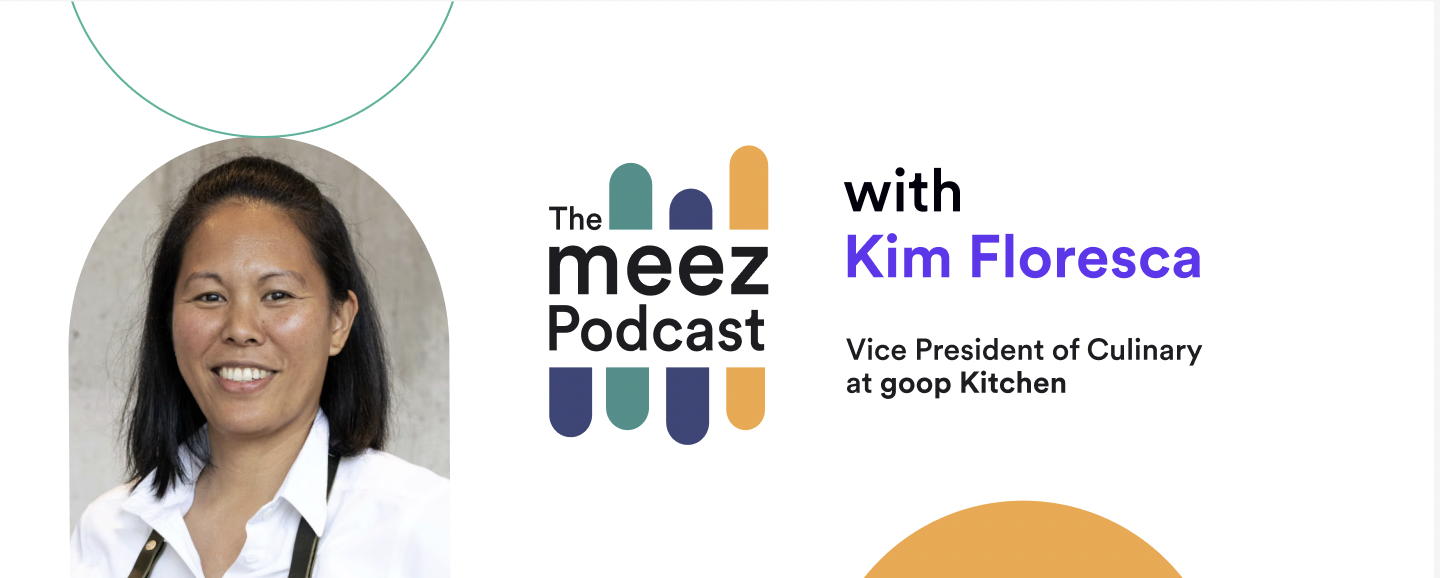
Joshua Sharkey: So hold, just explain to me waking up at two 30 in the morning because. That's so far past, let's get a burley. Like what, how does that even work? Like what time do you go to bed?
Kim Floresca: I mean, restaurants close at nine, so probably right around there.
Probably one. But how do you
Joshua Sharkey: even do that? How do you shut off?
Kim Floresca: It's like around nine. It's around nine. Um, I don't know, just kind of like start to read a book or something and it kind of does off from there. I immediately start around two 30, take my dogs out, let 'em go potty, and then start my day two 30 is around the time where nobody bothers me.
So I go to the gym, put a workout in, come back around four 30, um, and then start my day. So get [00:02:00] ready.
Joshua Sharkey: That's like five and a half hours of sleep. Is that right?
Kim Floresca: I'm one of those people that I think honestly functions better with less sleep. I think the more sleep that I have, the more useless I am. And it kind of sounds.
Counterintuitive, but it actually makes me feel better.
Joshua Sharkey: Do you use like a, like a aura ring or a whoop or anything like that?
Kim Floresca: No.
Joshua Sharkey: No, because I know
Kim Floresca: it's gonna tell me that my sleep habit is bad, but I can tell like myself, yeah, that I feel better with less sleep.
Joshua Sharkey: Well, it might tell you that your sleep is bad, but that if like you see a correlation that like, okay, whenever you sleep more, your HRV goes down, or you know, your heart rate goes, goes up or something.
Maybe, maybe, you know, there is those anomalies. I actually, I find the same, like if I get eight hours of sleep, I'm kind of groggy, but like right around six-ish is when I'm good. But like that in between, I actually ended up creating this app on my own that integrates with the OA ring. It wakes me up when I'm not in, uh, deep sleep, so it'll wake me up [00:03:00] earlier.
So it has to be earlier, not later, but like if I want to get up, you know, five or something, it'll track like when I'm in light sleep, because if I wake up during deep sleep, then I'm more groggy and tired. I think that was also part of it. Like even if I got eight hours, if I woke up when I was still kind of in a deep sleep 'cause I got kids and you know, they just wake you up, then I would just be more tired.
But I don't know how you'd like, I mean, two 30 must be great. I hear more about
Kim Floresca: that, but that's def definitely a different podcast. Right? Well, I mean we can talk about anything here by the way,
Joshua Sharkey: but, um, two 30 is just wild. Anyways, so I mean, I do wanna hear like what is a day in the life of Kim, why don't we start there?
Because just the fact that you're starting at 2:30 AM means that your day is much different than others. But like what is like Yeah, what is a day in life, Kim?
Kim Floresca: You know, that didn't always start that way. I think since I've started living here in LA I've started tracking my habits a lot differently. I've always been a morning person for some reason I know of working in restaurants, it's, you are usually a night owl.
And I think for the past 23 years that I've been in this industry, [00:04:00] I've always been a night owl. And for some reason since I've started living here in LA um, and working at Good Kitchen, I've started to change my habits and I realized that. In the morning, I'm more efficient, I'm more alert, and I feel at my best and I feel like I can give more to my team in the morning.
And so I started to change a lot of the habits, um, and I realized that if I needed to do better for my team, I needed to take care of more of myself first. So at two 30, that's the only time nobody bothers me. I get no texts, no calls, I can focus on myself. And I found that it actually helped me a lot and focusing whether it's getting the energy out, whether it's getting the aggression out that I was feeling inside, whatever that was, I could pour all of that energy into getting that frustration out or getting that anger out or whatever that I was feeling ready for the day so I could reset and I can feel neutral, start my day, and then [00:05:00] go into work with a clear mindset.
Joshua Sharkey: Yeah. And
Kim Floresca: I found that that was like a great reset for the morning so that I could give all of myself to the team and starting at 6:00 AM um, you know, all the orders started coming in and we have 13 restaurants now in California, and that's when all the problems started happening, right? Your shortages, your call outs, all of the issues that all the restaurants start to see start to happen that early.
And so what I found out was that if you can tackle that part of the day, the rest of the day was, okay, let's just manage all of the other issues that's gonna happen. Because if you can manage those issues that are the biggest parts of the day, then the rest of the day is kind of whatever you can manage everything else.
So I was like, okay, let's just get all of this in the first quarter of the day and then the rest of the day can't get any worse. Right? Hope, hopefully. And so I really enjoyed switching that up a little bit and found that. [00:06:00] I was happier and I was getting better and more efficient as the time went on, and it was, I don't know, just kind of made me feel better.
Joshua Sharkey: Yeah. So do you do that on your day off? On your day off? Do you also get up there early?
Kim Floresca: Yeah, I do.
Joshua Sharkey: So what happens if you go to dinner? Like what if you go out to di a dinner and you don't
Kim Floresca: get I'm, I'm in the early reservation person. If someone tells me seven 30 reservation, I'm like, are we really friends?
You don't know me.
Joshua Sharkey: You, you know, I, I, it took me a while to, but I finally got past the people making fun of me for five 30 reservations. And I'm like, it's just, you know, first of all, you, you know, it's, it's easier. You can mm-hmm. There's no issues and yeah, you're done at like 7, 7 30 and get home. Um, you know, eight 30.
I'm totally, I'm totally with you on the early reservation.
Kim Floresca: Yeah. I mean, you've got kids though, right? Like, you go home and you get to see them, you put them to bed, at least you can get that routine.
Joshua Sharkey: Yeah. Yeah. I mean, yeah, we kind of have like a, we have, we have no choice, but even we have a babysitter, um, we'll still do an early reservation.
[00:07:00] It's just, you know, I don't, I also don't want to eat at like eight o'clock at night. No. You know, and digestion's
Kim Floresca: hard and you just have came from a big meal and Yeah. You need to like, let it settle a little bit.
Joshua Sharkey: Yeah. Yeah. And if you, if you drink, you know, like I don't drink a lot, but if I'm gonna, you know, if I go to a restaurant, I'll have a, you know, drink or two and, uh, and um, you know, you want, you don't wanna drink too late either, so.
Yeah. Like late reservation, like a nine o'clock reservation. I was like,
oh,
you know, when I have to go out west and I'm at dinners and I have like a eight o'clock or nine o'clock dinner in like Vegas or LA for something, it's brutal because that's like, you know, that's like 11 o'clock my time. I'm like, you know, I do not want to eat right now.
No.
And I'm not finishing up, you know, a dinner at like 10:00 PM Pacific time. So it's like 1:00 AM my time that I'm like eating dessert. Like this is, this is terrible. Anyways, so like, you're, so you started day early. Got it. I wanna, I mean, I wanna talk about like, um, well obviously we're gonna talk a lot about goop today.
Um, but I definitely wanna understand, you know, your, your sort of process of RD and also where you choose to [00:08:00] spend your time. So early you get in, knock out all the, all the stuff that's more of a pain, deliveries, things like that. And then what's the rest of your day like?
Kim Floresca: Um, so once we handle most of the issues of, you know, the day-to-day operations, restaurants, shortages and things like that, we go into, okay, how do we move the restaurants forward?
How do we progress, um, and get more r and d? So r and D isn't just food related, it isn't just, um, what's the new items coming on the menu? It could be packaging, it could be new stickers, it could be the tackiness of stickers. It could be something as simple as let's change the napkin and the viscosity of a sauce, right?
It could be a million different things, partnerships that we're working on. Or it could be we need to make something better. Yeah. So for instance, our teriyaki bowl, number one selling item on our menu. It's been on the menu for, um, five years since we've opened. And how do we consistently make that better?
[00:09:00] So operationally, a glaze on the chicken might be, we might be having an issue and it's not consistent enough. How do we make that better? So that might be something that we're tracking that month and we'll, so we'll continue to make that glaze and refine it. And it actually kind of correlates a lot to like fine dining, right?
Where you're constantly in mode of refining, refining, refining, and then you know this better than anybody, that you work your entire life to perfect a technique and you are working to perfect a craft that you're like constantly. Educating yourself on. And so that's, that's really part of our job is how do we make this consistent in more hands, in more locations across the board?
And how do we tell more people in our kitchens that this is the technique that you're supposed to do, and how do we train everybody to do it when we're not in the kitchens all over the the state?
Joshua Sharkey: Yeah. I mean, you know, when I, when when you and I first had a, a longer conversation, like [00:10:00] the, the what I, what I took away when I left that, that I love so much was it was so clear that, um, that you were so passionate about innovating on the sort of every aspect of not just the food, but the entire, like digital, hospitality, um, ecosystem of what you're, of, what you're doing.
Like every and every little thing matters. I love that someone like you is in a place like Goop because you've been at, per se, you've been at, you've been all, you know, all these, all these incredible places and. Obviously we know coming from that world, like the way you do one thing is the way you do everything.
That's why you know your station is pristine. That's why your apron is clean. That's why your right angles of all your ninth pans, that's why all those things matter is because you can't do, you can't have a dirty station, but have delicious food. You know, you can't not have your museum plus together, but have a great service and they all matter.
But I feel like that's something that is so exciting that we're now translating into, you know, digital delivery, things like that. [00:11:00] Especially when someone like you can, can do that because you're getting your hands into everything. Like the fact that you're saying RD isn't just food, it's, it's every little part of the experience.
I'm excited just to learn more about like what, what that all looks like at Goop Kitchen. And maybe we start with like, what's, what's the gem because you, you, you mentioned this like, I think it's like a role, right?
Kim Floresca: Yeah. So a gem is our guest experience managers, and we created this because in a digital hospitality world, which doesn't really exist.
You usually order from a platform. So it could be Uber Eats, DoorDash, GrubHub, whoever you order your, you know, delivery from. And usually when there's an issue, you go back to the app and you say, Hey, my cookie's missing, um, my order was incorrect. And usually they'll either refund you or they'll say, sorry, good luck next time.
Right? And that's the end of it. Um, we hated that. We hated the fact that there was no connection, there was no human empathy that was coming back to you. And we said, well, why don't we change that? And so we [00:12:00] surrounded ourself with a team that really cared about that and we created this guest experience manager, um, team that basically comes in with that piece.
And so we created this digital hospitality, um, section in our company that basically handles that. So you can text, you can email, you can call us, and you can say, Hey, my cookie didn't get delivered. I am so sorry. How could we have done that? Let me get this back out to you. And it's this level of hospitality that we don't have a server in our restaurants.
We're completely ghost kitchen. We're only delivery you can pick up in some of our locations, but there's no server to take that order from you. There's no server to say, oh my gosh, I'm so sorry that we messed up your order. Let me go to the kitchen and get it corrected for you right away. So we wanted to create that server experience, but you know, how can we do that through a phone?
How can we do that through, um, call or email or text? [00:13:00] And so we found a way to make that a human experience and we hired. A team to make that happen. And we have this digital playbook of let's just create people. Or not create people. Let's just find people that care about this as much as we do. And I'll tell you, they take bullets every day, right?
Like people are hangry and people are mad that you messed up their teriyaki bowl and that you got the wrong dressing for their salad. And, and I can understand that. Like I can understand that there is a fact that your cob came with the wrong dressing and you were expecting this salad and you pay a lot of money for that to happen.
Let's make that experience better for you. Let's make that experience that you could have easily had completely go wrong, and let's just turn it around and let's just make that a better experience. So we created this entire team to make that a hospitality experience and. From all of the restaurant experience that we've had.
We have a team that's come from the Cheesecake [00:14:00] Factory. Um, so they know hospitality. And I'll tell you, um, Brent Benedict is one of our team members that actually heads that. Um, so we created this together with all of our team, and he really like owned it. And together we were like, well, what's the biggest issues?
People couldn't call us. People couldn't talk to us. People couldn't figure out what was going on. So let's just do this together and let's find somebody that can give you like a warm hug through a phone. I am so sorry that we messed this up. How can we make this better for you? And to get that guest back because through a phone, it's so easy just to say, yeah, good luck.
Joshua Sharkey: Yeah, yeah. Yeah. It's so funny. It's, it's a very similar experience, like, like when there's a delivery issue with food and when you, uh, when your, uh, plane gets delayed or canceled, like they're just as angry and there's so much this like angry mob of people that like. Otherwise would not be saying the type of things that they do to the poor person behind the desk.
You know? But they're saying some really, you know, hurtful [00:15:00] things and, and really what they, what everybody wants is just for someone to be like, man, I'm so sorry that really, that that really sucks. I, you know, you must be like so mad right now. And I, I'd love to do anything I can, but they don't, they don't do that 'cause they don't, you know, take the time to, but the fact that you're doing that is really, is really cool.
Kim Floresca: But it's also that, that transactional piece, right? Like they're not a customer to us, they're a guest. And it's that flipping the script of one guest at a time. And you really need to like understand that it's not just a transactional piece. That we're still a hospitality company and most of these companies that are doing digital hospitality are tech companies.
Yeah. And they're not run with a hospitality group in mind. And so you're thinking like, okay, well we're selling food. We should be a hospitality company. We are a restaurant company first. And if you're not getting that one guest at a time, what are you even doing? And so if you're not taking that into consideration, your mindset starts to flip when you think, you know, they're not a customer, they're guests.
And that's a very big piece of like yeah. The ethos of who [00:16:00] we are.
Joshua Sharkey: Yeah, no, absolutely. I mean, I really, every, every, every company should be hospitality company's allowed to learn from restaurants there. I think World good dollars smiling right now, but Exactly,
Kim Floresca: exactly.
Joshua Sharkey: So, you know, by the way, I never even asked you this, but you know, obviously you have, you know, this incredible, you know, fine dining background, but how did you end up at Goop?
Like how did you, how did you get there?
Kim Floresca: Lucky stars, um, Donald Moore, who is our CEO currently, he just called me out of the blue and I think it was through one of the guys that I used to work with at per se, and he was a food runner and I didn't even know he was a chef at the time, and Michael Israel.
And I think he put a connection to me and just called me outta the blue and said, Hey, do you wanna do this flower child? I said, no, that's not really for me. Thank you though. And then a year goes by and I get a call from him and he goes, Hey, um, Gwyneth Paltrow's doing this Ghost Kitchen Concepts. And I said, well, I don't, I'm not really a celebrity chaser.
I don't really, [00:17:00] I love Gwyneth Paltrow. She's great. I love her brand. I think it's really cool. You know, I, I don't really see myself in delivery space. Yeah. And uh, he said, well, why don't you just come down and see what it's like? And I saw it. They told me what it was and I said, well, this is a really cool challenge, but, you know, do you think that this is really gonna take off?
And they said, well, what do you think? Would you be interested in coming here? You said, you know, you've got a lot of fine dining experience. Do you feel like you would be interested in doing this? And I said, well, this is a really unique challenge and I think that it would be very unique. I've never done gluten-free, you know, no sugar, like light sugar.
It's like, um, no corn products, no. Like all of these things that I've never done before.
Joshua Sharkey: Oh, like no corn, like no, no corn syrup.
Kim Floresca: No corn syrup, corn flour, corn of any kind. Um, no process corn like you
Joshua Sharkey: took fresh corn.
Kim Floresca: Nope. No process sugars. Yeah. It was all of these things. And I said, well, I've never done gluten-free ever in my life [00:18:00] on purpose.
And I said, well, this is kind of a unique experience, but you know, why not? Um, and then we started to talk a lot more about what it was and how we wanted to get better food for people in more locations. And the more and more I thought about it, the more I was like, oh, this is kind of brand aligning. And I loved.
What they were thinking about and just like getting more food out to people and like bettering this food system and just kind of overall the aesthetics of what it looked like. And so we started to talk a lot more and they said, well, is this challenging enough? And I said, yeah, it's very challenging and it kind of makes you think a lot harder in terms of how you wanna create food.
And I said, well, the challenge I think is gluten-free pizza, right? Like that's something that was, took me a year to develop. And in a way it was really creative because I needed friends. I needed help on this. I've never done gluten-free pizza. I don't know a lot of pizza makers. I've got a couple friends that do pizza, and [00:19:00] how many of them do gluten free and really well without corn?
Hardly any of them. And so I pulled a friend in and I said, Hey, do you know anything about gluten-free pizza? I was like, yeah, I got some great stuff. And it was all corn base. And I said, well, you've got sugar in here. What can we do to substitute it? So we started tweaking it a lot and just realized like falling in love with like the process of it all.
Right. Yeah. And just like everything that a chef loves just nerding out and just like tweaking here and there and just making that better. I think that whole process is something that any chef could fall in love with it. But
Joshua Sharkey: yeah,
Kim Floresca: you realize like you created a beautiful product that you can share with more people.
That I think was like, what really got me?
Joshua Sharkey: Yeah. But what it's great about is that you can, you have so much more impact 'cause there's so much more scale even. Yeah. You know, it's not the the, the people that come to that one place, you know that's right when they have a reservation. But do I do this now?
Yeah. Okay. Sure. I wanna, I wanna like, dig into the gluten-free pizza, uh, selfishly. And also just like, you know, I'd love to [00:20:00] learn like, what, what you learned about that. Is it, is it, is it gluten-free flour? Are you using, like, you know, how are you going about it? Yeah. And what, what were like the biggest like, like takeaways, uh, to, to make it good.
Not soggy, crispy, but still have texture.
Kim Floresca: Gluten-free pizza sucks. I'll just say that we ate a lot of gluten-free pizza and I'll say it is just not very good. It's starchy, it's rice. It's like, you know, it's just not very good. And we've eaten probably every brand out there, um, that we could get our hands on.
And probably over a hundred brands. Any place that we could eat, we ate a hun like for an entire year. Anybody that had gluten-free pizza, especially in la, New York, we would just travel and eat. Um, and it wasn't. It wasn't very good. And so we said, okay, well what's the best part about gluten-free pizza that we did?
Like how do we get that crispy bottom? What kind of cooking techniques can we use? And we, we found some things that really helped. We're still trying to tweak that and still [00:21:00] trying to make it better. It's that soggy bottom of any pizza that's, you know, the steam is the hardest thing and you're trying to figure out, um, I'd still love to still get a crispy bottom, crispy or bottom.
Um, getting that ventilation is really important in the box, but then it's that thin crispy pizza that we like. And so, you know, we're still refining it and we're still trying to make it better. I'm never gonna say it's perfect, as any chef would say that nothing's ever gonna be perfect. But, you know, we are using a gluten-free flour mix and so it's a couple different flour blends.
Without corn is a very hard one. Yeah. 'cause corn was a really great, uh, moisture barrier and I think it really helped with the steam and it like actually kind of, um, absorbed a lot of it and gave it a little crispier bottom. But the challenge was how do you remove the corn and get it crispier? And so you used a good amount of fats to make that happen.
So olive oil is like a really good, um Oh, interesting. Moisture barrier. Yeah.
Joshua Sharkey: Gotcha. Yeah. 'cause I know like, you know, like New York style pizza has, you know, it's more sugar in it. [00:22:00] Yeah. So it's slower cooking so it doesn't burn, but it's like more, more of the, you know, the, the bottom has, has got more structure and then like, there's the, there's the Neapolitan style with less sugar, but like high heat.
Do you, do you go like super, like fast high heat or is it, is it lo lower and slower
Kim Floresca: high heat? Um, for, yeah, for a couple minutes.
Joshua Sharkey: Yeah. Yeah. I imagine when there's not as much sugar, you can go, you can go higher heat.
Kim Floresca: But then we also had an issue because it is rice flower based, like how do you get that to not look so white in the middle?
Right? Oh yeah. It doesn't look color like crispy and, and golden brown enough. So how do you get that a little bit more? People do not
Joshua Sharkey: use rice flour enough, by the way.
Kim Floresca: Yeah, I agree. It has
Joshua Sharkey: such like, you know, I mean, it's like, I always go, I'll, I'll go to H Mart and I look at like the, the, the rice flour for tempura.
It's like so good. It
Kim Floresca: is very good.
Joshua Sharkey: We were frying oysters, uh, uh, last week and um, with the mix, uh, rice flour and it's just like so crispy. Anyways. What are some of the, the other, you know, gluten-free challenges that you've been [00:23:00] excited about or like are the detriment of your existence?
Kim Floresca: Baking. Baking was a hard one.
Um, that I think was like a very eye-opening experience for me. I've not done a lot of gluten-free baking in my life. And then using like refined sugars like. Sugar, white sugar, brown sugar has been something of a staple. Like baking is,
Joshua Sharkey: yeah.
Kim Floresca: Hard enough that you can create like really good pastries. You know, it's, it's fairly simple but also very delicate and there's a good balance of it.
But removing gluten and refined sugars is very difficult to do. You know, what's actually really interesting, I'm gonna shift a little bit, is the delivery space. That 40 minute window is kind of on average on how long something will last. Um, from the time that it leaves a restaurant to the time it leaves, it gets to a, a guest.
Joshua Sharkey: Yeah.
Kim Floresca: And that was something that was a very big learning curve that we didn't actually anticipate when we were creating a lot of these dishes that we had to backtrack on. And so when you're thinking about like how hot food arrives [00:24:00] or how long something gets soggy for, we'll never eat our food right away.
We wanna see how a guest is actually eating it. So when we prepare a lot of our food, we'll put it in a bag, we'll shake it around, we'll test it 40 minutes later and see how that pizza is tasting. See how that teriyaki bowl is eating. Does it shift too much in transition? And that was something, um, that I never thought of.
Yeah. When we kind of like started this whole thing that, that makes so much
Joshua Sharkey: sense. I imagine that's, that, that has to be the part of your RD process for anything on the, on the menu at all times, right? Is that you're, you're making something and then they get sit for X amount of time before you eat it.
'cause nobody's eating it right away.
Kim Floresca: Yeah. I mean now it's, now we know, but we didn't know that. Yeah. You know, to begin with when we first started,
Joshua Sharkey: what are some other parts of the RD process for you that are either like, super similar to what you were doing, you know, in the, in the restaurant space or completely different that you were really surprised about?
Kim Floresca: I mean, I think I'm surprised every day by something. I mean, there's just so much that you learn I, whether you know it [00:25:00] or not, um, you know how much people. Care about everything. Um, it could be the smallest thing to the biggest thing, um, staples on our bags, right? Like, we wanna make sure that they're enclosed.
Well, they wanna reuse their bag. So how do you close the bag but also make it reusable? Because you can't have a strip in the bag that closes it. Mm-hmm. But you have to close it somehow. You have to seal it somehow. So the stables make it reusable, but then you can cut yourself when you put your hand in the bag.
And then like, there's so many other things in this business that we're still trying to figure out. So if you have any ideas, please swing on my way.
Joshua Sharkey: Um, well, are you thinking about you're probably not 'cause of just of the food. 'cause the food, I'm looking at it right now, obviously pretty, you know, it, it looks very wholesome.
Obviously fried things to go are horrific. Um, is that like, how do you, how, how do you guys think about, um, maintaining crispiness when [00:26:00] you're, when you're sending something.
Kim Floresca: Crispiness is either dehydrated or like, we don't really do a lot of fried things. It's not really something that like Yeah. Is kind of in our realm.
Um, yet I think that might be something down air down the line like
Joshua Sharkey: Fry could do.
Kim Floresca: Isn't that quite convection oven an I don't even
Joshua Sharkey: know. Honestly, I don't,
Kim Floresca: I don't, I've never used an air fryer. Can you believe that? We had a big conversation about this the other day.
Joshua Sharkey: I don't, I I don't know if it's a thing that we have, it's a
Kim Floresca: convection oven in a basket.
Joshua Sharkey: I don't really, yeah, I think that's what it's because we have a convection oven, one of those like, you know, fancy convection oven thing. One of the settings is air fry and I'm like, what is it? How can, what is it? Tell me be
Kim Floresca: I, I don't know.
Joshua Sharkey: I don't know. But I'm going to, I'm going to chat GPT this while we're, while we're going and I'll let you know what, what they say.
But, you know, any other, like, I mean, look, there's so many delivery challenges, you know, not, and, and again, not just the food, but yeah, like the handoff, like you get the food like. We order like here, you know, not that often just 'cause we, we, there's not a ton of great food, but like every [00:27:00] once in a while we will wonders around here and a couple of things, um, shout out to John Adler, but you, and the, the bag just ends up on my doorstep, you know, and so it's waiting there and there's like a bag, you know, that's just, it's, it's not, and like they always put it in front of the door.
So like, when I open the door is like pushing the bag out. That, that part of the experience even, you know, like I have, I have to imagine that that's something that you're thinking about as well. Like, okay, what's the hand up like,
Kim Floresca: yeah. We think about every bit of it from the time that it leaves our hands to the time that it, you know, like some of our partners that actually hand off the bags to the drivers even, um, we find frustration and then we start to take over that piece.
When you're talking about crispy things, there are some companies out there that give a lot of, um, textures and flour bases that help pull out moisture and humidity when it's in a container. So someplace like Griffith Foods and the larger manufacturing plants that do have the searches do help with the crispiness in places like that.
So if you're looking for something like that, let me know. I do have some connections, [00:28:00] but it's not something that we deal with. But that is, there are some places out there that definitely do it.
Joshua Sharkey: Yeah. By the way, you were right. It's a high speed fan positioned very close to the heating element. Small cooking chamber to concentrate the heat and airflow and a perforated, it's convection in a very small space.
Kim Floresca: And yeah, because I see it all the time in like a, what is it? The, um, like the bravo convection ovens, you know, the ones that are like on your countertop?
Joshua Sharkey: Oh, it's, so it is two to three x the velocity of traditional convection ovens. Yeah. So it's basically convection at a high velocity in a very enclosed space.
That makes sense. It's like rapidly drying things. Okay. Yeah. Okay, I gotcha. But
Kim Floresca: it's not really care, like care. No, it's not frying. Frying. I guess it's, uh,
Joshua Sharkey: but yeah, it's,
Kim Floresca: well, I guess frying is kind of a way of dehydrating, right?
Joshua Sharkey: Well, it's funny because people don't, most people don't realize that frying is actually a dry cooking method.
Yeah. You know, they, they, they think it's a wet cooking method, but, but it's not. 'cause Yeah, it is, it is, you know, removing moisture actually from [00:29:00] that, right. From the, from the atom. Um, so we're gonna, it's a cough topic. We'll circle back a little bit and then as it relates to today. With you in your background.
You know, I mean, I have so many lessons I learned in, in the fine dining world that have nothing to do with cooking, by the way, that still stick with me today. I'd love to hear like if you have some that are still with you today that you learned from any of the places. Oh, I mean,
Kim Floresca: like cutting tape and, you know, I mean like, I think all of the ones that you probably deal with, um, trim versus scraps.
There's so many things that I probably do all day every day that I can't not think of keeping your station clean. Um, I don't know. I probably do so many things that I don't even know, probably stick probably come to mind right away, but are just inherently something that I do all day. Like, I don't know.
Tell me something that you do.
Joshua Sharkey: Well, I mean, yeah, same. There's, there's a bunch, but they, they tend to like, uh, [00:30:00] manifest into things that have nothing to do with. Cooking, even though they were cooking related. Like, I remember one of my first jobs was at Oceana Brick. And um, he was terrible to me, like horrific.
Like every day I would come in and he's like, why are you here? Like, just go home. Like why do you even wake up in the morning? Um, 'cause he was trying to break me down, you know, over time I would sort of earn some trust and he'd like, okay, we're gonna make the, the crab cake mayo today. Great. So I would, I remember like walking to the station and he was, he's like, okay at, at 7 45, you know, we'll, we'll we'll start making it.
So I walked over, you know, I got there at like five 30 or something and, uh, I was like, okay, great, let's do it. And he's like, um, where is everything? I was like, oh, I thought we were gonna make it. He's like, where's the Meison Plus? I was like, well, you know, we'll, we'll gather it. And he's like, this isn't culinary school kid.
You, like, you have to earn the right to, um, to, he didn't say it this way, he said it a lot meaner way. But basically what he said is, he, you need to like earn the right to, uh, to learn. And the, the premise being like, yes, of course I should have had all the ME Plus already built out. [00:31:00] Measured out ready for this thing so he could just step in and show me.
And that for me has translated to, to over the years, like, you know, you, you, you don't just, you're not entitled to, to learn more things. You have to, you have to earn it, you have to work hard for it. And, and, um, you know, that meant early on me going in early to learn bread from the bread baker and just doing whatever they needed and going into the fish butcher and, and just doing whatever they needed.
And, and then over years as I, as, as I would get mentors, whether I was going to a new, you know, starting my own food business or starting this business, you know, anybody that wanted to help, you know, I knew I, I had to do the work and I had to, you know, go out of my way to show that. Like, I will do, you know, like I'll take action on what they say and things like that.
That's, I mean, there's many things like that that stick with me that, that, um, you know, it's a food lesson, but it actually translated into something much more.
Kim Floresca: Yeah. No. Do you think that the generation that's coming up, like do you, how do you, what do you think about them? Like, I'm [00:32:00] gonna, I'm just gonna flip the script.
It's because I think every generation says, you never worked as hard as I did. Right? Like, you never went through what I did. And it, and it builds character to a point because I think when we were growing up and we went through those ranks, there's a certain level of hazing that was, whether it be good or bad, we went through.
And obviously you can't do that now. And it, and when you look back on it, you're like, yeah, that was probably not something that was great, but we went through it and you are the person who you are now because of it.
Joshua Sharkey: Yeah. What
Kim Floresca: do you think about the generation now?
Joshua Sharkey: I mean, it's hard, I don't want to sound like that, cynical, like, oh, these kids these days.
'cause there's things that you know, that, that are very good about it. You know, we worked, you know, a hundred hour weeks, we worked six days with two doubles. That was just kind of the what it, what it was. And you get paid, you know, for a shift. And you know, the way that we learned was just being yelled at and it was kind of a battle with everybody.
Yeah. In, in, in, in a healthy way. A a lot of that I think is good and, and a lot of it, I'm sure is probably toxic. [00:33:00] I don't, I I don't have a good answer. I think there's probably like good and bad. The idea though of being in the trenches with people and um, going through suffering together builds a bond like independent of, of like the, is our craft different are, are there as many people that are as good because you have to, you have to aay something 5,000 times to good trauma to be great at it, you know?
Yeah. That stuff, yes. Maybe there aren't as many experts, but also like, I don't think you can have the same bond because, you know, when you go through those battles where you're just, where it's just hard, but you're doing it together with people, you know, that bond just stays forever. My, my, the people that I work with in those restaurants are friends for life and, um, I, that's the part that I think maybe changes.
I dunno what you think.
Kim Floresca: No, I, I agree. John, uh, Adler and I started the same day, uh, per se, and he and I have, you know, anytime you like see someone, you just like go back to those memories and no matter how much time passes by you, it's like being in the [00:34:00] military, right? No matter how much time goes by, you go back to those people and Yeah.
You can, you just, yeah. You go through war time. Yeah.
Joshua Sharkey: And there, I think there's a, there, there becomes this mutual respect where you and I never worked together, but the minute we talk, we're like, yep, I know. Yeah, we worked together. You know, and, and then there's that, there's that bond that's like, even though you weren't in it, maybe that's similar to the military, a bunch of people, you know, where, where you just know, you're like, yeah, that, that, you know, you went through the trenches.
So that part, I think, um, I'm sad about that part. I think there's good and bad about that, but I do also think the craft, you know, there's so much more information there now available where you can see, so maybe I, I don't know. Like I, I think about like. You know, making a tart dough, I don't know. I'm just making something up and I remember having to make it like a hundred times, or making algar train and having to make that every day for like two years and like, it, it took that much to, to know how to like, feel for the veins when you're pulling them out.
Know exactly where they are and the, [00:35:00] the right way to sort of press it in. It was not too hard and the right way to make sure you have enough space so that like after it melts and you pull the fat off, like how to make that thing was like a lot of trial and error over a lot of time today, probably somebody could just make a YouTube video of all of that, and then you have the exact, like all the learnings over the course of, you know, you know, 10 years you could probably put into a video if you wanted to.
It'd be very explicit and someone could just have that all, you know. In a day, um, that if I watched it a bunch of times, but, um, I don't know if that's good or bad. Maybe that's just better. Maybe that, you know, just means that now you can do more. This show is brought to you by, you guessed it, me's me, helps thousands of restaurants and food service businesses, all of the world build profitable menus and scale their business successfully.
If you're looking to organize your recipe IP and train your team to put out consistent product every day. In less time than ever before, then me is just for you. And you can transform all those old Google Docs and Word docs and PDFs and [00:36:00] spreadsheets and Google sheets into dynamic, actionable recipes and meez in lightning speed.
Plus, stop all that manual work of processing invoices. 'cause MES will digitize all your purchases automatically. And there's a built-in database of ingredient yields, prep yields and unit measure conversions for every ingredient, which means you're gonna get laser accurate food costs in a fraction of the time.
Visit www.getmes.com, that's G-E-T-M-E-E z.com to learn more and check out the show notes moving forward, because we're gonna be adding promotions and discount codes so that all of you lovely and brilliant meez podcast listeners, get a.
Kim Floresca: I think, I think there's something good to be said about both the future and the past, right? Like I think there's something that you can learn from both and there's something nostalgic to learn from the past and that craft that you can have [00:37:00] to rely on the feeling and the the memory that you have. But there's also something about the future to learn from in the sense of, although you may know it, you've never done it.
How do you like incorporate both of them into your own experience? And there's so much to learn from the younger generation. I learned from them all day, every day. And I'm like, Hey, can you help me with something? And I use them for a lot of expertise.
Joshua Sharkey: Yeah. Tech,
Kim Floresca: right? They know a lot more than I do, and I love that.
Yeah. I love that. They wanna teach me, but then I can also teach them a lot of things too. And there's this really great generation that is coming up in our company that they wanna learn and they want to care more about it. And it's never this generational, um, drift that I, I appreciate that they care more about what they wanna get better at.
And they're like to ask questions and they're curious. And as long as you remain curious about both ways, whether it [00:38:00] be the older generation, the newer one, that there's this neutral ground and there's not a separation. Yeah. And as long as everybody's is like in this even playing field and there's no separation, I think that is something to like really be excited about.
Joshua Sharkey: Yeah. Yeah. I do. I do think that requires though what, what you all are doing as well, which is, which is you have to be mission driven. What I love about what I'm, and I'm making assumption here or I'm sort of. Assuming of the entirety of the group, of, of this generation, that they, they are, they do seem to be more mission driven, where like, that's important for them even more than, you know, the, the, the dollars.
So having something that they can get behind is, is really important and that's when you wanna actually, obviously learn more.
Yeah.
I do have a question for you actually, because I remember when I like left Cafe gr and I started building the first like, fast casual restaurant that I had. And um, and then working on that, and then over the years of that, the way I cooked at home actually changed, and even just my [00:39:00] style of cooking changed.
I, I'm curious, like, do you, do you cook differently or do your taste or your taste different now with that you are, of course you've been doing this. How, how so? Yeah, of
Kim Floresca: course. Um, I think my food's more simple and it's more like organic. Like not organic in the sense of like, I'm using organic produce and yes I am, but it's organic and like whatever's nearby I think I'm cooking and it's, it's more, um.
I don't know. Loose, I guess kind of. Yeah. You know, it's, it's not like very, I used to be very regimented in like, what I was making and like a chef, right? Like, you just wanted to have like a prep list and knock it off and not really be thinking about it. Now it's just kind of like free flowing. Um, I think I'm more conscious about what I'm eating.
I mean, I'm getting older, I pack up more pounds and it's just easier to, to really like, you know, be mindful about that. But I think I am really being more conscious and especially being in this brand, you're doing a lot of label reading. Um, you know, and what you were [00:40:00] talking about before about the new generation, really caring about what they're eating.
I think they're, that's, you know, the generation coming up. Yeah. You have to be able to be mindful about that. And it is something that we all have to be careful about. It is wild. Not just following trends, but you know, just talking about, yeah, what are you really putting in your body?
Joshua Sharkey: I mean, it's pretty wild the things we eat.
I mean, I, I grew up Lucky Charms, you know?
Kim Floresca: Yeah. I don't
Joshua Sharkey: even think that's Pop Ramen all day
Kim Floresca: every day. Spam. Yeah. I'm not even sure it's
Joshua Sharkey: legal, you know, like that. What is it, the red, red dye number five or whatever. 40.
Kim Floresca: Yeah. Yeah.
Joshua Sharkey: My kids don't get lucky charms. I mean, they're missing out, but, you know, but, uh, but yeah.
Yeah.
Kim Floresca: Pop-Tarts. Yeah. Mean poptart, whatever it wast.
Joshua Sharkey: Um, what's the other one? Um, the, uh, toaster stru. Toaster strudels.
Kim Floresca: Oh,
Joshua Sharkey: it was so good, Josh. And are like, you and I are right here. Two packets of the, of the glaze. Yes. With one strudel. So you can always have extra strudels that you don't know what to do with, but like, I always, always need sandwich them.
Oh, that's a good idea. And
Kim Floresca: then [00:41:00] 'cause like the ratio of crispiness to the bottom. Yeah, yeah,
Joshua Sharkey: yeah, yeah. Poptarts were like, I would do poptart sandwiches too, though.
Kim Floresca: Never did that. I think I made a white, didn't I? I
Joshua Sharkey: think I used to do peanut butter and jelly sandwiches with poptarts.
Kim Floresca: Look at you.
Joshua Sharkey: So what, by the way, on the, um, label front, what's, what's your thoughts on the seed oil?
Kim Floresca: You know, I, we went down this whole rabbit hole on, uh, for about a year on what seed oils were good. Were bad, you know. Doctor, can you explain
Joshua Sharkey: to me what, 'cause I, to be honest with you, I feel like now this is what I feel like really old. I'm like, what do you mean? Like, pumpkin seed oil's amazing. Like what, what, explain what is the, what, what is this thing about seed oil that that is where at least a theory of why it's bad.
Kim Floresca: Yeah. So seed oils mainly being, um, canola oil, vegetable oils. I know it sounds crazy. Like seed oils in general. Yeah. Um, but really was causing inflammation and I think it really started from really the source. And where are you getting [00:42:00] these seed oils from? And what are you talking about when you're talking about seed oils?
There's a company called Seed Oil Scout that really started to promote these, and you would have to buy into their app and you could be on a restaurant that was on their app and say, you know, you're a seed oil frame and a lot of it was due to inflammation. Your body would, you know, not be so great. It would reject it, it would be not so healthy, healthy for you.
And so I went down this rabbit hole of understanding why this seed oil, it was so bad for you, sesame seed oil. And it was just really about the, the, um, health benefits about it. And I found out that a lot of people did claim to say that it was inflaming them a lot. It was something that, um, they found, uh, for health benefit reasons that was their trigger.
But it was something that, uh, really started to come out a lot in 20 24, 23, 24. [00:43:00] And so I just did a lot of research, talked to a lot of dieticians, doctors, nutritionalists, and we need to understand a little bit more about it. So, uh, we switched in Go Kitchen, uh, very quietly. We went to sea seaweed oil. So it was this company that we found that was using seaweed, um, to uh, it was a really cool system that they would ferment seaweed to extract oil from.
And it was a really cool regenerative source. And I love the benefits of seaweed and I didn't even know that that was like a thing. And then, you know, it was really hard. It got really expensive. And so we found this, which is really cool. Winterized avocado oil. Winterizing avocado oil allows it to not congeal when you're putting it in refrigeration.
And so that was the hardest thing. 'cause we wanted to go to a more natural oil. Uh, it was a little bit easier to get and winterizing avocado oil allows it to not congeal. So all of our dressings, [00:44:00] marinades, all of that stuff, um, still remained a little bit more. Um, you know, a room temperature would be a little bit more, uh,
what do you call it,
loose or
mm-hmm.
Yeah. More of
a consis consistent product. Yeah. At room temperature and refrigeration. And we were able to kind of switch over to that. So, you know, I think not only for trend but for health benefit reasons, um, we switched completely over to avocado oil, olive oil, and coconut oil for our restaurants and just wanted to like, understand that a little bit more, um, for just health reasons.
Joshua Sharkey: But like seed, when they say seed oil, it's not like all seeds then, right? It's just like certain. Certain seeds or, yeah,
Kim Floresca: it was, it was most targeted for like canola oil off, um, vegetable oils, things like that.
Joshua Sharkey: Yeah, it's funny 'cause canola oil. Soybean oil, I don't remember this from a long time ago. It was like, it just means Canadian oil low, like low acid, Canadian oil.
It's like grape seed, right? It's, it comes from, yeah, from the grape seed plant.
Kim Floresca: Safflower oil was in there. Yeah, it's like, [00:45:00] like the seeded base. Yeah. Yeah. Cotton seeds, things like that.
Joshua Sharkey: I mean, peanuts give you inflammation. Yeah. You know, I, I remember from, uh, the time at little bit we would, whenever we put peanut butter on something, we'd always like sprinkle uh, we'd put like great fresh turmeric on there 'cause turmeric exposed to remember inflammation, but not a lot of things give you inflammation.
Wait, what
Kim Floresca: were you putting turmeric on?
Joshua Sharkey: One of the dishes? We just had like, you know, or a couple of them actually we just put, you know, like we, we would use things like actually this guy, really great chef named Kate Kennedy, you know, was very like, very plant-based. And, uh, we added all of these other sort of adaptogens and things like that to the menu.
And, um, turmeric went on a bunch of stuff. Uh, there was like, you know, GaN no gando, um. A bunch of different mushrooms and things like that. But remember the turmeric is like, you know, anti-inflammatory and peanuts are inflammatory. So we would always combine the two, you know? Um, so, you know, it makes it sound like all seed oil is bad.
It sounds like it's just certain ones, you know? I hope never, I hope we never get rid of like, incredible Austrian pumpkin seed oil because [00:46:00] it's insanely good. And
Kim Floresca: I think you think, I think it's on a case by case basis. Yeah. I think if you, you find a very cold pressed, like very specific oil that you can find the source of, I think little by little is great.
Yeah. I don't think that if you're finding like a perfectly sourced pumpkin seed oil is gonna hurt you, I think everything in moderation is gonna be fine.
Joshua Sharkey: Yeah.
Kim Floresca: They're mostly talking about like frying oils and cotton seed oil and all these things, you know?
Joshua Sharkey: Yeah, that makes sense. So you all, you guys are scaling a lot.
I mean, I know some of this already, but like, how are you thinking about growing outside of California?
Kim Floresca: We're definitely thinking about it. Next year's gonna be a big year for us. We're gonna open 14 more locations, um, and it's gonna be out of state. It's gonna be our first ones outta state. Yeah.
Joshua Sharkey: Do you think about like regional, like regional cooking when you're, when you're going to other places?
Kim Floresca: I think we're definitely gonna have to, um, I know we're gonna have to, carrots from California are not gonna taste like carrots in another state. And so we're gonna do a lot of work in traveling [00:47:00] this year to make sure, um, you know, our recipes are consistent and if not, what are we gonna do to rectify that?
Joshua Sharkey: Yeah. And but are, will it be cultural things? Like if you're in, I don't know, like the Louisiana, are you gonna have like a gumbo kind of thing?
Kim Floresca: Um, probably not. Just, we wanna make sure that it's like brand aligning, right? Yeah. I don't know if gumbo is really goopy, but maybe, uh, well actually
Joshua Sharkey: tell me about that.
Like, can you, like, you know, how do you, how do you describe goop to, to people? Goop, kitchen.
Kim Floresca: Goop Kitchen is, um, taking classics and putting our own spin on it. Um, cleaning it up in the way that we know that is sustainable for lifestyle. And so we'll take things like a teriyaki bowl that has 90% sugar and we'll clean it up with no refined sugars.
We'll make it a little bit better. We'll get organic chickens. We'll take white rice and we'll put brown rice into it and we'll give it a little bit more, um, vegetable driven, um, sides, and we'll find the best products that we possibly can. So we'll make our own teriyaki [00:48:00] sauce. Um, we'll find like really great kale salad and we'll just put a chef spin on it.
So we will dress that kale with like a really delicious miso vinegarette. We'll find the best pickle ginger we can and we'll add our fun twist to it.
Joshua Sharkey: Yeah. And what, are there things that you know, would not show up on a Goop kitchen menu?
Kim Floresca: Um, I'll never say no because, um, who knows? You know, like there might be a time.
It could possibly happen, I don't know. Yeah.
Joshua Sharkey: But like right now, are the things that you're like, Hmm, this we probably won't have, you know, fried, you know, french fries with the menu or something?
Kim Floresca: Uh, I wouldn't, I wouldn't, I don't know. I dunno, I can't say no.
Joshua Sharkey: Okay. A hundred percent. Alright. Keep it an open, keep your eyes open.
I like it. Have you thought about, you know, I've been hearing this a lot more lately, this sort of, um, movement towards hyper-personalization of food. You know, like everybody, as we learn more about our, we were talking about the Whoop and the Oura ring and things like that, like, um, as we learn more about our specific, [00:49:00] you know, needs, um, I feel like, you know, I'm hearing a lot more of this, uh, you know, very, very personalized, you know, food based on not just like allergens, but other, other, other things.
Is that something that, that, that ever, you know, gets into the conversation for you guys?
Kim Floresca: Oh yeah. I think Wonder's doing something really incredible or they're looking into a lot of that. Um, we're studying a lot of those, especially here in LA where there's a big need for that. Um, yeah, that is something that's definitely on our radar.
We've been discussing a lot of.
Joshua Sharkey: How do you think about that? Is it just more options or is it more actually more sort of customization or,
Kim Floresca: I mean, there's so many different angles that you can come from. It is a lot of customization, but also we have to be careful on the modifications that can happen.
Yeah. Because that'll definitely slow down a lot of production. So we, you know, there's so many different things that, you know, technologically we can only hold ourselves to, but we also wanna make sure that we're not losing that guest experience. Um, so I mean, look, we're gonna be thinking about a million things and how much actually works from the guests, from the user [00:50:00] experience.
Yeah. It's, is what's gonna be, uh, what we actually test out and we'll probably test 'em out in a couple different places.
Joshua Sharkey: Yeah. I mean, what are you most excited about right now? Or what's keeping you up at night?
Kim Floresca: Everything's keeping me up at night.
Joshua Sharkey: Well, not, not for long by the way. 'cause you, you get to bed pretty early and wake up pretty early, so.
Kim Floresca: Um, I mean, well expansion, you know, like that is terrifying and exciting at the same time.
Joshua Sharkey: Um, what's most terrifying about it for you?
Kim Floresca: Just quality, consistency, um, making sure that we're getting enough product to everybody. Um, growth, um, getting the right people into play. Our team is amazing. This is probably the most exciting team I've ever worked with in the history of my culinary career.
Oh, wow. I wake up. It is insane. I like, I love everybody I work with and I, I know it sounds very like annoying for anybody to listening, but I wake up every day excited to see the people I work with. We start each day with a hug, and I know it sounds silly, but it's, I honestly like, I [00:51:00] That's so cool. I, I love the people that I work with and I'm ready to do anything with these guys.
We like help people move, we help people get cars, like we help people find places. Um, it's more of a family here, and I know it, I know it sounds really like Kumbaya, but
Joshua Sharkey: sounds amazing. The
Kim Floresca: people here, the culture here is incredible.
Joshua Sharkey: Just to divert for a minute, like, why, what, how did that happen? That's not common.
Kim Floresca: It's not common. And that's the reason why, like, we're tired of these places that are just like, you know what? Come work here. You can work from home like the, the ladi DA of every corporation that has ever become like, let's just change a landscape. Let's change the way we treat each other. Let's change the way that every restaurant company has ever been and let's like, treat each other with empathy.
And like the best way to get to the, um, end goal is to say what's best for the guests, and leave it on the table [00:52:00] and move on, right? Like, everybody's gonna have an opinion. Everyone's gonna get mad, everyone's gonna be. Whatever in a meeting and leave it on the table and then we move on. And for some reason, this is the best team that can actually do that.
Nobody leaves with hard feelings. Nobody gets upset. You leave a meeting, cool, great. You got this, you got that. Great. And you feel like everybody has been heard. You feel like everyone has had a voice at the table and you feel like everyone has their respective rules and you, you can move on.
Joshua Sharkey: Yeah. Do you then have to, um, I don't mean to sound like negative, but then do you have to weed out people if right away you find you realize that they're not gonna fit into that culture?
I
Kim Floresca: haven't had to do that much.
Joshua Sharkey: That's good.
Kim Floresca: Yeah. I mean, they honestly, they do it themselves.
Joshua Sharkey: Yeah. Yeah. Okay. So, uh, expansion is, is, uh, is keeping you up. What, what else are you like super excited about?
Kim Floresca: Expansion as well. Um, we're gonna be opening our first [00:53:00] restaurant, uh, full experience restaurant in one poeo in, oh, really?
Near San Diego. Mean
Joshua Sharkey: like, dine in,
Kim Floresca: dine in, you can also do to go and also do, um, delivery from this restaurant. So we're pretty excited about that. Um, that'll be it opening, it's called one eo. It'll be in San Diego.
Joshua Sharkey: Oh, in San Diego?
Kim Floresca: Yeah.
Joshua Sharkey: Um, tell me about that. So who, who runs that? So, so, so are you gonna be there a lot?
Like what, what, what, what? I, I had no idea about this.
Kim Floresca: Figuring it all out right now. So that'll be opening, um, probably about summertime. So we're kind of in the midst of that. Finding plateware, um, signing leases and all of that. Well, the leases signed, but, um, really designing out that space. It's really beautiful seats, so everyone's got seats.
Um, it's not really like a full seated like, uh, fine dining restaurant. It's kind of like very quick service, but very bespoke. We're kind of changing the landscape on what that quick service looks like and giving it a little bit more of that like half [00:54:00] Michelin star to one star experience. And I don't know, kind of like playing it off a little bit more.
So we'll see with it.
Joshua Sharkey: Do you think Michelin stars like matter anymore?
Kim Floresca: Um, I think it matters to chefs more than some people.
Joshua Sharkey: Yeah. And do you think that's a good thing or
Kim Floresca: I don't know. You know, there's a, I have a chef group and everyone's just kind of like, you know, it's over. I can't believe this.
Everyone's got their own opinions about it. Um, it's hard to see from afar like some places that you know deserve it and some places that you're like, oh, didn't see that coming. Uh, I don't have an opinion. I'm not in that game anymore. And it, it sucks to see some places, but I dunno.
Joshua Sharkey: Yeah.
Kim Floresca: What's your opinion on it?
Joshua Sharkey: I think it's just, um, a little bit dangerous because it's extrinsic, you know, like the. Don't necessarily, like, I don't think Thomas Keller needs someone to tell him that per se. And French laundry are incredible, but because it's there, it's there. Yeah. And if [00:55:00] for some reason they lost a star, it would be detrimental.
But I can probably guarantee you there's not much that had changed. Um, you know, Daniel Ballou is a star. Yeah. And like he's has an incredible restaurant and uh, he probably did, it probably didn't impact him as much. 'cause you know, he's a great person. But, um, I, I, I feel like it does more damage than good because it's so extrinsic, you know?
And it's not, um, you know, I would imagine that, you know, when you were in Chad, if you and Chad were in a different world, um, Chad from Sweet Green mm-hmm. And you must just said restaurants, it would mean a lot more to him that if you felt that his restaurant was, wasn't great than if he lost the star, um, from Michelin.
And vice versa. But because it's there, it becomes this thing that, you know, you have to, you have to, you have to live with. And it can create, I don't know, I think it can create the wrong incentives for why you do things. Sure. Because fried food can either have a great restaurant or, or not. I think, I love hearing Richard and Mario talk about it because they're, they're so anti, [00:56:00] you know, Michelins separate.
They, but they, but they're so obviously like, um, you know, maniacal about creating an incredible restaurant.
Mm-hmm.
And that, like, the Michelin has nothing to do with it. That's just, you know, they know that, that, you know, that their guests have a great experience and that it's, they're curating this experience that might be for everybody, but, but is what they love.
And, and, and there's a lot of people like that. And I, I just think that, I don't think it's, you know, that there's, that the intention is, is bad, but I think it can create the wrong incentives and can create like, you know. Some mental health issues.
Oh gosh.
You know, and, uh, obviously 100%, you know, so I don't, yeah.
I just, I'm not sure. I don't know if it does more, um, harm than good. Yeah. You know, but I think that's with everything all, you know, when you're waiting on the New York Times reviewer, you know, it's, you know, like, do you, do you need some, you, you do. Unfortunately, you need someone to say that so that you get more business.
Mm-hmm. But, um, it's tough.
Kim Floresca: It's tough.
Joshua Sharkey: I mean, you're in this sort of [00:57:00] digital space now and, um, you guys are, you know, testing out a bunch of technology using a bunch of technology. What's your, what's your thought on AI and how it's impacting how you all operate? And, and just really how you think about, you know, how it relates to creativity and staying like independently innovative as a chef.
Like is it replacing anything? Is it diminishing anything? Is it changing anything? And what is it making Incredibly better.
Kim Floresca: I think it's great and I think it's useful. Honestly, we use it very delicately. We use it for calling pools for restaurants. So let's just say for example, we're cooking rotisserie chickens.
It'll give us a tool to say to our chefs, okay, for Monday at lunchtime, you can cook. 12 birds, right? And so that is extremely helpful to let them know how many birds to cook. That way your yield is a lot better. You're not wasting any chicken, although the chickens are getting pulled for a um, Caesar salad.
But it gives them a better ideation of like how much they're actually doing. And especially [00:58:00] around the holidays, um, they have a better cue of what they're looking at when it comes to ai. As far as anything, um, data analytics, that's very helpful because it definitely helps our team, um, to pull that information a lot faster.
I think when it comes for chefs like writing menus, you can definitely tell when it starts to happen and you start to see like the trend of a lot of digital restaurants, um, start to like read the same. And I definitely can pull a lot of restaurants and I'm like, oh, I can see like the same verbiage is starting to happen where the same trend of words clump together starting to happen.
And. Whether they're using AI or not, um, you can start to see a lot of that starting to play into place. I think it does kind of like impede a little bit on creativity and it doesn't allow chefs to be as, um, playful and witty. But I think it is also kind of a fun tool if you're stuck, right? And you're writing copy for a menu and you're just [00:59:00] like, I need a playful name for a pizza, and you're just like, I can't, I'm in a mental block and I can't think of anything.
There might be a time where it can pull you out of a fuck. Um, but. For a marketing team, I think they use it quite a bit and maybe it's a helpful tool for them. I don't know. Um, when it comes to our company, I think we use it every once in a while when you need to, you know, make sure that when you're writing to a guest, a thoughtful letter, let me just make sure that I'm saying this correctly.
Is there anything wrong here? Um, and you wanna be very empathetic, but you wanna make sure that you're being, you know, very sensitive to what you're saying. You can be very specific on what you're asking for and just going over that to make sure to double check, triple check that you're, you know, what you're saying is correct, whether it be politically or whatever.
I think that's a helpful tool just to double check your work. Um, and we use it quite a bit and I think that there's a time and place for it.
Joshua Sharkey: Yeah, we use it all the time, obviously on, on, on our side. But on cooking side, like [01:00:00] generating recipes, I feel like there's, I don't know if there would ever, ever actually work.
I mean, there could be some, I think there will be a lot of opportunity for. Fixing things. We use it actually a lot for getting a lot more, um, clarity on instructions. Mm-hmm. Because instructions for recipes are typically not clear enough. Yeah. And, um, it can be helpful for prompting like, Hey, you know what size pan?
Sure. Um, you know what, you know how much space between this if you're going to be searing and things like that. We just ask these questions that like, then you can add more clarity.
Mm-hmm.
My wife has tried like asking, um, you know, GPT for a recipe for X, Y, Z and it's never, you know, it's, and I don't think it's ever actually worked.
Kim Floresca: I think the more specific you can get, the better.
Joshua Sharkey: Yeah. That's for sure. I mean, there's a bunch of stuff that works incredibly, and I use it for workflows and things all the time, like literally like every single day. But what are you, like, what are you thinking, you know, five years from now, what, what's gonna change for you and for, and for, and for Google.
Kim Floresca: Five years from now, I'm hoping Go Kitchen [01:01:00] has a bunch more locations, the quality and consistencies at the same pace that it is now. I'm hoping that, you know, the we IPO one day, that would be really cool. No, I'm joking. I really don't hope, I really hope we don't, because I hope that the quality and consistency of Goop Kitchens remains like that.
Private, privately owned, you know, very cared for brand that does remain humble. That does remain what it is today and that's made it so good. You've seen so many of these places that do IPO and they lose a lot of the heart of what it's become, um, and what made it so great and they lose a lot of the places because they're playing into the trends or the influencer games and they, you know, you've seen it a lot, Starbucks.
Yeah. They, they go so far into the influencer game that they have to come back to center. What made them the best coffee shop in the world was they were selling coffee and they wanted people to lounge around a little bit more.
Joshua Sharkey: Yeah. I
Kim Floresca: hope that group kitchen is in more [01:02:00] places and I hope that we're feeding people in the best way possible, and I hope that we're hiring more people to better the culture of the hospitality group and just doing it in a better way possible.
Yeah.
Joshua Sharkey: How about you in, in five years? If not, what's gonna change for you?
Kim Floresca: God, I didn't, I didn't even think I'd be here in five years, so I have no idea what's gonna happen in five years.
Joshua Sharkey: Isn't that I I'm on the same way. Like when I look back, like it's just like, how did I, what am I doing here? I never would've ever thought that.
Well, I hope in five years you'll see the same. Like, wow, I never thought that this is where I'd be in five years. So, um, this was awesome. Um, I'm so grateful that you took some time to come on here. And also just thanks for all the, you know, support and all the, you know, all the feedback you've shared has been really, really helpful.
Kim Floresca: Thank you. Appreciate it.
Joshua Sharkey: I do wanna come visit the kitchen, uh, soon. Now I just dunno which kitchen to visit, but
Kim Floresca: we're moving our headquarters very soon, so you should come visit us in our new kitchen.
Joshua Sharkey: Oh, where's that?
Kim Floresca: I can't tell you where yet. 'cause it hasn't been released, but it's gonna be, can you tell me the
Joshua Sharkey: state?
Kim Floresca: It'll be in California.
Joshua Sharkey: Okay, gotcha. All [01:03:00] right. That's enough.
Kim Floresca: But you, you're gonna love it when we, when we open it up. Awesome.
Joshua Sharkey: Well, I look forward to that. Thanks for tuning into the Me podcast. The music from the show is a remix of the Song Art Mirror by an old friend, hip hop artist, fresh Daily. For show notes and more, visit getmeez.com/podcast.
That's GT double E Z.com/podcast. If you enjoyed the show, I'd love it if you can share it with fellow entrepreneurs and culinary pros and give us a five star rating wherever you listen to your podcasts. Keep innovating, don't settle. Make today a little bit better than yesterday. And remember, it's impossible for us to learn what we think we already know.
See you next time.

.png)