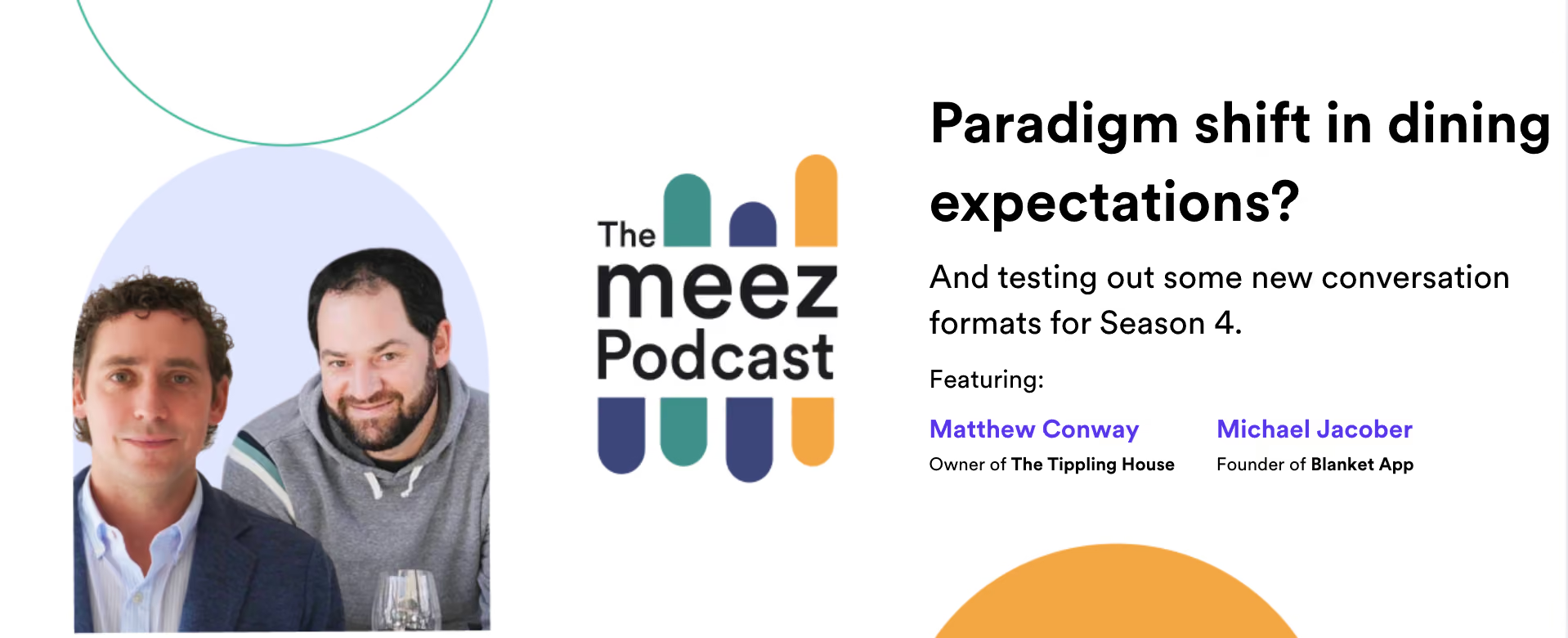
Matthew Conway: I love
Joshua Sharkey: it's context. See
Matthew Conway: that You just dropped that.
Joshua Sharkey: He's think it's, he eats out so well.
Matthew Conway: Yeah.
Joshua Sharkey: And I've never met anybody that's, that eats out as well as him. He's a good eater. Outer quantity.
Matthew Conway: Eat
Joshua Sharkey: eats. He's a great eater outer really so
Matthew Conway: much eats out
Joshua Sharkey: and he just continues to eat out. Yeah, he eats out in like all over the place. He doesn't care where [00:01:00] it is. All over
Matthew Conway: the world.
Joshua Sharkey: Yeah. He doesn't care. He'll eat out anywhere and and that's what I appreciate about him mostly me
Michael Jacober: too.
Joshua Sharkey: Context.
Matthew Conway: Context.
Joshua Sharkey: See, this is what I mean.
You are listening to me podcast. I'm your host, Josh Sharkey, the founder and CEO of me, a culinary operating system for food professionals. On the show we're to talk to high performers in the food business. Everything from chefs to CEOs, technologists, writers, investors, and more about how they innovate and operate and how they consistently execute at a high level day after day.
And I would really love it if you could drop us a five star review anywhere that you listen to your podcast. That could be Apple, that could be Spotify, could be Google. I'm not picky Anywhere works, but I really appreciate the support and as always, I hope you enjoy the show. Lemme ask you a question, maybe just kicking this off before I, I'm gonna put you into a rant, uh, Conway.
If people read our [00:02:00] group texts or individual texts, is there anything that they would think differently of me or you or
Michael Jacober: me?
Joshua Sharkey: Yeah, any,
Michael Jacober: I think my public statements and image very much reflect the same thing that would happen in a private text conversation.
Joshua Sharkey: I would agree with that. For the most
Michael Jacober: part, I think many people might be nervous to expose all of their texts to the world, and I think I would probably fall into that category.
But as a general rule, I think most of my texts fall right in line with the same old guy that you see face to face, whether in person or on a podcast.
Matthew Conway: I think it's a diplomatic answer.
Joshua Sharkey: I think my humor would, uh, would not be understood by everyone without context. And there's not often context, and I'm pretty sure that I would get canceled.
Michael Jacober: Well, me,
Joshua Sharkey: you know, I don't think that's, it's bad, but I, you know, outta context,
Michael Jacober: everybody has life goals. Sharky, everybody has life goals. Sounds like yours is to get [00:03:00] canceled. We can make this happen for you.
Joshua Sharkey: I just, you know, there context is everything really, you know? Any, any, any joke outta context. Just doesn't, just doesn't, you know, land the same.
I think Jacoba, you're kind of, I think the same, you, you get canceled too,
Michael Jacober: probably. Yeah. But I think most, most comedians would say the j the, the litmus test of any joke, whether in context or not, is whether, it's funny if people laugh, you can get away with anything. If people don't laugh, you're fucked.
Joshua Sharkey: Yeah. Yeah.
Michael Jacober: That's how it works.
Joshua Sharkey: Well, this is, this is a, a run through. We al we are, this is live. We are gonna record this and we, what we already are, and this is gonna go on air and everybody will hear this, but we're gonna do a practice, run everything, life's practice. That's, uh, a new format because I wanted to do something different with the, with the show.
And I've been talking, talking about it for a while. And I just wanna one, have more people on people that, uh, everybody that comes on I respect, but like, hopefully where we, uh, can have some, you know, good. Discussions but also disagree. And when we disagree that we disagree pretty hard. But in general, just [00:04:00] try something different.
So today the impetus for this specific one, because I've been trying this for a while, is Matt, you, uh, you brought something up that you wanted to talk about. So we'll start with that. But I have a bunch of things that we can go into. We're gonna kind of go in a bunch of random different directions. Yeah.
And I don't, I'm not gonna bother with like introductions of you guys 'cause nobody cares about any of us. But we could talk about that, you know, afterwards and post about it. But Matt, you said that there's something that is like one of the most under-discussed aspects of today's hospitality world about social media and how it's changing dining.
So just start us off rant, you know, tell me what you were saying, but like, you know, get, get into more detail.
Michael Jacober: Yeah, sure. I think, you know, today's world's changed a lot, period, obviously, but within the hospitality community, whether you're a line cook all the way up to a multi-unit restaurant owner, people talk about how.
People talk about all types of shit, of why the world's changing, why people are drinking less, why cooks don't know have the fine [00:05:00] skills anymore. Why, why, why, why, why? There's all these reasons why. And the end result is because I think personally fine dining, whatever that is, I don't mean white tablecloth.
I mean dining that gets awarded by the publications and entities, whether it be beards or Michelins or whatever. Those restaurants don't all have tablecloths anymore. But all of those experiences, I think people who have, uh, a long tenured experience of dining out at great restaurants, it's never been worse.
And you watch every year people get up and pat each other on the back and it always looks a little cliquey and it always has been. And those situations just kind of seem super disingenuous. 'cause everybody on the stage, everybody that's loving on each other knows that what they're producing today probably doesn't hold the candle to what was happening 10 years ago.
And. In between.
Joshua Sharkey: What do you mean by that? When you said like, it's not, it's, it's not too good.
Michael Jacober: I think today's great dining experience is a lesser experience than it was 5, 10, [00:06:00] 15 years ago. From a quality of service, the types of things that go into the details that make a great experience. And again, I don't believe you have to have white tablecloths or the old traditional mindset to be a great restaurant.
But I think there's certain things that we all agree on. If your server comes up chewing gum and isn't kept well, that's probably not somebody you want in a fine dining restaurant, and again, I use that for lack of a better term, but people are like, oh yeah, this person's the best, this person's the best.
And you get so excited and you go to their restaurant and then you see sloppy service, gross food handling things that would never be acceptable. I went to a highly regarded restaurant recently in New York, uh, that gets on all of these crazy lists for whatever. And it's in this very quiet, you forget that you're in New York City.
It's amazing. They create this environment and you have to take an earlier, a late reservation because that's all they have available for you. And as soon as we like sat down and got settled in the [00:07:00] back door, kicked open to uh, major thoroughfare in Manhattan with taxi cabs honking, and the guy was bringing in a full packed dolly full of vegetables falling off all the kitchen guys started swearing at the guy.
And this was a two Michelin star restaurant that people wait months in advance to get into. And I just don't think you would see that 10 years ago. And I don't think you see it at a restaurant that's been around like Bernadette or whoever else gets on those lists forever. But the thing that everybody wants to talk about, some people told me when I explained that experience, oh, that's the cool factor these days.
Like that's them not trying to like be too like that, that's them being loose with everything. And everybody can have an excuse for all that. But when we get to the bottom line. People dine out differently than they ever have. And my opinion, and I'll die on this hill, is that through social media, there used to be an experimental factor of dining out, cocktails, wine, [00:08:00] the chef, the quality of the food.
Now my wife and Sharky and his wife could all agree to go out to dinner on a Friday night, two weeks in advance at a restaurant where we were excited to experience the chef 15 years ago. And then the first time thing we would do when we sit down is catch up because we haven't seen each other in a while.
There'd be an excitement to see each other. And then we would have anticipation for the what the wine list was gonna look like, what the cocktail program might feel, maybe even what the room looks like, as well as like the service. And then you like get into some of the most celebrated chefs of our culture and it's like you're excited to experience what they're putting on a plate.
In today's world, those people have DMed each other 200 times that day about. Their life is like, so when you meet them, the anticipation of meeting your guests is now completely different. And then the restaurant that you're going to has posted every cocktail, every picture of the room introduced you to their service staff, the chefs, every whim, whimsical dish has been shown [00:09:00] over and over and oftentimes put on reels and highlighted.
And it's like, so you get there and it's like you don't have any interest in what your guests have done for the past weeks or months since you've seen them because you're constantly texting or DMing each other. You've seen everything the restaurant has to offer on whatever. And how can you keep the world of dining exciting and have people want to go out and spend a lot of money on these experiences when frankly from New York to Tokyo, they've seen every dish that any chef that they care about has ever put out.
And I think that is something we don't talk about enough and how that lack of excitement. People get more love from likes or comments or things on their social media than they do by going out and experiencing a great dish that they've never seen before. So the excitement has transferred from the actual experience to capturing the experience.
And at that same restaurant, I'll finish here where the door kicked open in the back and like you're waited forever. For the five 15 reservation, we [00:10:00] had a three top, it's counter service only sitting next to us. And she videotaped on a little tiny video camera the food going into her mouth, each bite. And we were in the background of all of this and she, for the entire three hour experience, she filmed everything.
And I eventually called the som layover and said, I don't really care, but like if I were famous, would you allow them to photograph me this entire time? Like, shouldn't there be some level of safety here for you to approach the guest and say, this isn't the place for that? And he kinda chuckled and said, yeah, well, you know, if you wanna complain, we'll go say something.
I said, oh, no, no. Let her, let live Wildes dreams. But now we can't even eat a meal without being like, look, it's going into my mouth. And that person then posted a reel about everything, including what the inside of her, the roof of her mouth looks like. So when we're gonna discuss the evolving nature of our industry, how we get that excitement back, will we ever get that excitement back?
Do we care about getting that excitement back? I think those are [00:11:00] things that need to be a part of the discussion versus just patting each other on the back when somebody wins an award for service and standards that are subpar, in my opinion.
Joshua Sharkey: Okay. I have a bunch of questions, but I don't wanna hear. I
Matthew Conway: I do too.
Yeah.
Joshua Sharkey: I want hear Jacoba as well. But I will say one thing before, this is sort of an aside, but like,
Michael Jacober: first of all, do you agree or disagree?
Joshua Sharkey: Well, I, so I agree with a lot of it, but I think that there's also, I mean, I think there are a lot of restaurants that are doing great things. I think that, you know, and also just businesses that are, that are trying to do really great things.
I had Kim on from Goop, uh, kitchen, uh, last week and she's like, you know, she has an incredible pedigree and she's like totally rethinking how to have an amazing experience with, with that type of world. And, and, and I think there are people clearly doing the restaurant space, but let's, I wanna talk about that, but I will say.
I get yelled at whenever I go out for not taking the picture of the thing before we eat it. And I, I was eating with you at Tatiana. Mm-hmm. With Evan and like the, the famous dishes came out and I just went to eat it because that's what I wanna do, is [00:12:00] eat it. And I got yelled at. Yes. Like, Hey man, that's his most famous thing.
Make you gotta stop and to let pictures get taken. So I'll be honest, like, it, it's, it's an, it is all encompassing and I, I, I agree. But, um, there's like then this pressure, right. Of like, you know, 'cause I don't wanna, I don't wanna wait. I don't wanna take a picture. I, I just wanna eat the thing. Well, it's still like, at its perfect, you know, thing And
Michael Jacober: the way it was designed
Joshua Sharkey: that happened with us, right?
With all of us. With all of us there. Yeah. So it, it is like, it's, it's endemic. But Mike, what do you, what do you think?
Matthew Conway: Well, I, the first question I, I, I ask is, who has, who has never said that, right? Like, I feel like that conversation and, and I'm, I'm being a little bit provocative here. Every generation has said that About the previous generation?
Yeah. Oh, it's just, it's just not like it used to be. It, uh, it's just not, you know, they don't care as much as they did. Like you ask any chef, [00:13:00] like the chefs that I worked for said the same shit, and I'm sure the chefs that they worked for said the same shit. I think there's like just a cultural thing that just inevitably comes out as, as you know, each generation puts their stamp on something.
But you also, if you look at like, kind of macro in terms of that, specifically, that concept specifically where like things are getting diluted. There's just more restaurants, right? Like when we were coming up, I dunno, when I was coming up there was like, you know, five really good Michelin starred restaurants that you could work at, and it was really competitive to work at those restaurants Today.
If you're starting out, you can, like, you're working at. Someone's restaurant who learned from one of those guys, and there's hundreds if not thousands of those guys out there. So there's just so many more restaurants to work at, and it's next to impossible to sort of maintain those, you know, those same levels and those same [00:14:00] standards when you just have, I don't know, just I would say like a dilution of high quality restaurants that you can go and cut your teeth at.
So it's just this like seemingly inevitable cycle where over time the level of skill is just going to continue to deteriorate. Deteriorate,
Michael Jacober: period. But before we get to the level of skill, my point and. First of all to, to address Sharky. I'm not claiming there aren't great restaurants or people doing great work that that was not what I was saying.
What I was saying is I think the same caliber of restaurant today at whatever level they're at, was operated at a higher level not that long ago. And you're talking about skill sets or working somewhere? We can get to that. 'cause I know it's something Sharky actually cares a lot about as far as Yeah.
You know how a cook own, owns their, owns their skills and or sommelier or whoever. I'm just talking about information. Yeah. [00:15:00] And how much more access we have to know what we're getting ourselves into, which used to be the centerpiece of dining from
Matthew Conway: Yeah.
Michael Jacober: And your guests, what you're about to eat and drink and experience.
Like the difference between what wine you had this Friday and last Friday used to be exciting to people and now they're way more excited about. At least in my experience, a lot of superficial things that have nothing to do with their ex exact experience. And while we can talk about how things have changed with the number of restaurants and how hard people work to climb the ladder and how many great restaurants actually do exist, even if you're at those places, their there, you have an expectation of what's gonna go on.
Sharky's. An example of of Tatiana, which I think is a great one. He basically tried to drag me in the hole of me accusing other people of, of behaving ways that I did myself. My wife wanted to go to a restaurant that was really hard to get into in New York City, and we flew all the way up there for one dinner.
And on his [00:16:00] chef's table there's a whole, you know, montage of his photos. And one of them is his Piri Piri dish, which is his most famous, colorful dish. She flew all the way from New York. I'd rather chop sharky's fucking handoff than let. Not let my wife get a photo of what we, like, literally flew up there and worked so hard.
Okay,
Joshua Sharkey: well that's fair. I actually forgot about that, but No, but I get yelled at it for all the time. That's, that's a unique thing. But I get yelled at for coffee. Like,
Michael Jacober: that makes me part of the problem. And I'm not, I'm not, I'm not saying that I'm not or that I, I
Joshua Sharkey: think that's a unique situation, but
Michael Jacober: it is a unique situation.
But even in, in my restaurant in Charleston, we share more of our food photos and what wines and things you're gonna expect. And my wife and I talked a lot before we opened, how much, I would love to not do that or say you can't even take photographs or post photographs of what gets served here. But now it's part of the expectation of society.
Even if you minimally share, if you don't share anything, it's really hard to exist because people expect it. How many times you go out with people or you [00:17:00] know, your significant others or friend, good friends and they look at the menu days or weeks before you even go to the restaurant. Like, that's so common to me, where people are like, oh, I looked at, I looked at the menu and it's.
Why are we even gonna the restaurant if you already know what everything's on the menu, like it, it seems like it's taking the fun out of dining out. And at that point you might as well just lower your standards to, let's just go to the local place that does a pretty good job, but doesn't do as well as the people who really go crazy.
And I have a, a beverage director friend that runs a hundred million dollar multi-unit restaurant group in New York. And he said their biggest problem is competing with, you know, somebody who lives in Fort Green used to have to come to Manhattan and go to that fancy restaurant and pay that extra 30% premium to get a great meal.
And now they can get one delivered to their house probably from the same restaurant. Or there's a comparable restaurant that's a little less expensive that's close by and they don't really care that much about that gray area of difference. And so it's diluting the people who actually have to work [00:18:00] their ass off to be that 30% better to be the greats of our industry.
And so there's less of them and it's a big part to do with. Information to me.
Joshua Sharkey: I agree. I also think, look, the, I I think the market drives behavior and what is important today for, for the younger people dining is maybe not as I the same things that were important to us when we were dining more. I don't get to go out as much, you know, so the things that are important to them are just different and restaurants are, you know, addressing that.
Matthew Conway: Sure.
Joshua Sharkey: I think there is an aggregate way more good food now because there's this trickle down of, you know, there was only x number of restaurants in right in, in the late nineties, two thousands. All those great chefs produce more chefs. All those great chefs produce more chefs. And now you have this, you know, diaspora of, of like from the cities into everywhere of, of great food.
So there's just more good food. So there's, which means that you don't have to. Be as differentiated if you, 'cause you know, if you're in the neighborhood and you're good then you know it's good enough. But [00:19:00] also I do think people, you know, go out for different reasons. Now, we didn't have the kind of social media that, um, there is now.
So the, the experience was, you know, that that was all we had was go, go to that place because that's where I'd see you. I wouldn't see you otherwise.
Michael Jacober: Sure.
Joshua Sharkey: You know, now for them it might just be, and I don't know, I'm actually speculating because I don't fucking know. It might just be they're like, I'm next to you at the restaurant.
I don't, I haven't seen you in like two months. We've only been on, you know, social media. And so like, that's all I care about. I don't care about the thing, you know, the, the door. I just wanna be able to take my pictures and, and hang out with my friend. I don't know. That's a, maybe it's just that there's just other things that are important to people because I don't know if necessarily the food is.
The food is definitely in aggregate better at most places. And the
Michael Jacober: wine, yeah, I vehement the wine
Joshua Sharkey: too.
Michael Jacober: I'd vehemently disagree with that. I think that there, I do, I think finding a good place to eat dinner in New York in any borough, except for at the [00:20:00] very low level, dollar wise, the inexpensive version of restaurants.
Anything past, whatever the New York Times would call under 20, which is probably under 80 now. Did I read the New York Times? Yeah. Those restaurants, there's a plethora of them. To your point, there's a lot of good food, but good quality dining experiences are harder to find in new, more than ever.
Joshua Sharkey: I'm talking specifically about food like, and I mean more,
Michael Jacober: yeah,
Joshua Sharkey: there's, there's more cities now that have.
Enough good options of food that they didn't have that 20 years ago.
Michael Jacober: I agree with that. And the, the low level definitely counts because there's more options, more availability of different types of cuisine than there ever have on every block, even outside of New York there. There's truth to that. I guess what I'm trying to equate, and we can probably move on, which I think is a good analogy that just popped in my head, is like dating obviously I think we're all long path past that part of our lives, but like I have employees that are all in that age of, of, you know, looking for love and [00:21:00] nobody meets each other in person anymore.
So the idea, what does that mean?
Joshua Sharkey: What do you mean? I don't know what does that, like how do they do
Michael Jacober: it? You guys, people go online on apps and they swipe and they meet through technology and then they meet up on these cold dates with people that they've never had. A lot of people do it at my wine bar and have their first dates 'cause they know it's a cozy, comfortable, safe place to meet a stranger, whereas.
And I know a lot of people who met their significant others on dating apps. Like it's I'm, I'm 43. It's not like I didn't live through that era. Fortunately I didn't really have to do that just because I think it's easier to meet people in person and I think a lot of people disagree, but like dating 10, 15 years ago, you might actually have to go sit at a bar and hope that the guy or gal next to you strikes up some con conversation and now you can sit on your couch and just swipe.
It's changed the face of human interaction. And if it's happening on the dating level, it's definitely happening on the hospitality level. But you go to a conference, you talk to the experts in the field, you [00:22:00] talk to the chefs. Not really something most people are talking about, at least publicly. I do hear a bit of it behind closed doors, especially from those big companies with big ambitions that are like, we're losing, especially in New York.
We're losing the lunch diner, we're losing this whole demographic. These people are aging out. Uh, the younger generation doesn't drink or care about wine and like all these things are eating at our ability to fill seats. And we used to be worried about margins. When I left New York City in 2020, everybody was talking about how margins were shrinking because of fuel surcharges and all of these other things was making it possible to sustain as a restaurateur.
And now people are talk about, uh, fuck margins. They just need butts in the seats and then they can worry about margins. And I think that change has a lot to do with the ability to get food delivered to your door or not care about it. Having to be Andrew Carini. You can probably get something close to your house that it's pretty good.
Close enough.
Matthew Conway: Let me ask you a question. 'cause you've talked about, you, you mentioned, you know, New York City and there [00:23:00] being what seems to be a dilution of quality in New York City. If you, if you zoom out and you kind of think about, you know, if you wanted to be a great cook, you had to come to a major metro, right?
You had to come to LA or New York or Paris, like, like there, there were literally only places you could go to learn to cook for the greats. You know, my question is like, is what's happened better for, you know, the dining landscape nationally? Because what you have is people not needing to go to New York now to learn to be, you know, quote unquote good.
Because you have people who have learned from the city, they've left the city. They've opened great restaurants outside of New York. You know, Josh, we were in, what was it, Minneapolis this year at having like some pretty exceptional dining experiences. Like I wouldn't put Minneapolis on my radar 20 years ago to go have a great dining experience.
[00:24:00] But you know, there's just so many more cities now where good, really good cooks slash chefs have now opened up restaurants. So the question is like, maybe it's not what's best for New York, but has, has just the level risen, you know, has there been dilution in New York, but has it been given to other cities throughout the country in exchange for that?
And is that a good thing? Or is that a bad thing? I, I don't know the answer.
Michael Jacober: I agree with your assessment there. There's better dining options nationally than there was, let's say, pre pandemic, because a lot of those people moved and took their skills there. But I think people have forgotten a lot of the service standards.
I went to Minneapolis this the end of the summer for my niece's college tour, and we ate at restaurants that were highly regarded, that had half of their menu not available on a Saturday lunch. And they apologized and said, sorry, it's because we had a busy Friday night. I think if you're a Beard War [00:25:00] order, sure.
Yeah, yeah. On everybody's short list, you should probably have better ordering practices knowing that you're gonna do a hundred covers. 'cause it was very hard to get into that restaurant. And overall, I didn't particularly think the restaurant scene in Minneapolis was that intriguing, but a lot of that was more the whole experience than the food.
And I find over the past couple years, I joke about it with my wife all the time, but it's not a joke. We regularly go out, order food and drinks, but usually drinks first and hot food hits the table before our drinks. It happened last night here in Charleston. We ordered hot food and gin and tonics, two two bit drinks and a lime, and the food hit the table before the gin and tonic did.
I think that's my point. That matters. You don't wanna sit there and stare at your food without a glass of wine. And if the system's so broken, great. The chef did their time in a big city and moved to a small city. But they don't, many of them don't care about the wine [00:26:00] list. They don't care about wine service.
They don't care about a good cocktail program. And I'm not saying nobody does.
Matthew Conway: Yeah. But it's
Michael Jacober: commonplace for us to go to restaurants that are highly regarded, at least in their own town, and have service experience that are like, what? What the fuck are we doing here? Well, why are there. Pan roasted oysters on the table before a gin and tonic.
Like even if the bar was backed up, you think that you could manage that scenario. So we waited five more minutes for the drink to hit our table before the food got fired. That was not unquestionable or hard to do five or 10 years ago. But now it seems like nobody even gives a shit.
Joshua Sharkey: Do think they do. You think they know that that's supposed to happen?
Michael Jacober: I let 'em know. No,
Joshua Sharkey: but do you think before you let them know that they actually know that, you know, there's a lot of these things that maybe we just knew because we, we had to do it and, and also to be fair, you know, because you think about it and you care and you wanna, you know, and [00:27:00] every little detail matters.
But I'm curious if like, if they didn't even know, you know, they didn't even know that was a thing,
Matthew Conway: that that could be, yeah, that could be a knowledge gap in terms of steps of service. Yeah,
Michael Jacober: sure. And you know, it's, it's a guiding principle of all of my mentorship and training over my career. Always treat the guest how you would want to be treated or that you would treat your mother.
And at the end of the day, if you, if I traded places, you'd want your drink before your hot food. Like if that has to be taught, which it does. I'm not denying that, but that's where it's crazy place we're in because it seems that some levels of hospitality are instinctual, right? The 51 percenters that Danny Meyer chased, just know that you should probably get your drink before your food because that's what they would want.
And again, that connective feeling seems to be fleeting and there are some people that do very good jobs. But you didn't bring me on here to talk about the [00:28:00] people who are doing great work. You we're talking about what's some of the bigger problems in the industry are, and I think Mike brings up some good points about, you know, what are the questions here of, of intentionality and how many chefs are going here versus there.
Like that all matters. New York isn't the whole country. Um, but I think the whole experience is as vulnerable, and I think that's a good word to use as a vulnerable as it's ever been of collapsing. What is high-end dining anymore when you see some of the awards given? We had this conversation with, uh, Daniel came down here for a chef event who has won a Michelin star and worked at Michelin star restaurants, and we're having a conversation.
Do you think a Michelin star in Paris should be the same equivalent as a Michelin star in New York, as it should be in Charleston? They just got released here and everybody's unanimous answer was, no. Of course not. Yeah. And I'm like, whoa, whoa. Everybody else is in on the idea that one star from the Michelin guide should be viewed [00:29:00] different from market to market.
That seems a little wild to me. And they were like, well, you can't compare Charleston to Paris. And I'm like. They're both wonderful. Michelin
Matthew Conway: guy does. Yeah. Yeah.
Michael Jacober: Like if I, we ate at SEP team last month and we eat at Michelin starred restaurants in Charleston all the time. The the ones that won, and I'm not saying, I'm not gonna sit here and say who's better or worse, but they're definitely different experiences dramatically.
And I think the idea that, in know in the US everybody shrugged their shoulders and said, why would we compare ourselves to them? It's like, shouldn't we be comparing if everybody's consensus is that the Parisian one star is better than the US one star? Shouldn't we be aspiring to make that?
Joshua Sharkey: Michel? Is, is Michelin, what's your thoughts on Michelin as a, the importance of it in, in the industry today?
Michael Jacober: Most chefs value that over most of the other accolades. And I think being able to call yourself a Michelin starred chef [00:30:00] has and will for the foreseeable future. Be important to those who work 70 hour weeks and do the hard work to try to get that recognition. And I think that type of recognition is important to keep people driving hard so that there's hopefully a trophy at the end of, uh, partial career or whatever to get the accolades that you think you deserve.
But as far as like putting butts in seats or, or you know, what it really means quality wise, I'm less convinced about that. But I think that it's definitely a highly coveted chef's thing and I think it's good for our industry to have something meaningful like that for chefs to chase and inspire their teams to chase.
Do I think it's political. As all awards are to some level, I think it has to be. I don't really care about that though, 'cause that's life. But I think it's good for chefs to have something to chase. That's my personal opinion.
Joshua Sharkey: This show is brought to you by you guested it. Mes [00:31:00] mes helps the thousands of restaurants and food, such businesses, all of the world build profitable menus and scale their business successfully.
If you're looking to organize your recipe IP and train your team to put out consistent product every day. In less time than ever before. Then meez is just for you and you can transform all those old Google Docs and Word docs and PDFs and spreadsheets and Google sheets into dynamic actionable recipes and meez in lightning speed.
Plus, stop all that manual work of processing invoices 'cause me will digitize all your purchases automatically. And there's a built-in database of ingredient yields, prep yields and unit measure conversions for every ingredient, which means you're gonna get laser accurate food costs and a fraction of the time.
Visit www.getme.com, that's G-E-T-M-E-E-Z.com to learn more and check out the show notes moving forward, because
Matthew Conway: we're gonna be adding promotions and discount codes so that all of you, lovely and brilliant meez podcast listeners, get a sweet deal on me.[00:32:00]
Joshua Sharkey: I think that's a good perspective that every award, no matter what everywhere is, is somewhat political. But my, my concern with it is not the the good parts because there's a lot of good parts about it. Is the, it's extrinsic no matter what. It's like, it's a, it's an extrinsic reward. It's not like, you know, you could, you could know you're crushing it.
Matthew Conway: Yeah.
Joshua Sharkey: And you could be in like, Tulsa, you know, and, and you're just crushing it and not get anything. But if you, you know, is it more important that you're, that you know you're doing the best and that like you're crushing this thing, or that you've got a Michelin star and you know, that that's, that, that to me is a, is a bit of a disparity.
And that, um, you know, that, that it, it's not that it's arbitrary by any means, but it is, it can be somewhat random. Whereas there could be a restaurant that is better than the two Michelin star in New York, and it's in a place that like, is not, you know, very common [00:33:00] and they probably just won't get it. And they might not get anything by the way.
Michael Jacober: Sure.
Joshua Sharkey: This is a global world, and this is not like, you know, it's not just New York, la, Chicago anymore. So that part, you know what, so just leave where you are. So, which means then that if it's that important, then those places just won't have the same caliber of, of restaurants, and that means that the person that really cares about their craft will need to leave to do that.
That's where I get, I'm not saying it's right or wrong, but I, it does, I I, it's hard for me to reconcile that, but you make a good point that every award, no matter what is political. So this,
Michael Jacober: there's, it's impossible to take that out of anything. And it's not just food and hospitality in the Grammys or Oscars.
If there's, yeah, whatever it is, there's always gonna be that nature of it. But like here in Charleston, they just released. The guide here for the first time this November, and you know everybody that eats out a lot and is involved in the community. There was some general consensus about who actually very much deserved some, and when the stars came out, there was a lot of surprise that a [00:34:00] couple of restaurants that weren't on everybody's list were recognized.
And some that were on everybody's list weren't. But I think the most glaring example that's genuinely consensus among everybody's opinion is Chubby Fish. Well, no, no brainer that it's, it's crazy that chubby fish did not receive a star. Yes, but I think people would argue that they have a line, and I'm the biggest chubby fish supporter on the planet Earth.
I think they deserved it a hundred times over. My opinion doesn't matter, but what I think the consensus everybody agreed on Vern's and Chubby Fish were the most likely to be on everybody's list. And Vern's Deservingly very much so. Uh, got a star and, and is a restaurant. I would strongly stand behind receiving one.
Mike Lata from Fig, who's been here for 20 years and you know, fig ran, fig walked, so Verns can run. It's, you know, and Fig still is excelling with excellence after 20 years, which is even harder to do than for a [00:35:00] short period of time. And he literally put Charleston on his back and is still in the restaurant on a regular basis and still has the same leadership team for over a decade, front and back of the house.
I mean, the dude's doing the work today and I think it's almost harder to do it for 20 years or years 10 through 20 than it is one through five. Yeah. And the fact that, that Mike Lata and Fig was recommended and, and not starred, I think everybody agrees while Verns is 1000000% deserving. Everybody was stoked for that.
But it's like, how could you recognize Verns and not fig? They're similar farm to table type, you know. Yeah. New American, everything made in house. It's like they're kind of, it, they're far from different when you eat at them, but similar ethos. And I think that is, to your point, sharky a little confusing to people.
Like, how is that possible? Is this even a real award? Did somebody piss somebody off? Like, well, what, what, how could think be [00:36:00] left off of that? And again, I, I like fig, but uh, it's not that I have any skin in the game for that restaurant or that restaurant group Yeah. Is a unbiased observer from the outside.
It's like, wait, that just doesn't, that doesn't add up.
Joshua Sharkey: There's like a contradiction or it's a conundrum because you want it to not matter in that, in that regard. Sure. Because FIG is awesome, fig is incredible restaurant. And to have that durability over 20 years and to have that quality over t is, is just incredible.
So you want it to not matter the Michelin star. Because, 'cause it shouldn't in that, in that regard, but then if you have one, you want it to matter. So it's, you know, there's this, this, it, it's really, um, it's a, it is a bit of a conundrum. 'cause if you're not in the city where, where there, where there is Michelin, then it, it doesn't matter to you.
Matthew Conway: Yeah.
Joshua Sharkey: And, but if you are, it matters deeply. But you know that I just feel like the, the, um, things need to be far more intrinsic, or at least your opinion should matter and, and it doesn't. Right. Your opinion doesn't matter for, for fig. So maybe there's just a better, a better way to do it. I, yeah, I think that you, like, you need [00:37:00] some sort of indicator that a thing is good.
There's too many places. So you have to have something that says, go here, not here. And Yelp isn't the thing to do that. So what is, and, and again, Michelin can't be because it's only in certain places.
Michael Jacober: To your point about chubby, it's like they have every award. They've might be the, had the best run of any restaurant this year you could possibly have.
So they're not lacking attention, but. You would then ask yourself, why not the Michelin star? Right?
Matthew Conway: Why not? The one that like really, really matters,
Michael Jacober: but I mean a lot of people in total, is it because they don't take reservations? Is it 'cause they don't have a full bar? Like what's the excuse? Because there's gotta be a catch here.
And I think a lot of people feel that making the Michelin, uh, reviewers wait in the line because they can't cut the line and expose themselves is why that that was
Matthew Conway: enough. Yeah.
Michael Jacober: I don't know why they did. I'll tell you right now, like if you eat out in this town, fig and and chubby are definitely wildly deserving.
Uh, when you compare the consistency of [00:38:00] those meals and I eat out at those places frequently. They're both pretty close to my house that I'm sitting in now. But you, you people start to question how is it possible? But to Sharky's point, there's gotta be something that says that it's good. And I think Chubby's done pretty damn well proving to the world that they're a very good restaurant without the mission star, but.
I, I don't know. I haven't spoken to him about it, but I would guess that James would give up a lot of that to have the Michelin star, which is how we opened with this. I think a chef is, would be willing to not be on this list or that list or have this recognition and rather have the Michelin star. At least that's my experience.
Joshua Sharkey: Yeah. Yeah. Which is true. And I just wish there was something that was more, you know, democratic might be the wrong word, but just more available to every, to everyone and, and more easy to understand how and why. I
Michael Jacober: agree. Wow. We agreed. This is crazy. Shut it down.
Joshua Sharkey: Wow. We actually did. That's, um,
Michael Jacober: and Matthew agreed for the first time in 20 years of friendship, it's over.
Joshua Sharkey: No, we've, we agreed more [00:39:00] when I, when I was able to drink wine. So maybe now that I'm able to drink wine again, I think we'll agree more. I, I think we agreed on, hold on.
Matthew Conway: What, what happened
Joshua Sharkey: recently? Oh, you didn't hear? No. Yeah, I can drink wine again.
Matthew Conway: Why? What, what changed?
Joshua Sharkey: I have no idea. No idea whatsoever.
It's just one day I was like, I dunno, something feels different. I'm gonna take a sip. And I took a sip and it, and I was okay. And then I immediately, 'cause if I, I used to be, if I took a sip, I would like, my eyes would get blurry. I would, you know, I would, I would get really tired and I right away, like literally immediately like a sip.
And that didn't happen. So then I drank a little bit more, and then I had a whole glass and I was like, okay. So I tried it again. So now I, you know, I mean, now I'm going a little bit, like a little crazy. I need to, I need to dial it back.
Michael Jacober: Yeah.
Joshua Sharkey: Time. You're
Michael Jacober: making up for lost time,
Matthew Conway: brother. You're making up for lost time.
Yeah,
Joshua Sharkey: yeah, yeah. I mean, I couldn't drink Sherry for like 15 years and, uh, I had like, that must
Matthew Conway: have been an amazing revelation.
Joshua Sharkey: Well, I still, and I still need to now get some, like, I had all these almost an nieces that I had to like, give away and, and, uh, [00:40:00] but now I think it's get some more. But, um, you know, I'm, uh, yeah, it's great.
I had a ne last night and, uh, welcome Matt. It's, it's, um, it's amazing. Um, but, you know, it's interesting 'cause now I, I don't, I, I can't drink a lot. I can only like after like two glasses. That's, that's probably not, but I don't drink that much anyways.
Matthew Conway: Yeah.
Joshua Sharkey: But I only wanna drink like, really, really, really good wine.
So I need another round, Matt.
Michael Jacober: All right. Can I, can I can make that happen. So I, I, a question I'll have for you both after that, that intro or my feelings about that, how would you think we could possibly moving away from accolades and. That stuff. How can we actually bring some excitement back to the dining table?
How can we actually, what, what are, are there any steps that you can think of that we could work together as a, as a hospitality community nationally to get people excited to come back to the dinner table? Not because there's a promo or because there was a TikTok reel, but because they're actually [00:41:00] excited to be dining at that restaurant and it's not because it was hard to get there because they actually were excited about what is might happen in front of them, what might be served to them.
Is that possible?
Joshua Sharkey: Uh, I, I have two parts. So one part where I think that I think there is something that could, could help and then maybe something that maybe is a little bit pessimistic, because I don't necessarily think that the level of execution and all the things dialed in the right way is going to en masse, you know, have, have a big change.
I think the restaurants that do that, you know, right away, it's incredible. It's helpful. They, they love it as much as you love it. It's a lot of work to do. But I think that, you know, and I hate to sound some old, you know, people are just way more, way more entrenched with social media and being on the phone and looking at things and there's way less community.
I think the way that you get more people is. To try to figure out ways to have, you know, multiple, like a, a community coming to your restaurant. So it's not like, Hey, you two that are married come, but [00:42:00] hey, you group with people. We have something that you can, you know, that you can convene around that's really interesting and you're gonna have an incredible experience because I don't know if people do that as much anymore.
I don't know if that happens as much. I mean, it's been slowly over like 25. I mean, we used to just go to the mall and meet you there and there was no, like, you know, when we get there, there was no like, I'll be there in 20 minutes. It was just, we got dropped off at the mall and then we hung out and that was a long time ago.
And then it was, you know, things slowly over the last 25 years, like that has been degrading and degrading where like, I don't know if people, you know, I don't know how often that that happens at all. So like, I, I think it's gotta be some sort of a community based incentive to get there where you meet like the people that you, you already know, or people that like you want to know.
I, I don't know if. The incredible experience that you're going to have is something that is, you know, it can, it, there's gonna be enough to sustain that. Everybody wants to go do that more.
Matthew Conway: It's hard for me to kinda speak for a [00:43:00] huge group of people. So I, I, I try to think about, you know, what are the most meaningful experiences that I have and have had and what gets me excited, uh, about going out.
And I think other people can probably relate to, as someone who's been around food for so many years, it's really about like, and I'm gonna use, I'm gonna use the word exotic and exotic experience, which is basically something that like, I can't very comfortably replicate within my home, or can comfortably replicate or, or have someone else comfortably replicate and me experience that.
Dining. So like, you know, we think about, you know, French, Italian, just these, these, these cuisines that we're so accustomed to enjoying for, for a very long time. When I compare, you know, those experiences to, you know, sitting at the bar at [00:44:00] Chuko, like, I can never produce that level of, of excellence and just that like that, I, I never trained to do that.
And so that experience to me is just so special. 'cause it's, it's, it's so exotic. So that's like definitely one area. Uh, I would say the other area that gets me excited is what Josh just said. It's just about who I'm dining with and the experience that I'm having dining with that gr and group dining to me has been.
I think some of the most, the best dining experience I had this year was I was in Italy. Uh, the first time I ever went to Italy, which I still can't believe, was this year at a restaurant called Drio. And it was this lunch at Drio that, uh, it was equal parts, you know, food and wine that I never would be able to replicate on my own, but [00:45:00] more so just the people that I was enjoying it with.
Like, you, you can't, you can't replicate that. And so I think, yeah, just having, and I don't know how you bottle that. I don't know how you market that and create that as a, as a restaurant. Like this is gonna be the restaurant that you, you know, have a really meaningful group experience.
Joshua Sharkey: That's, so I have an idea for the rest, like, I'm in this group called Hampton, I think I'm told you about.
It's like a co group and, um, that my group is incredible. Like they're, they're just like, so. And, uh, learn so much from them. And, and we meet, you know, we meet every, you know, once a month in a, on a call, but then we also like, we'll go to Jackson Hole or somewhere and just like hang together. Yeah. And, and then, uh, Hampton has this now local thing where you can do a, a group locally where you can, 'cause they're all around the country.
And man, whatever's the restaurant where you actually facilitated those groups of people that were like you and scheduled those [00:46:00] dinners. Like, you're gonna be, you're gonna be once a month here and then another like, you know, interim thing for throughout the month and you actually like, schedule all of those group dinners for all these dis disparate types of, of, of groups.
Yeah. CEOs. It could be chefs, it could be wine people, it could be, and you actually like, take care of the, the, the entire thing and facilitate like, you know, comms outside of that.
Michael Jacober: I think that, I think
Joshua Sharkey: that can work.
Matthew Conway: That that could be a business.
Michael Jacober: But I mean, I do agree with you that every generation says about the last generation, oh, whatever, blah, blah, blah.
That's like a tale as old as time. I
Matthew Conway: mean, that's like
Michael Jacober: whatever. I'm not, and, and Sharkey, and I've had this conversation on a PA podcast and privately before about Yeah, like, you gotta get over whatever, and you can sit back and think about the things in our lifetimes or careers, like I'm not a chef, but I, I remember Chefs of Sharky's generation talking about, I think it's Marco Pierre White's cookbook.
That came out and like it [00:47:00] got cooks like foaming at the mouth. Yeah. To like work 80 hour work weeks because that book just transformed fine dining and the way people think about that. Like what is that today? But more importantly than that, as not as a non chef, and I can leave that to the chef questions, like you're talking about this excitement in these things like this exotic nature, but one of my favorite restaurants to go to in New York City, which I said is the hardest place for me to choose a restaurant.
And I obviously am up there a lot, frequent the city. And when I'm there, I'm usually eating out.
Joshua Sharkey: Hold on, just to decide. My wife said to me. Dude, what the fuck? Why doesn't Matt text you when he goes to the city? I, because she sees on Instagram that you're there. She's like, did you know Matt's in the city?
I'm like, no, I didn't know that question. Oh, interesting. Letting know you
Michael Jacober: live in Yonkers or Westchester?
Joshua Sharkey: I live, like, I live in Westchester. It's a quick train ride, you know, I mean, the, the, the easy thing to do is tell me, knowing that I won't be able to make it so that I have to say no,
Michael Jacober: so you can tell me no, that'll feel much better for everybody.
But you know, when I think about places to go, one of the places [00:48:00] that I, I truly get excited to go, and this is just absolute honesty. Red Hook tavern. And there's nothing exotic about that restaurant at all. It's hard to get into. But the wine list, the cocktail program, the Amaris at the end, the service man, they treat me like I'm a king every time I'm there.
And like I know Billy the chef, but I usually don't tell him I'm going in because I'm not that guy. And like if once he finds out I'm there, he is like, yo ass. Well why didn't you tell me you were there? And I was like, your team treats me like a million bucks when they don't know I'm your homie. That's all that matters to me.
And going into a place that has delicious food, nothing about the menu is exotic at all. A burger, you know, fish and chips, things that are just so whatever, but just executed to perfection. Oysters on the hash, like shrimp cocktail. Nothing that's blowing anybody's mind except for every time it blows my fucking mind.
And then I can drink an amazing bottle of champagne, have it served by a knowledgeable sommelier with a warm service app. I crave going to that restaurant and I wish. I don't think [00:49:00] that's exotic and it excites me. And maybe that's just because I'm an old man. I wish there was more restaurants across the country that gave me the same feeling that Red Hook Tavern does.
And there's nothing exotic about that restaurant.
Joshua Sharkey: Well, I think that there's just different, and this is also just being at a stage in your career as a chef, where like you get early on, you, you're learning and then you, when you start doing this, you need to, you need to wow people and you're trying to do whatever you can to like create like the wow factor.
And then over time you realize you start to like, you know, one, maybe it's, you start to earn the trust, but then you start to realize that like, doing something really well consistently is way more important than doing one thing incredibly well once. And then, you know, not being able to, uh, repeat it.
Michael Jacober: Incredible.
Joshua Sharkey: And part of that's a maturity. A maturity thing. Yeah. But it is way harder. I was having this conversation, I don't remember with who, but like it's much harder to serve somebody. And I re I know this because of Bark Hot Dogs was like. It is so much harder to make a BLT sandwich or a hot dog [00:50:00] and execute it exceptionally well because one, there's no garnishes.
You know, there's like, you know, there's nothing, there's nothing around it. There's already an expectation of what it's, there's no, like, you know, you go to, you go to a restaurant, no, ma, but no's incredible, obviously, but like, you have no idea what to expect and you have nothing to compare it to. You get a BLT, you don't exactly what to compare it to.
And A BLT or a burger or a shrimp cocktail, you know, if it's a BLT, what bread, how thick, how well did you toast it? Mm-hmm. You know, which bacon, how thick,
Michael Jacober: what
Joshua Sharkey: type of mayo
Michael Jacober: baby?
Joshua Sharkey: What type of mayo? Like what kinda lettuce? What, how did you cut the lettuce? How much lettuce, how much tomato? How thick did you cut tomato?
Is it a good tomato? Is it ripe? Is it over ripe? Is it under ripe? You know, all those things are really fucking hard. And it's A BLT. And more importantly, everybody knows what A BLT is, so you can't hide behind it.
Matthew Conway: Sure.
Joshua Sharkey: And you can only charge so much for it. To me that stuff is way harder
than
Matthew Conway: It's so
Joshua Sharkey: much harder.
Yeah. You know, the lemongrass [00:51:00] poach, you know, because there's not really a compare, you don't have a thing to compare it to. And if you do that really well, like, you know, red Hook Tavern, right? Where like everything Yeah. From cocktail is, it's hard. You have to cook it perfectly. You have to cool, cool it, the right tempt, and then you have to have the right texture.
You have to clean up all the veins. You have to like, have just enough tail that, like all those things that, that you take for granted. The cocktail sauce has to be really good. You have to have it cold enough and, but not too cold. And, and all that stuff matters and it's hard and it's, it's harder because you can compare it to a hundred other times that you've had it.
Sure. And if you layer on do they actually have really good service? Do they think about you when you, when you went to like, sip that wine and it's almost done. Oh, they're already back with another, that's really hard and way harder than the thing that you don't have to compare it to.
Michael Jacober: Yeah. And when that hits, I get really excited, but that gets me two to, gives me two really good questions.
What's your mayo of choice, gentlemen?
Joshua Sharkey: So actually it depends. I like Hellmans. I like, you know, like, I kinda go back and forth, but I'm asking, [00:52:00] but, well, it, it depends on what I'm making, right? So like, it, it depends on the kind of thing I'm making. Yeah. Different Mays
Michael Jacober: in your cupboard.
Joshua Sharkey: Yeah. Well, but, so let me finish.
I was down to Virginia and I actually had never had this mayo, which I'll tell you, which you're probably like, wait, you know, but there was a bunch of it in the store and I bought a bunch. A friend of ours up here also loves it. Duke's Mayo and
Michael Jacober: the mayo
Joshua Sharkey: itself. It's really, really fucking good. It's very, and so now I have like four bottles of Dukes and I use it for everything.
But I, I will say like, yeah, I like, I like Hellmans. If I'm, if I'm making like Gadea, I like Kie. If I'm just gonna put Mayo on a sandwich. Yeah. 'cause it's really, you know, it's easy. But now I do that with Dukes 'cause they have the, the, the, the spreadable ones so that they're kind of like, I like
Michael Jacober: what you, what do you do, Mike?
Matthew Conway: In terms of Mayo.
Michael Jacober: Yeah. What's from Mayo in the cupboard?
Matthew Conway: It's definitely Hellman's. Uh, Hellman's is in the fridge. Um,
Michael Jacober: yeah.
Matthew Conway: Right next to a bottle of Copi. Yeah. I always learned to say Q Pie.
Michael Jacober: It's a controversial topic here in the South. 'cause this is Duke's country and
Matthew Conway: [00:53:00] yeah.
Michael Jacober: As a non southern boy that's now faking on Southern, you gotta know who, who fucks with what Mayo.
Yeah. The second part of that question, Sharky is, is, and maybe I'm pronouncing his name wrong, but Marco, Pierre White or, or, or that cookbook White Heat, I think it was. What is the current version of that? Is there a publication, whether it's a hardback book or it could be online, it could be a, it could be on Instagram or some other, other, is there something out there where, what
Matthew Conway: year was white heat?
What year was white heat?
Joshua Sharkey: Um, what year did it come out?
Michael Jacober: Yeah.
Joshua Sharkey: It's
Michael Jacober: not my world.
Joshua Sharkey: I, I mean, I vividly remember when the French laundry came out. 1990.
Matthew Conway: Yeah. And what year was Cooks Confidential? Because that really, like, that
Michael Jacober: was probably 97.
Matthew Conway: Okay.
Joshua Sharkey: Um, so it's been a while. I think French Laundry probably had the biggest impact of like American cooking, the French laundry cookbook, like I'm sure everybody was.
Michael Jacober: What's that
Joshua Sharkey: today? I don't, I don't know. There's so many
Michael Jacober: because the French Andre Cookbook probably came out in the early [00:54:00] two thousands. Mid, so between, uh,
Joshua Sharkey: it came out in 99.
Michael Jacober: Yeah. So the three books we all came out and talked about came out in the nineties. There's 25 years since those three I know publications.
What's hap what's, and I don't even care about the first 20 in the past five years, maybe just before COVID to today, what's the Bible that's inspiring kids to throw on their whites and risk?
Joshua Sharkey: I don't think I
Michael Jacober: 70th work weeks and death to, to, to cook a good meal. Whoa.
Joshua Sharkey: I don't know if there is a, don't think there comparable one.
There's 'cause just there's, that's
Michael Jacober: crazy.
Matthew Conway: But there's all new media too. Like books
Joshua Sharkey: used to be the way that Yeah, I think Jeremy, um, what's his name from, um, Jeremy Fox. I think that that book has, has, uh, has resonated for people. But I don't know if there is one that's like recently that's like comparable to, to white theater.
Michael Jacober: I think the think industry would be better off if we had the type of contributions. And again, they probably exist. I'm not claiming they don't, I'm not a chef. It's not my wheelhouse. It was a question I was posing to you guys. So you know, if this is well watched, maybe we'll [00:55:00] get some feedback of people that say, Hey, fuck you buddy.
Yeah, shit about shit, it's this and this and this. And my guess is that it's likely online and not an actual hardback book like it used to be. And that's fine. I just don't know who's driving that drive for a young cook to want to keep going like there used to be. And I think that's an important designation of what I'm viewing as some of the vulnerability of our industry.
Matthew Conway: Do you guys follow Christian Patron?
Michael Jacober: I do not.
Joshua Sharkey: Mm. No,
Matthew Conway: he's an incredible storyteller. He's like, uh, Bronx Italian from Paizano. Uh, his, you know, his fam, I think he's first generation. He's got an incredible way of like, talking about and handling food and just telling amazing stories. I'd, I wouldn't be shocked if like, that's the type of, you know, for lack of a better term influencer that is Sure.
You know, actually inspiring kids from a younger generation to, [00:56:00] to start to really fall in love with food. But I'm, yeah, I don't know. I think it's, it's people who are online, not,
Joshua Sharkey: well, there's, there's just not as many. I mean, there's, there was not as many cookbooks then as there are now. Yeah. So I think that's, you know, that's part of it.
But I do remember a lot of, you know, a lot more, um, I mean, my bookshelf, I guess it's, it's downstairs now. It's, most of them are 10 to 20 years old at, at least. Yeah. I remember vividly like when the, when the robes. Season book came out. I remember when French Laundry came out. Uh, you know, one, one book I really love more.
'cause it's, it's, it, there's some great stuff in there, but it's also beautiful is, um, albeit Cone Martin McCarts book was just gorgeous. Um, I don't think that one gets enough love, but I don't, yeah, I don't, I don't know. I I, I bet if I had to, if I had to like guess, I would say Jeremy Fox's books probably do pretty well.
I think Samin book probably does. Yeah. Really well. But I don't know if that's for chefs, you know, for chefs. I don't think that's, that's certainly not one. So for chefs, I don't really, I don't really know. They probably still use the, you
Michael Jacober: know, good question for, uh, Evan [00:57:00] Sung. He probably has a good answer.
Joshua Sharkey: Yeah. I don't know if he'll know like what the impact for
Matthew Conway: Yeah. Actually he would.
Joshua Sharkey: Yeah,
Michael Jacober: of course.
Joshua Sharkey: We'll ask
Michael Jacober: him. Absolutely.
Joshua Sharkey: That's, that's a good, that's at
Michael Jacober: least with ones are selling and being circulated amongst the cool kids used word. That's
Joshua Sharkey: true.
Michael Jacober: Should he's had his finger on that pulse more than anybody I know.
Joshua Sharkey: Yeah, I bet. Need
to
Michael Jacober: have more than all three of us combined.
Joshua Sharkey: Yes, he does. He is a professional eater. Outer context.
Matthew Conway: I love
Joshua Sharkey: context. See
Matthew Conway: that? You just dropped that.
Joshua Sharkey: He,
Matthew Conway: I think it's he's,
Joshua Sharkey: he eats out so well. Yeah. And I've never met anybody that's, that eats out as well as him. He's a good eater out quantity.
Matthew Conway: Eat
Joshua Sharkey: he eat out. He's a great eater outer. Really? So
Matthew Conway: much.
Joshua Sharkey: He just continues to eat out.
Michael Jacober: Yeah.
Joshua Sharkey: Yeah. He eats out in, uh, like all over the place. He doesn't care where it is. All over
Michael Jacober: the
Matthew Conway: world. Yeah.
Joshua Sharkey: Yeah. He doesn't care. He'll eat out anywhere.
Michael Jacober: Yeah.
Joshua Sharkey: And, and now that's what I appreciate about him.
Michael Jacober: Me
Joshua Sharkey: too. Mostly me too.
Context.
Michael Jacober: Context.
Joshua Sharkey: See, this is what I mean. I want to like, just because I, I have you here, Matt. I want ask, can you just tell me three wines I [00:58:00] should, I should buy for Christmas?
Michael Jacober: Like what?
Joshua Sharkey: This is actually just selfishly like, I wanna know where you live, everybody. No, because people can all buy wine from you and you'll tell us how.
But tell me what, what I should buy if I wanna have a killer Christmas.
Michael Jacober: I mean, that's like, what should I cook you or what should I cook if I have
Joshua Sharkey: Yeah. But just what comes to mind? You sent me three bottles last time and I gave you very vague. We can stick to Northern Italian if you want, or
Michael Jacober: I drink.
Joshua Sharkey: No.
'cause you sent me Burgundy as well. So
Michael Jacober: tonight we're, when I, I'm gonna head into the bar now. It's Friday night. Should be busy. We do a by the glass promo every Friday and we have, uh, Barlow Mascar, who's the king of Barolo, but it's his longe, uh, Nelo. So it's declassified and I've never tasted the wine and I can't wait to get in there and taste it.
It's fairly inexpensive by Barolo standards, but apparently the best longe, nelo on the market. I, I can't wait to taste that wine. And that's pretty inexpensive. I'm not the biggest [00:59:00] nelo drinker on the planet. Uh, I do that with like ribeyes or a New York strip, which I do cook pretty frequently, but like I'm more.
I drink a lot more white wine and champagne. Just my wife kind of prefers that it's hot here a lot. So white, burgundy. Um, I just shipped Mikes from Arlo, which is one of the most famous producers of Burgundy, but I got a few bottles that aren't like thousands of dollars and shared them with people that have been helpful to me.
Uh, I love white, burgundy Chenin Blanc from the Lair Valley. I always fuck with, I have Domain Collier. I just brought a case upstairs. 2021 just came out and those are pretty inexpensive, all things considered. And their wines are just toe curlingly delicious, high acid, crunchy, great with a wide range of food, but like champagne, man, it's holidays, champagne goes with the stuff that's laying around on the table.
It goes with the first course, it goes with the second course. Three weeks ago I made a ribeye where again, I do it [01:00:00] probably every other week for my wife. And we drank a bottle of a champagne with the steak and. She was like, fuck, this is incredible how well the bubbles go with the red meat. And I would've never guessed that that would go so well.
But it's like bubbles and acid with like a fatty beef, like if they're made for each other. So there's a lot of answers, but I think Champagne and Shannon White, burgundy, I drink a lot of raf, I'm drinking red from the Northern Rone domain. REO is something I put in his box. That's
Joshua Sharkey: uh Okay. Well I got, I got, I got some orders now.
I at least have an order for you. I always
Matthew Conway: remember I could listen. I could listen to Matt talk about wine.
Joshua Sharkey: I
Michael Jacober: know.
So I
Matthew Conway: know was
Michael Jacober: well priced in. Just want you to
Matthew Conway: keep going. Jesus. Yeah.
Joshua Sharkey: What's that
Michael Jacober: domain REO that I put in his box? It's Crow's Amage from the Rone Valley. Two. Two brothers. Yeah. Antoine and Maxim that took over for their father, who was a good friend of mine passed away.
They're like two of my really good friends. But like for the price, I think it's maybe, I don't know, depending [01:01:00] on where you're at, 40 to 50 retail and the wines drink. It's just such a good value. And again, not everybody out there wants to go that high, but I'm sure a lot of restaurant people, that's not that crazy.
It's not hundreds and the wines just overdeliver and they're just great, great examples of raw in Northern Rone. So I would highly suggest some grow.
Joshua Sharkey: Okay.
Michael Jacober: Always.
Joshua Sharkey: I got it. I got an order coming.
Michael Jacober: Got, I got a box waiting with your name on it.
Joshua Sharkey: Oh, I can't wait.
Michael Jacober: We just, just need, uh, our friends at FedEx to do a little maneuvering for us and
Joshua Sharkey: Oh yeah.
That
Michael Jacober: was, it'll beka at Sharky's in no time.
Joshua Sharkey: I think I just gave you the wrong address last time that Ravion was so like insane.
Michael Jacober: So good.
Joshua Sharkey: It was so good. Um, I know. We were like, it was an amazing place that we were drinking it at, but it was, that was, that was ridiculous.
Michael Jacober: Yeah.
Joshua Sharkey: Also the Tippling stuff is like, that was great because two bottles of
Michael Jacober: that for what it is and it's great.
But Trevion 14, so it's got [01:02:00] whatever that is, 11 years on it. It's ready. Yeah. Like in a good place. We drank one the week before you opened yours at the, at the bar. Because I was trying to show people like the real one versus ours. And I, we were enamored with it too. I was like, dang, I shouldn't have given one of these sharky.
They're so good. And I kept up with myself. Not a problem. All I do is collect more and more wine and it stacks up and one day I am gonna have a lot of wine and no wife.
Joshua Sharkey: Yeah. They just need to do more half bottles. It's just, it's hard to,
Michael Jacober: you know, you gotta drink the whole thing, brother. I don't believe in half
Joshua Sharkey: bottles.
I can't, I can't, I can't, I can't only drink two, two glasses, you know?
Michael Jacober: We'll work on that. Yeah.
Joshua Sharkey: Yeah. Well, this was, I think this was good. And I, and we definitely are, need to keep doing This was fun. I have like 10 more, 10 more rows to go down. One. I think that Mike, I wanna talk to you about next time, which is focus.
First breath. I like, I keep, I, I, I can't wrap my head around how you do so many different businesses. It's like, I literally just [01:03:00] don't understand how you. I want to, I wanna talk about that both. We can talk about is from the craft perspective and then just like businesses, because I literally don't know how you fucking do that and it pisses me off.
Um, alright guys. Thank you. Thanks for tuning into the meez podcast. Music from the show is a remix of the Song Art Mirror by an old friend, hip hop artist, fresh Daily. For show notes and more, visit get mes.com/podcast. That's GETM double e z.com/podcast. If you enjoyed the show, I'd love it if you can share it with fellow entrepreneurs and culinary pros and give us a five star rating wherever you listen to your podcasts.
Keep innovating, don't settle. Make today a little bit better than yesterday. And remember, it's impossible for us to learn what we think we already know. See you next [01:04:00] time.