For years, restaurant technology was a simple decision of whether to buy a software.
Unless you were a company like Wingstop with an internal engineering team, building your own tools wasn't realistic. Operators didn't have the time, technical expertise, or budget to create custom software.
That's no longer true.
On a recent episode of The meez Podcast, Chowly CEO Sterling Douglass joined Josh Sharkey and Michael Jacober to talk about one of the biggest shifts happening in restaurant technology today:
AI hasn't just made software smarter. It's made building software accessible.
That changes the conversation for every restaurant group evaluating technology in 2026.
Instead of asking "Which software should we buy?"
Operators can now ask:
- Should we build this ourselves?
- Should we buy an existing solution?
- Which problems are actually worth solving with AI?
Those are questions restaurants have never really been able to ask before.
AI Didn't Replace Software. It Changed Who Can Build It.
One story Sterling shared perfectly illustrates how much AI has changed the equation.
A single-location restaurant built its own website from scratch. Not with Squarespace or a template, but a fully custom site with SEO optimization and a deployment pipeline for publishing updates.
A few years ago, that simply wasn't an option for most restaurants. If you wanted custom technology, you hired engineers or bought software from a vendor. Today, AI coding tools have lowered the barrier enough that operators can build useful software without a development team.
Sterling described it this way: restaurants have gone from having essentially 0% independence to maybe 5%. That might not sound like much, but it's a remarkable shift because that 5% didn't exist before.
"Restaurants now have a decision that they never had before, which was build or buy."
Build vs. Buy Is Finally a Real Decision
That doesn't mean every restaurant should start building software. In fact, for most operators, they shouldn't.
Core operational systems still require years of refinement, customer support, security, integrations, and ongoing product development.
Think about platforms built for recipe management, inventory, POS, ERP, labor management, and accounting.
Those aren't weekend AI projects. They're businesses built over years.
Where AI changes things is around the edges. Instead of replacing your tech stack, operators can build smaller workflows that are unique to how they operate.
Examples include:
- A purchasing alert when ingredient prices spike
- Weather-triggered promotions
- Internal reporting dashboards
- Prep planning automations
- Custom operational alerts
Sterling shared an example of a Poke Works franchisee who built an automation that sends customers a free miso soup offer whenever rain is in the forecast.
Years ago, that type of personalization required enterprise software.
But larger brands like McDonald's have reportedly spent hundreds of millions acquiring software, such as Dynamic Yield, to build similar capabilities.
Today? A franchisee can build something surprisingly close using AI. That's the shift.
Using AI Isn't the Same as Getting Value From It
Restaurant AI adoption is growing quickly.
According to the National Restaurant Association's 2026 State of the Restaurant Industry Report, 26% of operators now use AI tools, with marketing being the most common application.
But Sterling pointed out an important distinction.
Using AI isn't the same thing as improving operations. Generating social media posts and writing emails faster is helpful. But neither necessarily improves margins.
The bigger opportunity is applying AI to the operational decisions restaurants make every day: menu performance and recipe costing, purchasing, labor planning, and forecasting.
That's where AI begins moving the business, not just saving a few minutes.
AI Is Only As Smart As the Data You Feed It
One of the strongest themes throughout the conversation wasn't actually about AI but data.
AI doesn't magically clean up bad information. It simply processes whatever you give it, good or bad.
If your recipes live across:
- Google Docs
- Old spreadsheets
- PDFs
- Recipe binders
- Handwritten notes
...your AI tools will produce inconsistent results.
That's why recipe data is becoming one of the most valuable operational assets in a restaurant.
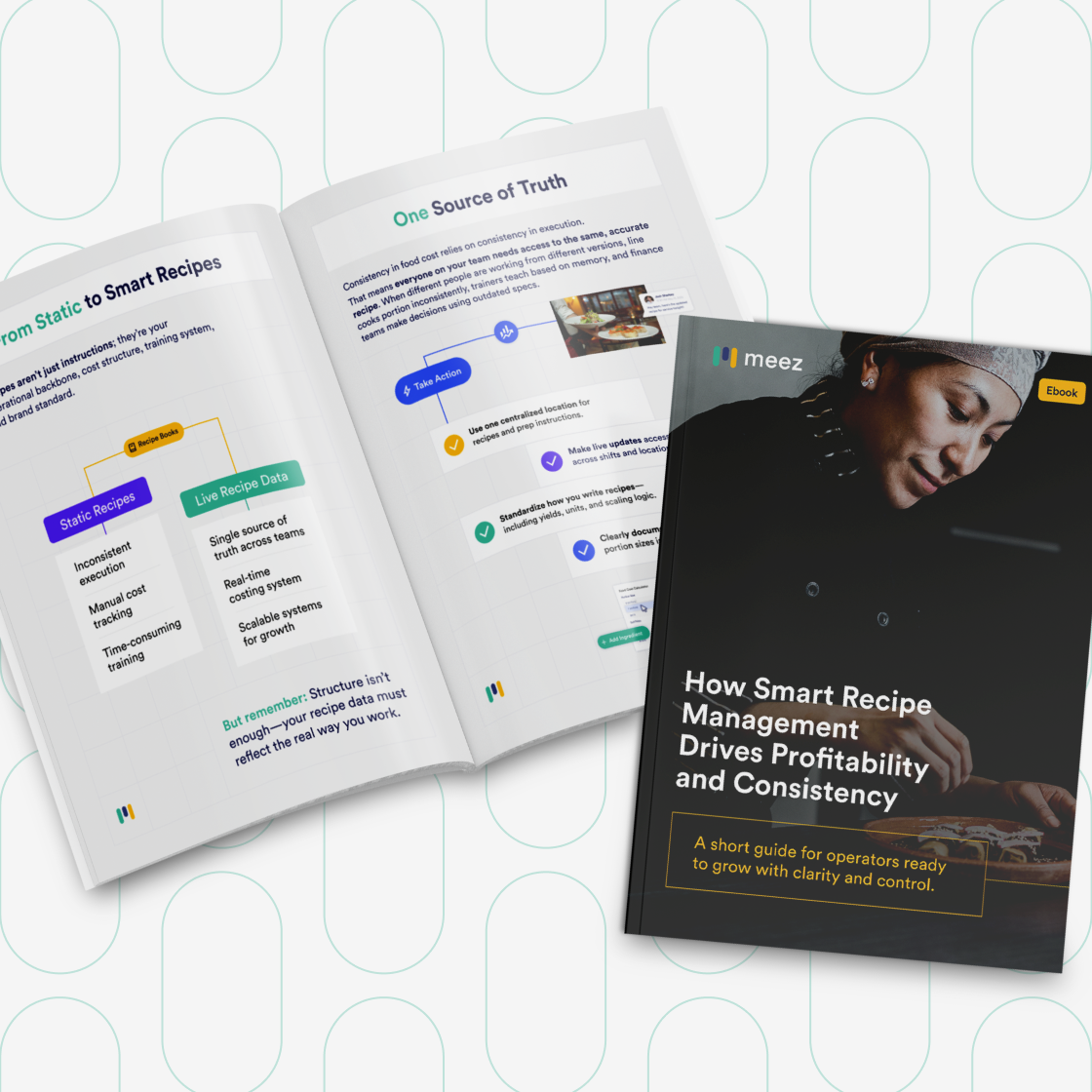
Recipes don't just power the kitchen anymore. They power food costing, purchasing, inventory, menu engineering, nutrition, allergen management, forecasting, and AI decision making.
Whether you build your own AI tools or buy them from a vendor, none of it works without structured recipe data underneath.
That's the part many operators skip, and it's the reason so many AI projects disappoint.
The Real Moat Is Operational Excellence
If competitors can build similar features faster than ever before, what becomes difficult to copy?
According to Sterling, it's everything that happens after the product is built.
Things like:
- Building integrations that actually work
- Successfully onboarding customers
- Delivering consistent support
- Shipping product improvements quickly
- Building trust with operators over time
Those aren't AI problems. They're operational ones.
Chowly, for example, has spent years building integrations across dozens of POS systems. AI might help another company write similar code faster, but recreating years of implementation experience, customer relationships, and operational knowledge isn't something AI can do overnight.
The same idea applies when evaluating restaurant technology vendors.
A polished AI demo is easy to build, but a platform that consistently delivers value over years of operation is much harder.
When you're evaluating new technology, don't just ask what the software can do today.
Ask questions like:
- How often does the product evolve?
- How mature are the integrations?
- What's implementation actually like?
- How quickly does the support team respond?
- Can this platform scale as our business grows?
Those answers matter far more than the latest AI feature announcement.
"Building software on top of existing systems of record, POS, supply chain, labor tools, is now realistic."
From Systems of Record to Systems of Action
For years, restaurant technology has focused on recording what already happened.
Your POS tracks sales. Your inventory system records stock levels. Your accounting software logs spending. These "systems of record" are essential, but they're largely reactive. They tell you what happened yesterday.
AI is shifting the industry toward systems of action: software that doesn't just report on operations, but recommends or automates the next step.
Instead of simply showing that food cost increased last week, a system of action might:
- Identify the ingredient driving the variance
- Recommend a recipe adjustment
- Alert purchasing before the next order
- Suggest menu pricing changes
As Modern Restaurant Management's 2026 Industry Outlook notes:
AI is moving restaurant technology beyond dashboards and reporting toward systems that monitor, recommend, and eventually automate operational decisions.
That's a much bigger shift than adding AI to existing software. It's changing the role restaurant technology plays altogether.
AI Is Only as Good as the Data Behind It
The conversation around AI often focuses on the intelligence of the tools.
The bigger challenge is the quality of the data they're working with.
Whether you're building your own workflows or buying software from a vendor, AI depends on structured operational data. Without it, even the smartest system can't make reliable recommendations.
Take recipe data as an example. If ingredient costs, yields, prep recipes, and portion sizes live across spreadsheets, PDFs, and recipe binders, AI can't confidently answer questions like:
- Why did food costs increase?
- Which menu items are losing margin?
- How will this ingredient substitution affect allergens?
- What should purchasing order next?
Intelligence isn't the problem.The data is.
That's why recipe management has become much more than documentation. For restaurant groups, it's increasingly the operational foundation that powers costing, purchasing, training, menu engineering, and every AI system built on top of them.
Restaurant Technology Is Evolving Faster Than Ever
Sterling made another point that should resonate with anyone evaluating restaurant technology today:
"Every two years, you've got to make a pretty big change in the product."
Just a few years ago, software companies could spend three to five years refining a product before making major changes.
Today, that window has shrunk dramatically.
AI assistants have become everyday tools almost overnight. POS platforms continue expanding into new categories, and companies like Toast and DoorDash are shipping new capabilities at an unprecedented pace.
For operators, that means choosing technology isn't just about today's feature set—it's about whether a vendor can continue evolving alongside your business.
Flexibility Is Becoming a Competitive Advantage
As technology cycles accelerate, flexibility matters more than ever.
When evaluating restaurant software, operators should think beyond feature lists and ask:
- Can we export our data?
- Will this integrate with future tools?
- Are we locked into one ecosystem?
- Can we adapt as AI evolves?
The restaurant groups that stay flexible will have a much easier time adopting new technologies as they emerge.
That flexibility starts with owning your operational data, not trapping it inside a single application.
Build What Makes You Different. Buy What Doesn't.
So what should restaurant owners do: build or buy?
The answer is probably both.
AI has made it easier than ever to build small workflows that solve unique operational problems, a purchasing alert, a weather-triggered promotion, or an internal reporting dashboard.
But core operational systems are a different story.
Recipe management, food costing, inventory, accounting, and POS platforms require years of product development, integrations, customer support, and industry expertise. Those aren't systems most restaurant groups should be rebuilding from scratch.
The smarter approach is to use proven platforms as your operational foundation, then layer AI on top to customize the workflows that make your business unique.
Because whether you build, buy, or do a combination of both, one thing doesn't change:
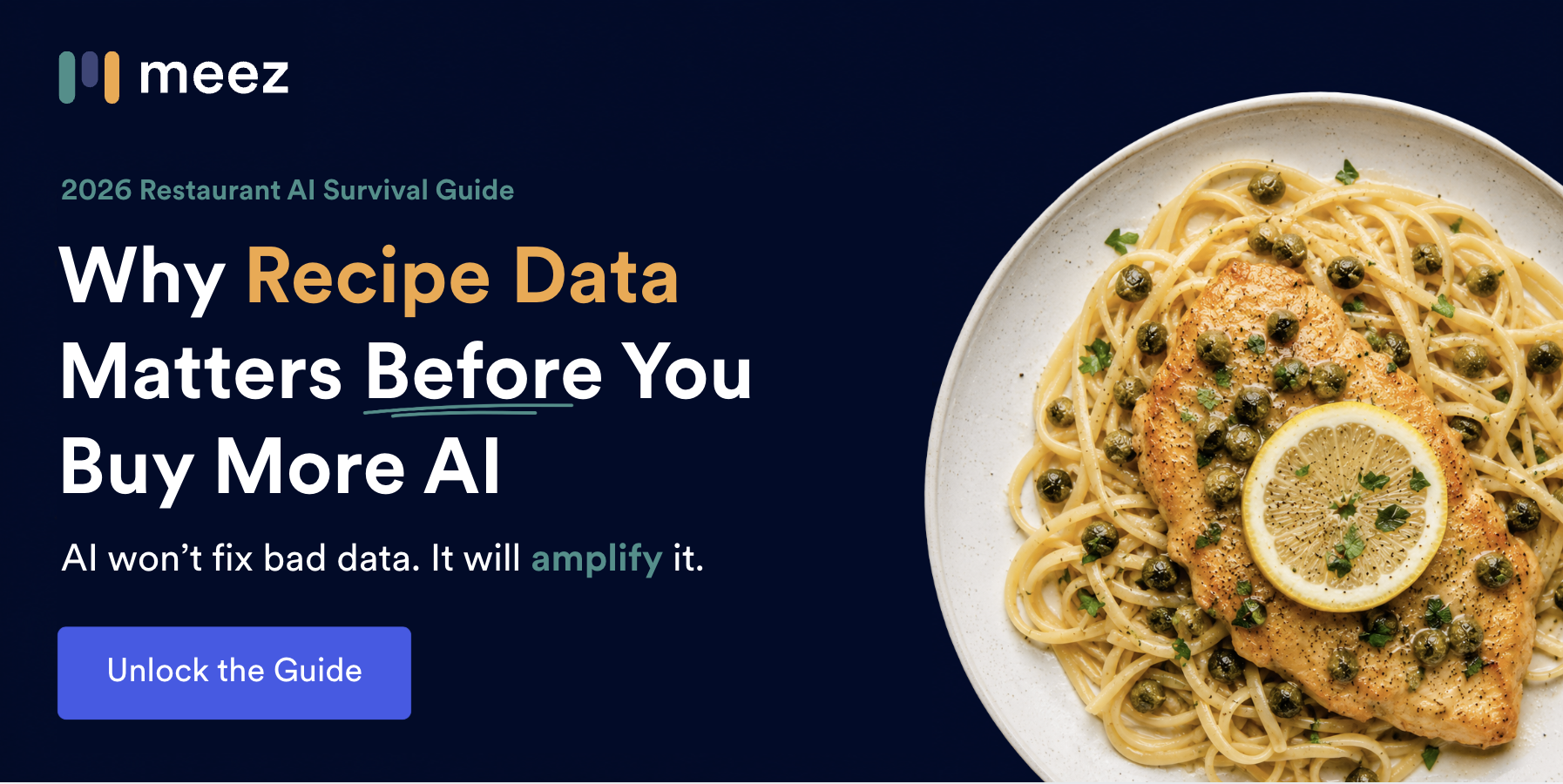
The quality of your AI will always depend on the quality of your data.
If your recipe and cost data isn't structured enough to power the AI tools you're evaluating, building or buying won't matter. See how meez's multi-unit restaurant operations tools give operators the clean foundation both paths depend on.
Listen to the Full Conversation
Sterling Douglass, Josh Sharkey, and Michael Jacober cover everything from AI adoption and product development to systems of action, restaurant data, and where technology is headed next.
Listen to the full episode: In the AI Weeds with Sterling Douglass: "Build or Buy?" Is Now a Decision Every Restaurant Can Make With Their Tech Stack.
FAQ: Restaurant Technology Build vs Buy
What does "build vs buy" mean for restaurant technology in 2026?
It refers to the choice between developing custom software in-house versus purchasing an existing vendor's product. AI-assisted development has made building a realistic option for restaurants of nearly any size, not just large chains with engineering teams, though most operators will still benefit more from buying purpose-built tools for core functions like recipe costing and training.
Can independent restaurants actually build their own technology now?
Yes, to a meaningful degree. AI coding assistants let non-technical operators build functional tools, from automated promotions to simple websites, without hiring developers. Chowly CEO Sterling Douglass describes helping a single-location group build its own website with a working deployment pipeline, something that was not previously possible without technical staff.
What is the difference between systems of record and systems of action?
A system of record captures and stores what happened, like a POS logging a sale or an accounting platform tracking spend. A system of action goes further, using that data to recommend or automatically execute the next step, such as adjusting a purchase order when food cost variance spikes.
How is AI changing restaurant technology moats and competitive advantage?
Traditional product moats are eroding because AI lowers the cost of building similar features quickly. What's replacing them is distribution and go-to-market efficiency: a company's ability to sell, implement, and retain customers reliably, which takes years to build and cannot be replicated by a fast AI build.
Why does recipe data matter for restaurant AI tools?
Any AI layer, whether built in-house or bought from a vendor, is only as accurate as the data feeding it. Recipes stored as PDFs or inconsistent spreadsheets cannot support reliable costing, training, or purchasing decisions. Structured, costed recipe data is the foundation that makes accurate food cost analysis possible at all.
How much does it cost to build restaurant AI tools versus buying software?
Costs vary widely, but the barrier to experimenting has dropped sharply. Many restaurant leaders report meaningful AI subscription costs under a few hundred dollars a month for tools that previously required significant custom development. Buying specialized software still tends to make more sense for core operational systems where reliability, support, and integrations matter more than customization.
Should restaurant operators worry about AI adoption without measuring ROI?
Early-stage experimentation with low-cost AI tools carries limited downside, but restaurants operating on thin margins should not treat AI spend the same way a venture-backed tech company does. The more important question for most operators is whether the tools they adopt actually connect to profitability drivers like food cost and labor, not just adoption for its own sake.
What should operators look for before choosing a restaurant tech vendor in 2026?
Beyond feature lists, evaluate whether the vendor's data model is portable and whether their integrations, like those supporting multi-unit restaurant operations, will stay current as the technology cycle compresses. A vendor with a strong operational track record is a safer bet than one with the flashiest AI demo.